Elegance of Bihari Roots: A Guide to Sarees, Dhotis, and Gamchas
Bihar holds a distinct place in India’s regional culture and heritage. Known historically for its ancient educational centers, philosophical traditions, and spiritual landmarks, the region also possesses a unique textile and sartorial tradition. The attire of Bihar reflects a deep connection between practical daily necessity and artistic craftsmanship. Over generations, traditional clothing in the state has evolved from minimalistic, climate-friendly daily garments into sophisticated attire worn across major festivals, family gatherings, and grand celebrations.
Understanding Bihari clothing involves looking at both functional daily wear—such as light cotton dhotis, lungis, and versatile gamchas—and the rich handloom heritage of Bhagalpur, often called the “Silk City.” Whether it is the sacred fast of Chhath Puja or a festive evening during Durga Puja, Bihari garments balance texture, comfort, and cultural pride.
The Evolution of Bihari Attire: Practical Utility to Festive Splendor
The climate of the Eastern Gangetic plains heavily influences traditional dressing habits in Bihar. Hot summers and humid monsoons historically required lightweight, breathable, and highly absorbent fabrics. Naturally woven cotton became the cornerstone of daily wear for work in agricultural fields and artisanal workshops.
For decades, simple draped garments were favored for their ease of movement and thermal comfort. Men relied heavily on unstitched garments like the dhoti, lungi, and gamcha paired with simple kurtas. Women draped lightweight cotton sarees using traditional regional styles that provided ease during domestic work and outdoor chores.
As weaving techniques matured and regional craft gained prominence, traditional clothing began transitioning into the sphere of formal fashion. Fine handloom techniques, intricate border weaves, and the development of wild silks like Tussar allowed everyday garments to transform. Today, while the functional nature of daily attire remains intact, traditional Bihari textiles are celebrated in contemporary ethnic fashion and high-end festive wardrobes.
Key Traditional Garments of Bihar
Bihari clothing is characterized by simple drapes, distinct checkered patterns, and refined silk textures. Each garment serves a distinct purpose depending on the occasion, season, and setting.
1. The Gamcha: The Universal Companion
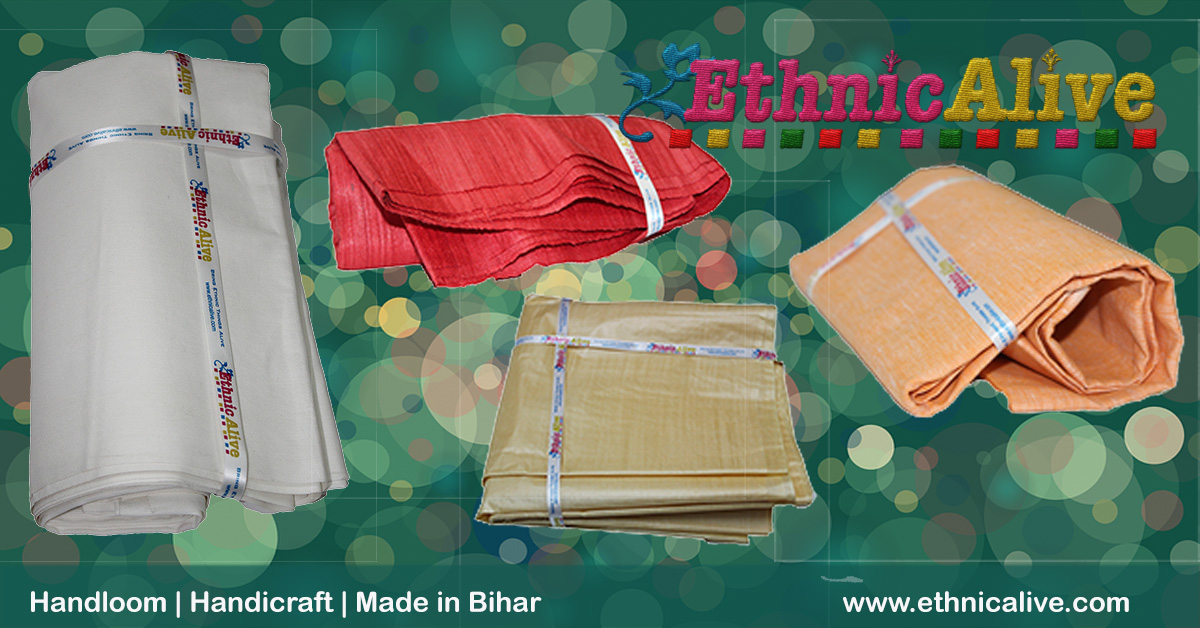
The gamcha is perhaps the most recognizable textile product from the region. Made from loosely woven cotton, it is light, durable, and highly moisture-absorbent. Beyond serving as a simple towel or head covering to protect against the summer heat, the gamcha is deeply embedded in regional life. Workers, farmers, and weavers carry it daily, while during auspicious rituals and traditional cooking, a fresh, unbleached gamcha is often worn across the shoulders as a symbol of purity.
2. The Dhoti and Lungi for Men
For men, the classic dhoti remains a symbol of formal traditional attire. Worn during religious ceremonies, weddings, and cultural functions, the white or off-white cotton dhoti represents clean simplicity. For relaxed domestic wear, the lungi—frequently woven in checkered or striped cotton—offers complete freedom of movement and ventilation during warm climate conditions.
3. Sarees of Bihar: Cotton and Bhagalpuri Tussar Silk
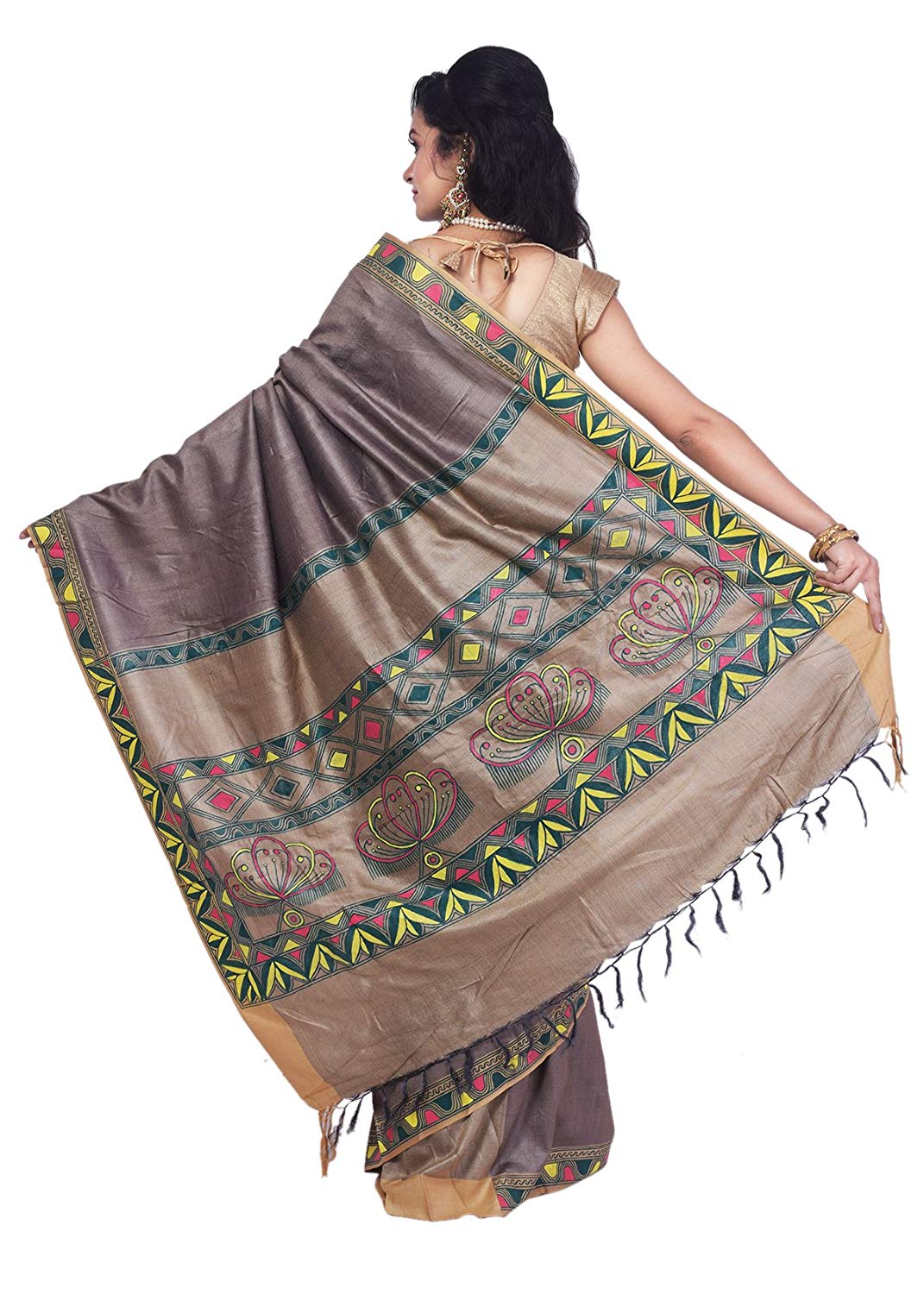
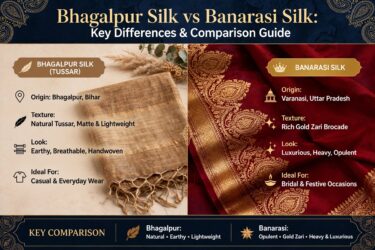
Sarees form the core of traditional women’s clothing in Bihar. Daily wear sarees are predominantly soft cottons designed for ease. However, for special occasions, Bhagalpuri silk takes center stage. Bhagalpur has a centuries-old tradition of sericulture and silk weaving, particularly renowned for producing Tussar silk (also known as Kosa silk). These sarees are celebrated for their natural golden sheen, textured handfeel, and lightweight drape, making them suitable for long festive ceremonies.
Cultural Significance in Festivals and Rituals
Festivals in Bihar are intrinsically linked with specific attire. The choice of garment often reflects devotional purity, seasonal changes, and cultural discipline.
Chhath Puja: The grandest festival of the region emphasizes strict simplicity and devotion. Devotees (Vratis) wear unstitched, natural cotton garments—typically un-dyed or light-colored cotton sarees for women and clean cotton dhotis or gamchas for men—during the holy rituals at riverbanks.
Durga Puja and Diwali: These celebrations bring out vibrant festive attire. Rich Bhagalpuri silk sarees featuring bold contrast borders and deep tones are preferred by women, while men pair handloom kurtas with dhotis or textured dupattas.
Weddings: Traditional weddings feature classic yellow (turmeric) and red drapes. The auspicious presence of silk sarees and finely woven shoulder drapes remains an essential part of wedding ceremonies across the region.
Featured Handloom Products Inspired by Bihari Heritage
To experience the authentic feel of traditional regional weaving, exploring specific handloom items provides a practical understanding of texture, drape, and utility.
1. Bhagalpuri Soft Cotton Gamcha
This multipurpose lightweight towel reflects the authentic regional weaving style of Bhagalpur. Made from soft cotton, it offers high absorbency and quick drying properties, making it suitable for hot and humid climates.
The simple checkered design and skin-friendly weave make it a useful accessory for everyday bathing, travel, or outdoor protection against the sun. Its breathable cotton weave ensures long-lasting comfort throughout the day.
Representing the festive elegance of regional handloom, this saree captures the refined aesthetic of Bhagalpuri silk craft. It features a soft texture paired with a rich contrast border and a detailed pallu.
Designed to be lightweight while maintaining a structured fall, this saree is suitable for festive occasions like Durga Puja, Diwali, and family gatherings. It comes with an included blouse piece to complete the traditional ensemble.
A staple garment for comfortable home wear, this handloom lungi showcases traditional checkered patterns common in Eastern Indian weaving hubs.
Measuring 2.5 meters in length, the pure cotton construction provides breathable comfort for daily indoor relaxing or warm weather conditions, maintaining traditional aesthetic simplicity.
Modern fashion trends frequently blend traditional drapes with modern cuts, creating versatile looks suitable for formal and casual settings alike.
Festive Fusion: A Bhagalpuri Tussar silk saree can be styled with minimal brass or terracotta jewelry to highlight the natural texture of the fabric without overwhelming the look.
Casual Ethnic Comfort: Gamchas are increasingly repurposed in contemporary ethnic fashion as scarves or dupattas paired with solid-colored kurtas for a subtle traditional touch.
Men’s Ceremonial Attire: Pairing a clean handloom kurta with a classic dhoti and layering a folded Bhagalpuri silk shoulder drape adds structure and cultural grace during cultural events.
Care and Maintenance for Bihari Handlooms
Maintaining handwoven cottons and textured silk fabrics requires thoughtful handling to preserve their thread count and natural sheen over time.
Fabric Type
Washing Technique
Drying & Ironing
Bhagalpuri Tussar / Silk Blends
Dry cleaning is recommended for best results. If hand washed, use cold water and a mild silk-friendly detergent. Avoid twisting or wringing.
Dry in shade to prevent color fading. Iron on low to medium heat settings on the reverse side.
Handloom Cotton (Gamcha & Lungi)
Hand wash or gentle machine wash in cold water with mild liquid detergent. Wash dark colors separately initially.
Line dry outdoors away from harsh sunlight to preserve fiber strength. Warm steam iron restores crispness.
Frequently Asked Questions
1. What makes Bhagalpuri silk distinct from other silks in India?
Bhagalpuri silk, especially Tussar silk, is known for its distinct coarse texture, natural golden tint, and lightweight structure. Unlike heavier mulberry silks, Bhagalpuri fabrics offer a understated matte luster that makes them suitable for both day wear and grand evening celebrations.
2. Why is the gamcha so widely used in Bihar?
The gamcha is lightweight, compact, highly absorbent, and dries quickly in humid conditions. Its versatility makes it useful as a bath towel, protective head cover, sweat cloth, and symbolic ceremonial wrap during traditional rituals.
3. Are Bhagalpuri semi-Tussar sarees comfortable for long festival days?
Yes. Semi-Tussar and blended Tussar handlooms offer the aesthetic rich appearance of traditional silk while remaining lightweight and easy to manage throughout day-long events like Durga Puja or family ceremonies.
4. How long is a standard traditional men’s lungi?
Standard handloom lungis typically measure around 2.25 to 2.5 meters in length, providing ample fabric for secure draping and comfortable movement.
Affiliate Disclosure
EthnicAlive may earn a commission from qualifying purchases made through affiliate links on this page. This comes at no additional cost to you and helps support our research into Indian local heritage and traditional handlooms.
Conclusion
The attire of Bihar is a testament to the enduring appeal of practical design and artisanal handloom skills. From the daily utility of cotton gamchas and lungis to the festive luxury of Bhagalpuri Tussar silk sarees, every garment carries a slice of regional identity. Embracing these handloom traditions allows us to appreciate the harmony between regional climate, cultural roots, and timeless Indian craftsmanship.