
India holds a sacred relationship with the loom. Across thousands of towns and villages, generations of artisans have preserved the art of weaving, transforming humble threads into breath-taking textiles. The vast landscape of Indian handloom fabrics reflects the nation’s diverse geography, regional culture, and ancient traditions. Every fold of a handwoven textile tells a story of the soil it comes from, the community that nurtured it, and the craftsman whose hands shaped every detail.
From imperial courts to everyday village life, traditional Indian textiles have consistently held central importance in cultural celebrations, heirloom wardrobes, and spiritual rituals. Exploring the famous handlooms of India offers more than just a lesson in fashion; it is a journey through a living heritage that continues to thrive in contemporary Indian lifestyle and regional aesthetics.
The Sacred Thread: Understanding India’s Handloom Saree Heritage
The story of handloom weaving in India is inextricably linked to the country’s cultural ethos. For centuries, textiles were not merely utilitarian objects—they served as markers of identity, social status, and regional pride. The intricate variations in weave, design, and dye technique across different states showcase the remarkable versatility of Indian artisans.
Central to this legacy is the rich handloom saree heritage. Whether woven from delicate cotton threads or opulent mulberry silk, handloom sarees and fabrics carry an understated grandeur that modern power looms cannot duplicate. The subtle irregularities in handloom weaves give them character, texture, and breathability, making them highly valued both locally and internationally.
10 Famous Handloom Fabrics of India and Their Regional Origins
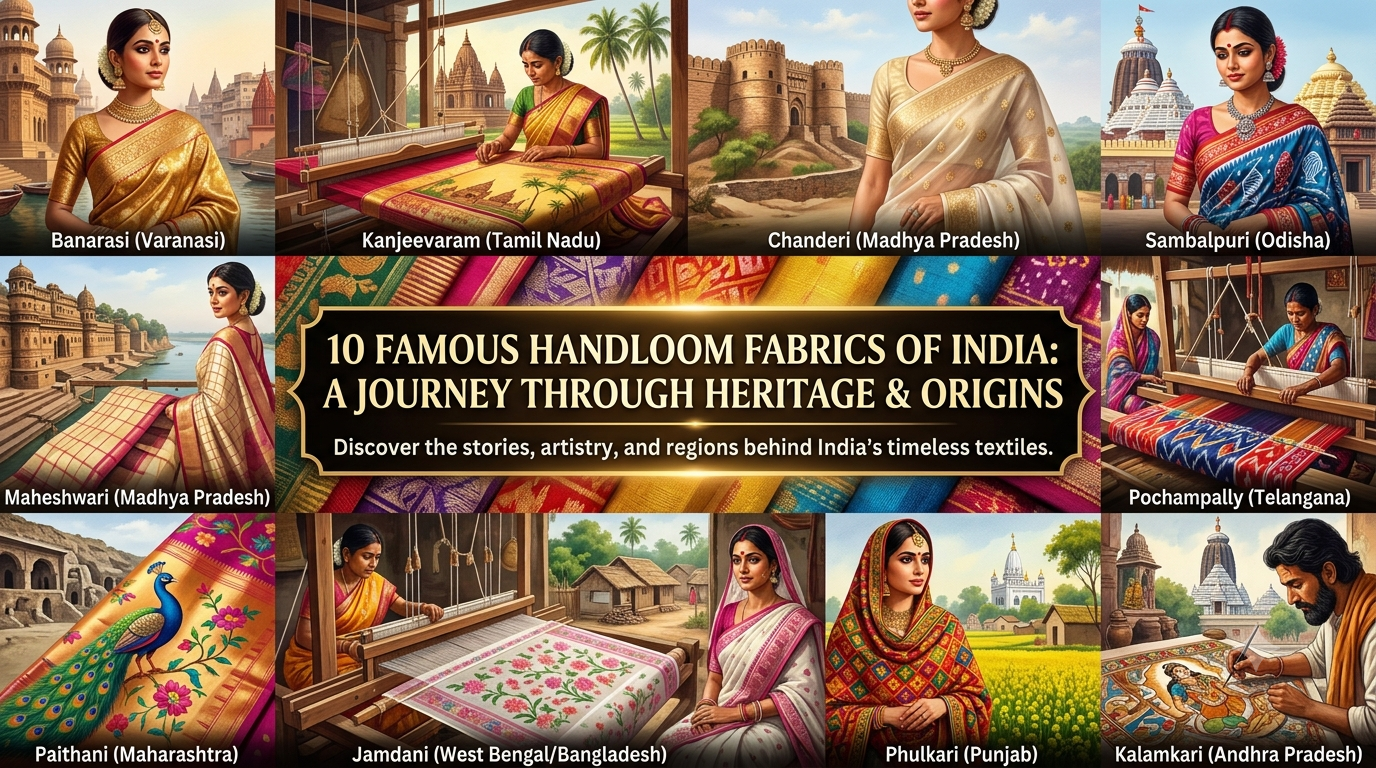
To truly appreciate the deep-rooted heritage of Indian weaving, one must look at the specific regions where these iconic textiles originated. Here is a closer look at 10 of the most renowned handlooms of India, their weaving processes, and their cultural significance.
1. Banarasi Silk (Varanasi, Uttar Pradesh)
Originating in the holy city of Varanasi, Banarasi silk is world-renowned for its opulence and imperial allure. Influenced heavily by Mughal aesthetics, Banarasi fabrics traditionally feature intricate floral motifs, foliage patterns (kalga and bel), and decorative metallic threadwork known as zari.
The weaving process of a classic Banarasi fabric is complex, often taking weeks or even months to complete on traditional pit looms. Craftsmen painstakingly interweave fine silk yarns with gold or silver coated threads. Banarasi sarees and fabrics are considered essential heirlooms in Indian weddings, symbolizing prosperity, grace, and timeless luxury.
2. Kanjeevaram Silk (Kanchipuram, Tamil Nadu)
Hailing from the temple town of Kanchipuram in Tamil Nadu, Kanjeevaram silk is celebrated for its structural strength, vibrant color combinations, and thick silk base. The origin of Indian fabrics like Kanjeevaram is deeply tied to temple iconography; motifs often feature temple borders, peacocks, elephants, and sacred geometric structures.
What sets Kanjeevaram apart is the specialized technique where the border, body, and pallu are woven separately and then joined together with immense precision. The joint is so strong that even if the fabric wears out over decades, the seam rarely detaches. It remains a hallmark of South Indian bridal traditions and ceremonial attire.
3. Chanderi (Madhya Pradesh)
Nestled in the historic town of Chanderi in Madhya Pradesh, this lightweight, sheer fabric has been favored by royalty since the Vedic era and Mughal period. Chanderi is produced by weaving fine silk and cotton threads together, resulting in a distinct glossy transparency and soft drape.
Chanderi fabrics are distinguished by their hand-woven zari motifs, which include classic coin (ashrafi) shapes, floral boots, and geometric patterns. Because of its breathable yet formal texture, Chanderi is widely loved for both high-elegance festive wear and refined ethnic daywear.
4. Pochampally Ikat (Telangana)
Pochampally, located in the Nalgonda district of Telangana, is famous for its mesmerizing double ikat weaves. Often referred to as the “Silk City of India,” Pochampally creates fabrics where the warp and weft threads are tie-dyed in precise patterns before being placed on the loom.
The hallmark of Pochampally Ikat lies in its bold geometric patterns and slightly feathered edges, which occur naturally during the alignment of hand-dyed threads. This traditional technique requires immense mathematical precision from the weaver to ensure the design aligns seamlessly during weaving.
5. Bandhani (Gujarat and Rajasthan)
Bandhani, derived from the Sanskrit word ‘Bandha’ (meaning to tie), is an ancient tie-dye textile art native to Gujarat and Rajasthan. While the base fabric can be fine cotton, silk, or georgette, the magic lies in the manual resist-dyeing technique.
Artisans pinch small portions of the fabric and bind them tightly with thread before dipping the cloth into vibrant natural or modern dyes. When untied, intricate patterns of dots, waves, and squares emerge. Bandhani textiles carry deep cultural symbolism, representing marriage, fertility, and joyous auspicious occasions across western India.
6. Tussar Silk (Jharkhand and Chhattisgarh)
Tussar silk, also known as Wild Silk or Kosa silk, is primarily produced in the tribal belts of Jharkhand, Chhattisgarh, and Odisha. Unlike cultivated mulberry silk, Tussar is harvested from wild silkworms that feed on local forest trees like Sal and Asan.
This natural harvesting gives Tussar its rich texture, natural golden sheen, and porous, breathable structure. Tussar fabrics have an understated, earthy appeal that makes them immensely popular for modern ethnic fusion wear, formal drapes, and artistic craft collections.
7. Jamdani (West Bengal)
Jamdani is an extraordinary handloom technique originating from the historic Bengal region. Known for its feather-light sheer cotton texture, Jamdani is often considered one of the most labor-intensive non-structural weaving methods in the world.
Craftsmen create intricate floral, geometric, or paisley motifs directly on the loom using supplementary weft threads. The motifs appear to float weightlessly on the translucent fabric surface. In Bengali culture, a fine Jamdani saree represents the pinnacle of subtle elegance and artistic craftsmanship.
8. Patan Patola (Gujarat)
Patan in Gujarat is the birthplace of Patola, one of the rarest and most complex handloom textiles in existence. Patan Patola utilizes a strict double-ikat technique, meaning both the warp and weft threads are tie-dyed with total precision before weaving begins.
Because both sides of a Patan Patola fabric exhibit identical color intensity and design clarity, there is no distinct “front” or “back.” The complexity is so intense that producing a single piece can take months or years, making Patola a treasured symbol of heritage and prestige.
9. Muga Silk (Assam)
Exclusive to the Brahmaputra valley of Assam, Muga silk is derived from the endemic silkworm Antheraea assamensis. Renowned for its natural golden hue and luminous gloss, Muga silk holds a revered status in North-Eastern cultural traditions.
Muga silk is famous for its exceptional durability; it is often said that the fabric outlasts the wearer and gains a richer lustre with every wash. Traditionally used in the Assamese Mekhela Chador, Muga silk remains an irreplaceable icon of regional fashion and identity.
10. Kalamkari (Andhra Pradesh)
Kalamkari, which translates literally to “pen-craft,” is an ancient textile art originating from Andhra Pradesh. It encompasses two main schools: Srikalahasti, where motifs are entirely hand-drawn using a bamboo pen, and Machilipatnam, which uses carved wooden block prints.
Using natural vegetable dyes derived from madder root, pomegranate rind, and indigo, Kalamkari fabrics depict mythological motifs, epic scenes, flora, and fauna. The organic warmth and storytelling quality of Kalamkari make it a timeless choice for ethnic apparel and traditional home decor accents.
Comparing Key Characteristics of Famous Indian Handloom Fabrics
To help you understand the distinct qualities of these legendary textiles, the table below summarizes their key traits:
| Fabric Type | Primary Origin | Key Textile Material | Distinguishing Feature |
|---|---|---|---|
| Banarasi | Varanasi, Uttar Pradesh | Fine Silk / Zari | Opulent brocades and royal zari motifs |
| Kanjeevaram | Kanchipuram, Tamil Nadu | Mulberry Silk | Heavy silk base, temple borders, durable weave |
| Chanderi | Chanderi, Madhya Pradesh | Silk-Cotton blend | Sheer transparency, lightweight sheen, fine zari bootis |
| Pochampally Ikat | Telangana | Cotton / Silk | Geometric tie-and-dye patterns with soft edges |
| Jamdani | West Bengal | Fine Muslin Cotton | Feather-light sheer weave with floating hand-woven motifs |
| Muga Silk | Assam | Wild Muga Silk | Natural golden lustre and high durability |
Integrating Traditional Indian Textiles into Modern Lifestyle
While traditional handloom fabrics have historically been reserved for grand celebrations and formal ceremonies, today’s craft enthusiasts are incorporating them into versatile everyday looks. A lightweight Chanderi dupatta can elevate a simple contemporary suit, while block-printed Kalamkari or Pochampally cotton fabrics make exquisite tailored shirts, dresses, and home soft-furnishings.
When selecting fabrics for custom tailoring or home decor, choosing authentic handloom products directly supports artisan communities and helps keep centuries-old craft traditions alive.
Exploring Authentic Handloom Options
If you are looking to explore handwoven materials for custom ethnic garments, home accents, or craft projects, exploring curated fabric options online can be a helpful starting point.

Shop For Handloom fabrics of India
Explore a selection of authentic Indian handloom textiles suitable for traditional tailoring, ethnic wear, and artisan crafting.
Essential Care Tips for Handloom Fabrics
Handloom fabrics are delicate handmade treasures that require thoughtful care to preserve their rich colors, structural integrity, and natural sheen over time. Here are practical care recommendations for traditional textiles:
- Dry Cleaning First: For rich silk weaves like Banarasi, Kanjeevaram, and Muga silk, professional dry cleaning is highly recommended to protect metallic zari threads and delicate silk fibers.
- Gentle Handwash for Cotton: Light handloom cottons, Jamdani, and vegetable-dyed Kalamkari should be washed separately in cold water using mild, pH-neutral liquid detergents.
- Avoid Direct Sunlight: Always dry handwoven fabrics in a shaded, well-ventilated area. Direct sunlight can fade natural dyes and weaken fine threads.
- Proper Storage: Store silk handlooms wrapped in clean, breathable unbleached cotton or muslin cloth. Avoid storing them in plastic bags, as lack of air circulation can damage natural fibers.
- Refold Periodically: Periodically unfold and air out silk sarees and heavy woven fabrics to prevent permanent crease marks along the weave lines.
Frequently Asked Questions
What makes Indian handloom fabrics different from power loom fabrics?
Indian handloom fabrics are woven manually by artisans using foot- or hand-operated looms without electricity. This manual process allows for intricate design variations, greater breathability, and subtle textural uniqueness that automated power looms cannot replicate.
How can I identify genuine handloom saree heritage products?
Authentic handloom items often feature slight variations in weave density, minor organic imperfections in thread tension, and soft, hand-bound selvedges. Additionally, authentic handloom textiles in India frequently carry government-certified marks like the Handloom Mark or Silk Mark.
Which handloom fabric is best suited for warm climates?
Lightweight cotton handlooms such as Bengal Jamdani, Chanderi cotton-silk blends, Pochampally cotton ikat, and South Indian fine cotton fabrics are ideal for warm climates due to their breathability and moisture-absorbent properties.
Why are traditional Indian handlooms considered sustainable?
Handloom production relies primarily on human energy rather than electricity, resulting in a minimal carbon footprint. Furthermore, many traditional techniques utilize natural plant-based dyes and organic fibers, making handloom weaving an eco-friendly textile practice.
Preserving the Legacy of Indian Weaves
The story of Indian handloom fabrics is a celebration of human skill, regional identity, and artistic dedication. From the royal zari drapes of Banaras to the delicate sheer threads of Chanderi and the bold geometric dyes of Pochampally, these textiles reflect the enduring pulse of Indian cultural heritage. By welcoming handloom products into our homes and wardrobes, we help honor the timeless craft of master weavers and keep India’s rich textile legacy alive for future generations.
EthnicAlive may earn a commission from qualifying purchases made through links on this page.