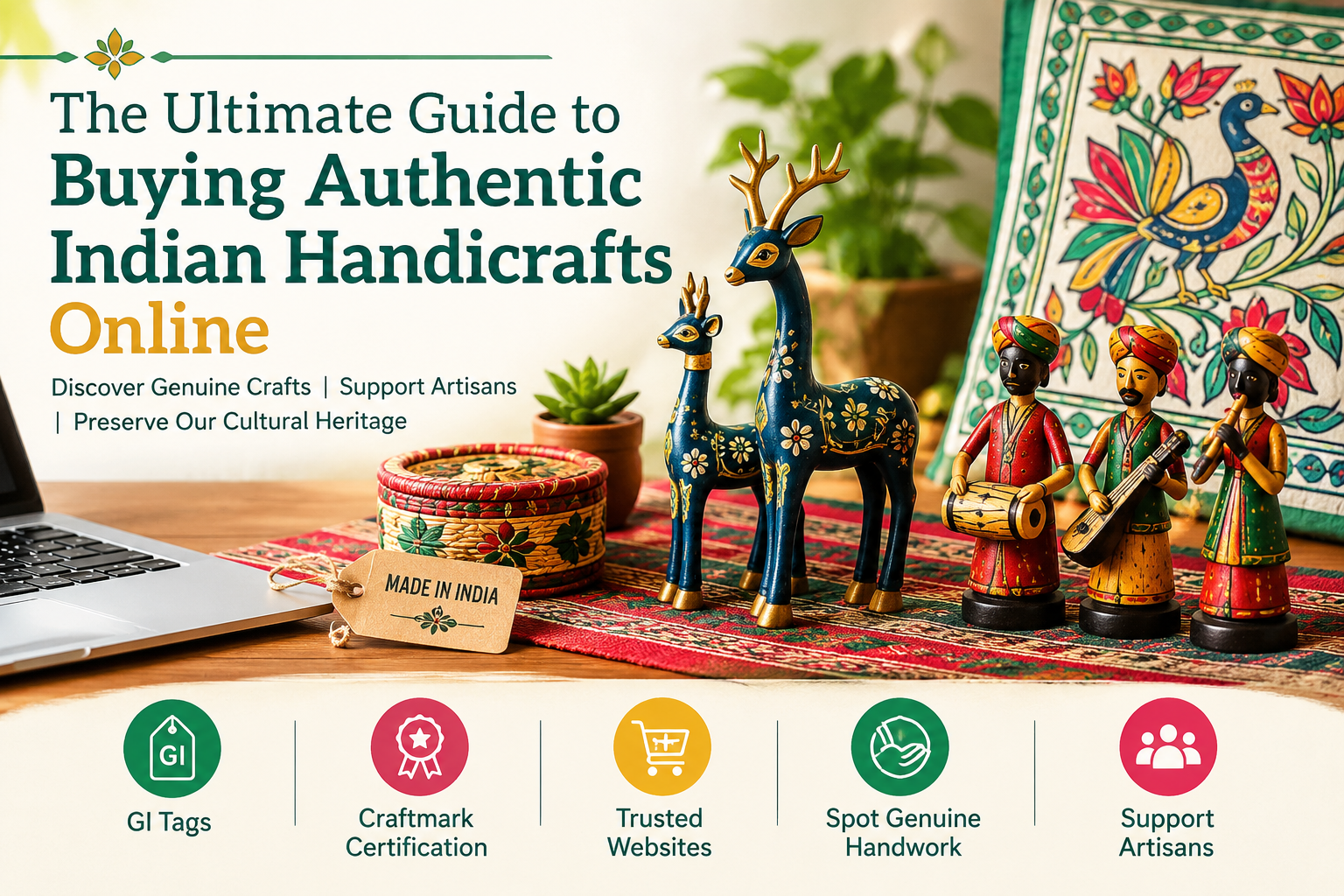
The Ultimate Guide to Buying Authentic Indian Handicrafts Online
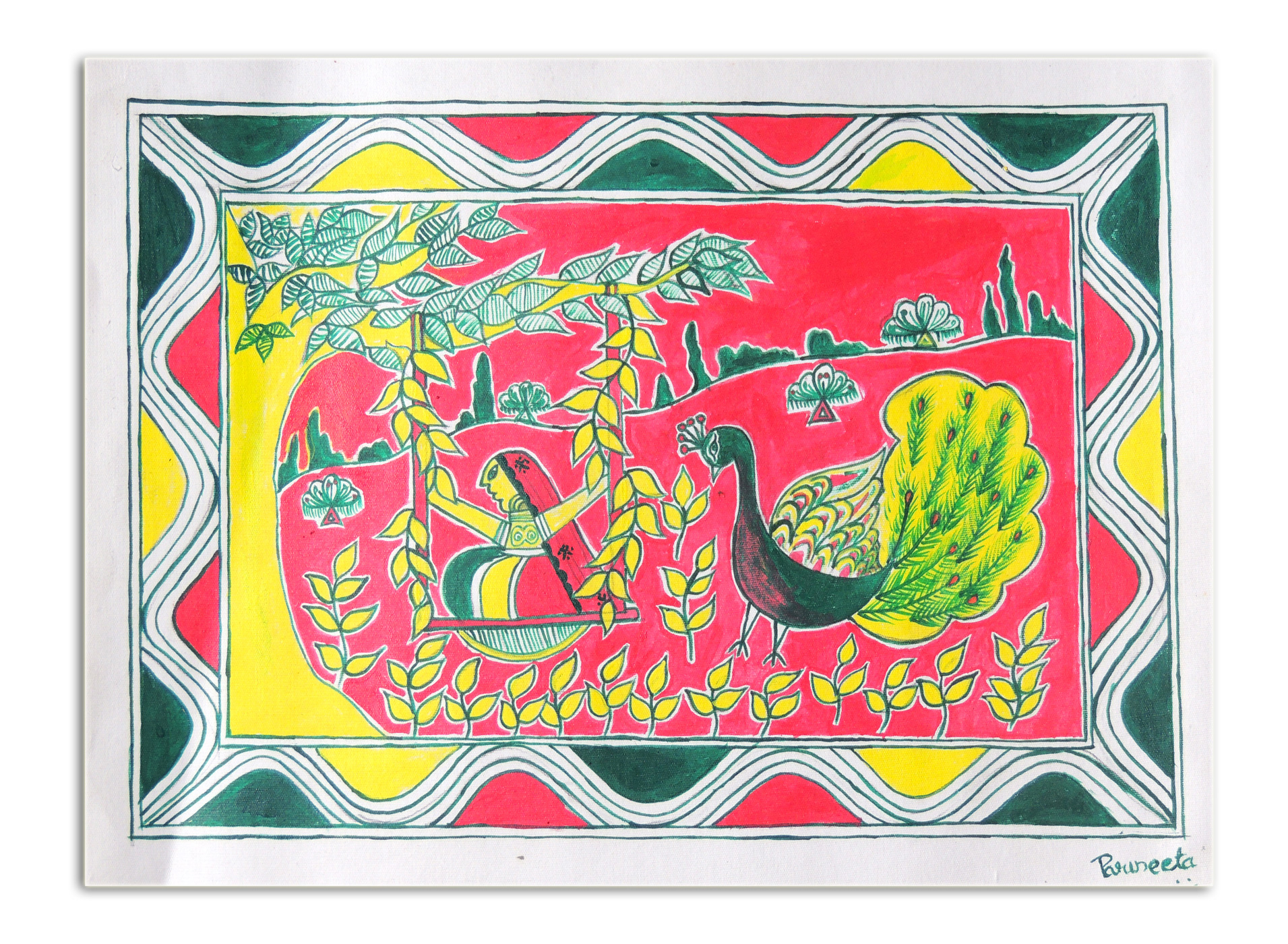
India’s handicrafts represent centuries of creativity, cultural identity, and traditional knowledge. From handwoven textiles and embroidered fabrics to terracotta pottery, wooden carvings, metalwork, and folk art, every craft reflects the skills and heritage of its makers.
Online shopping has made these treasures accessible to buyers across India and around the world. However, it has also become more difficult to distinguish genuinely handmade products from factory-made replicas inspired by traditional designs.
This guide explains how to identify authentic Indian handicrafts, understand Geographical Indication (GI) tags and Craftmark certification, find reliable online shopping platforms, and make informed purchases that support India’s artisan communities.
1. Why Buy Authentic Indian Handicrafts?
Handicrafts are more than decorative objects. They preserve regional traditions, traditional skills, and the cultural stories passed down through generations.
Preserve cultural heritage: Traditional crafts help keep regional art forms, weaving methods, and decorative techniques alive.
Support artisan livelihoods: Purchasing from credible artisan-led businesses and craft organisations helps sustain skilled work.
Discover regional identity: Different regions of India are known for distinctive materials, techniques, motifs, and designs.
Find distinctive products: Handmade items may contain small variations in colour, pattern, texture, or shape that make individual pieces unique.
Choose meaningful gifts: Traditional crafts can make thoughtful gifts for festivals, weddings, housewarmings, and special occasions.
2. How to Identify Authentic Indian Handicrafts Online
Before purchasing a handicraft, examine the product description, photographs, seller information, and available evidence about how the item was made. A traditional appearance alone does not prove that a product is handmade.
Check the maker’s information
Look for the artisan’s name, craft community, production region, cooperative, self-help group, or organisation responsible for the product. Detailed maker information can help you understand where the item comes from and who benefits from the sale.
Read the manufacturing description carefully
Product listings should explain whether an item is handwoven, hand-embroidered, hand-painted, hand-carved, moulded, printed, or machine-made. Some products combine manual craftsmanship with machine processing, so check which stages are performed by hand.
Examine product photographs
Zoom in on the weave, stitching, painted lines, carving, surface texture, and finishing. Handmade items can display natural variations, but irregularities alone are not proof of authenticity. Consistent, identical designs do not automatically mean a product is machine-made either.
Look for process photographs and videos
Photographs of weaving, carving, pottery, embroidery, or painting can help buyers understand the production process. Videos and artisan stories provide useful context, particularly when the seller explains the techniques and materials involved.
Compare prices realistically
Traditional handmade products may require considerable time, specialised skills, and quality materials. If a supposedly intricate, labour-intensive item is offered at an unusually low price, investigate the seller and manufacturing claims before buying. Price alone cannot establish authenticity.
3. Understanding GI Tags and Craftmark Certification
Verification is especially important when purchasing products marketed as traditional, regional, or certified handicrafts. Two useful things to understand are Geographical Indications and craft-specific certification.
What is a Geographical Indication (GI) tag?
A Geographical Indication identifies goods associated with a particular geographical origin, where a recognised quality, reputation, or characteristic is attributable to that origin. India protects registered GIs under its Geographical Indications of Goods (Registration and Protection) Act, 1999.
Examples of well-known Indian craft and textile traditions with geographical associations include Banarasi Brocades and Sarees, Kanchipuram Silk, and Channapatna Toys.
How buyers can check:
Find the claimed GI name in the product description.
Visit the official Intellectual Property India website.
Search the registered GI list and check the relevant product category.
Where necessary, check whether the producer or seller is an authorised user or can otherwise demonstrate a legitimate connection to the registered GI.
A GI registration protects a qualifying regional product identity; it does not automatically certify every item that uses a similar pattern or is advertised with a regional name.
Craftmark is associated with initiatives to identify and promote genuine Indian handicrafts through standards and certification. When a seller advertises a product as Craftmark-certified, buyers should verify the precise certification claim, its scope, and the relevant issuer or programme.
Check whether the certification applies to the specific product, artisan, producer, or organisation rather than assuming that every item sold by a business carries the same status.
Remember that not every genuine handmade item necessarily has a GI tag or Craftmark certification. Many authentic crafts are produced by individual artisans and small communities that do not participate in every certification programme.
4. Trusted Websites for Buying Indian Handicrafts Online
Start with platforms that provide useful product descriptions, seller information, craft stories, or links to artisan communities. The following options offer different ways to explore India’s craft traditions.
Indiahandmade
Indiahandmade is an online marketplace initiative associated with the Ministry of Textiles, Government of India, intended to provide handloom weavers and handicraft artisans with opportunities to sell their products online.
Why explore it? It offers a government-associated route for discovering Indian handmade products and supporting artisan market access. Check the current product selection, seller information, and availability before ordering.
Gaatha
Gaatha combines online shopping with research and storytelling about Indian crafts. Its work includes documenting craft traditions and presenting handmade products with information about their cultural and production backgrounds.
Why explore it? It is useful for shoppers who want to learn about the craft behind a product, discover regional techniques, and explore textiles, accessories, and home décor.
iTokri
iTokri offers a wide selection of Indian textiles, clothing, accessories, and craft products. Its platform describes its sourcing relationships with artisans and craft communities.
Why explore it? It is worth browsing for traditional fabrics, regional textiles, embroidered products, and handcrafted gifts. Read the individual listing to understand the materials, technique, and origin of each item.
Why explore it? Use this resource to research India’s craft ecosystem, learn about artisan development initiatives, and identify relevant official information before purchasing from a seller.
Shopping tip: A platform’s reputation is a useful starting point, not an unconditional guarantee. Review the specific listing, return policy, shipping terms, seller details, and payment protections before placing an order.
5. Handmade vs. Factory-Made: What Is the Difference?
Factory production and traditional craftsmanship can sometimes create visually similar products. The important difference is the actual production process and how honestly it is described.
What to check
Handcrafted product
Factory-made product
Production method
One or more stages involve manual craft skills.
Production relies primarily on industrial machinery or moulds.
Variation
Small variations may occur between pieces.
Products may have highly consistent shapes and finishes.
Product information
May include artisan, region, materials, and process details.
May emphasise standard specifications and bulk production.
Price
Can reflect skilled labour, materials, and production time.
Can benefit from large-scale production efficiencies.
These are general tendencies rather than absolute rules. Handcrafted products can be very consistent, and factory-made products can be well designed and durable. Some products are made using a combination of manual and industrial processes.
The most important rule is simple: buy according to your preference, but do not pay a premium for a handmade claim that the seller cannot reasonably explain or substantiate.
6. Buying Indian Handicrafts for Home Décor
Handcrafted and craft-inspired décor can add character to a living room, bedroom, study, or entrance. Depending on your style and budget, you might explore:
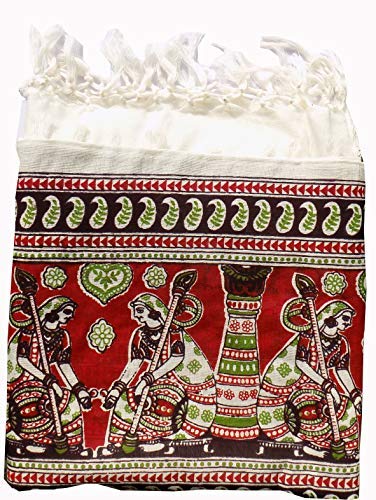
Traditional textiles: Handwoven cushions, table runners, wall hangings, and embroidered fabrics.
Clay and terracotta: Decorative pottery, traditional figurines, and sculptural objects.
Wood and metal crafts: Carved panels, decorative boxes, brass objects, and artisan-made accessories.
Folk-inspired décor: Figurines and decorative pieces featuring traditional clothing, musicians, regional motifs, and cultural themes.
When choosing décor, consider the dimensions, weight, material, finish, cleaning requirements, and suitability for your room. If supporting handmade production is your priority, verify the production method instead of relying solely on an ethnic or traditional design.
7. Recommended Decorative Products
The following products are options for shoppers exploring decorative pieces with traditional or artistic styling. They are presented as home décor recommendations; their appearance alone should not be taken as proof of handmade production or artisan certification.
Amazon Basics Creative Resin Golden Reindeer Sculptures — Pack of 2
These resin reindeer sculptures offer a decorative option for shelves, side tables, console tables, or other display areas. Their blue-and-golden styling may suit contemporary interiors or festive arrangements.
Product type: Decorative resin sculptures.
Pack size: Two pieces, as stated in the supplied product title.
Suitable for: Display shelves, living-room décor, and gifting.
Before buying: Check current dimensions, finish, customer reviews, and seller details.
Authenticity note: Resin décor can be attractive without being traditional handmade handicraft. Confirm the manufacturing method if artisan-made production is essential to your purchase.
KUTUMBH Handcrafted Nagpuri Folk Musician Figurines — Set of 3
Inspired by folk musicians, this set of three figurines is intended for ethnic-style home decoration. It may complement a living-room display, bookshelf, cultural décor arrangement, or gift collection.
Product type: Folk musician figurines.
Pack size: Three pieces, as stated in the supplied product title.
Suitable for: Living rooms, display shelves, and traditional-style interiors.
Before buying: Check the material, dimensions, finish, care instructions, and available customer feedback.
Authenticity note: The product title describes these as handcrafted Nagpuri folk musician figurines. Review the listing for details about the actual maker, production location, and manufacturing technique before treating them as verified regional handicrafts.
8. How to Shop Safely and Avoid Misleading Listings
Authenticity is only one part of a successful online purchase. Follow these practical steps to reduce the risk of disappointment.
Read the complete description. Check materials, dimensions, colour, quantity, and production method.
Check seller information. Review the seller’s identity, ratings, customer feedback, and history where available.
Review the return policy. Understand whether damaged, incorrect, or significantly misdescribed products can be returned or replaced.
Look for original photographs. Multiple clear images can help you inspect texture, construction, and finishing.
Verify certification claims. Check the relevant official register or certification issuer rather than relying on a badge shown in a photograph.
Use secure payment methods. Prefer the platform’s supported payment process and avoid suspicious requests for direct transfers.
Save your order details. Keep the invoice, product description, seller information, and order confirmation in case you need to raise a complaint.
For expensive or collectible pieces, consider asking the seller for additional photographs, information about the artisan, provenance, or documentation supporting specific claims.
9. How Your Purchase Can Support Indian Artisans
Responsible shopping goes beyond selecting an attractive product. Buyers can help sustain craft traditions by seeking transparent sellers, understanding the work involved, and valuing the people behind each creation.
Choose artisan-owned businesses, cooperatives, and organisations that explain their sourcing relationships.
Look for meaningful information about the maker, community, materials, and technique.
Pay attention to whether a product is handmade, partly handmade, hand-finished, or machine-produced.
Share accurate information about the craft and its regional origins.
Consider quality, repairability, material use, and expected product life when comparing purchases.
Buying handmade does not automatically guarantee that a product is environmentally sustainable or that every artisan receives a fair share of the sale. Transparent sourcing and responsible business practices matter too.
10. Frequently Asked Questions
How can I verify whether an Indian handicraft is genuine?
Examine the production description, maker information, material details, photographs, and supporting documentation. For products claiming a GI designation, check the official GI registry and relevant authorised-user information.
Does a GI tag mean every product is handmade?
No. A GI identifies goods associated with a geographical origin and the characteristics or reputation linked to it. The specific GI’s registered product description and requirements determine what is protected.
Are all products sold on handicraft websites handmade?
Not necessarily. Product ranges and production methods vary. Read the individual listing and verify any specific handmade, regional-origin, or certification claim.
Can I buy authentic Indian handicrafts on Amazon?
Yes, online marketplaces can offer handmade crafts and traditional-style décor. However, the marketplace itself does not prove the authenticity of every listing. Check the product details, seller information, and evidence of craftsmanship before purchasing.
Are machine-made products always inferior to handmade products?
No. Machine-made products may offer consistency, affordability, and practical durability. Handmade products can provide distinctive craftsmanship and a closer connection to traditional techniques. The best choice depends on your needs and priorities.
Conclusion: Shop with Confidence, Preserve India’s Craft Heritage
Buying authentic Indian handicrafts online becomes easier when you look beyond attractive photographs and investigate the story behind the product. Understanding GI tags, checking relevant Craftmark claims, exploring credible artisan-focused platforms, and reading product descriptions carefully can help you make better decisions.
Whether you are shopping for handwoven textiles, traditional pottery, folk-inspired figurines, or distinctive home décor, choose products whose materials, manufacturing methods, and origins are described honestly.
Every informed purchase is an opportunity to appreciate India’s cultural diversity and encourage responsible craft businesses. Shop thoughtfully, value skilled work, and help keep traditional knowledge and creativity alive for future generations.
Affiliate Disclosure: This article contains affiliate links. If you purchase a product through these links, EthnicAlive may earn a commission at no additional cost to you. Product availability, prices, specifications, and seller information may change. Please review the current listing before purchasing.