
The state of Bihar holds an extraordinary place in India’s cultural tapestry. Grounded in ancient history along the banks of the Ganges, Bihar’s artistic heritage stretches back centuries, reflecting the traditions, belief systems, and daily lives of its communities. The famous handicrafts of Bihar are not merely decorative items; they are vibrant mediums of storytelling, ritual celebration, and community expression passed down through generations of skilled artisans.
From the world-renowned Mithila region to the silk hubs of Bhagalpur and the stone carving clusters of Gaya, Bihar’s regional crafts carry distinctive visual languages. Many of these traditions have earned geographical indication (GI) tags, highlighting their authentic origins and cultural significance. Exploring Bihar handicrafts offers a window into Indian handloom traditions, folk art narratives, and sustainable artisan practices that continue to shape regional fashion and Indian home decor today.
1. Madhubani Painting (Mithila Art): The World-Famous Canvas of Bihar
Perhaps the most widely recognized art of Bihar, Madhubani painting—also known as Mithila art—originates from the Mithila region of northern Bihar. Traditionally practiced by women on freshly plastered mud walls during festivals, weddings, and harvest celebrations, this art form has evolved onto paper, canvas, and textiles while retaining its original symbolic iconography.
Madhubani art is characterized by striking geometric patterns, intricate line work, and double borders filled with fine hatching or cross-hatching. The imagery often depicts scenes from nature, flora, fauna, deities, and traditional wedding rituals. Natural pigments sourced from plants, charcoal, and minerals are traditionally used, created with twigs, bamboo sticks, or fingers rather than modern synthetic brushes.
Decorating with Mithila Art
Modern homes across India and the world incorporate Madhubani art to bring warmth, heritage, and character into contemporary interior spaces. Wall art canvas sets framed in traditional motifs offer a timeless way to celebrate Indian local heritage.
 PAPER PLANE DESIGN Madhubani paintings for living room. Set of 3 canvas wrapped framed madhubani art for wall decor.
This decor set features traditional Madhubani art styling suited for display in living rooms, study spaces, or hallways, highlighting traditional motifs through framed artwork.
2. Manjusha Painting: The Ancient Snake Art of Bhagalpur
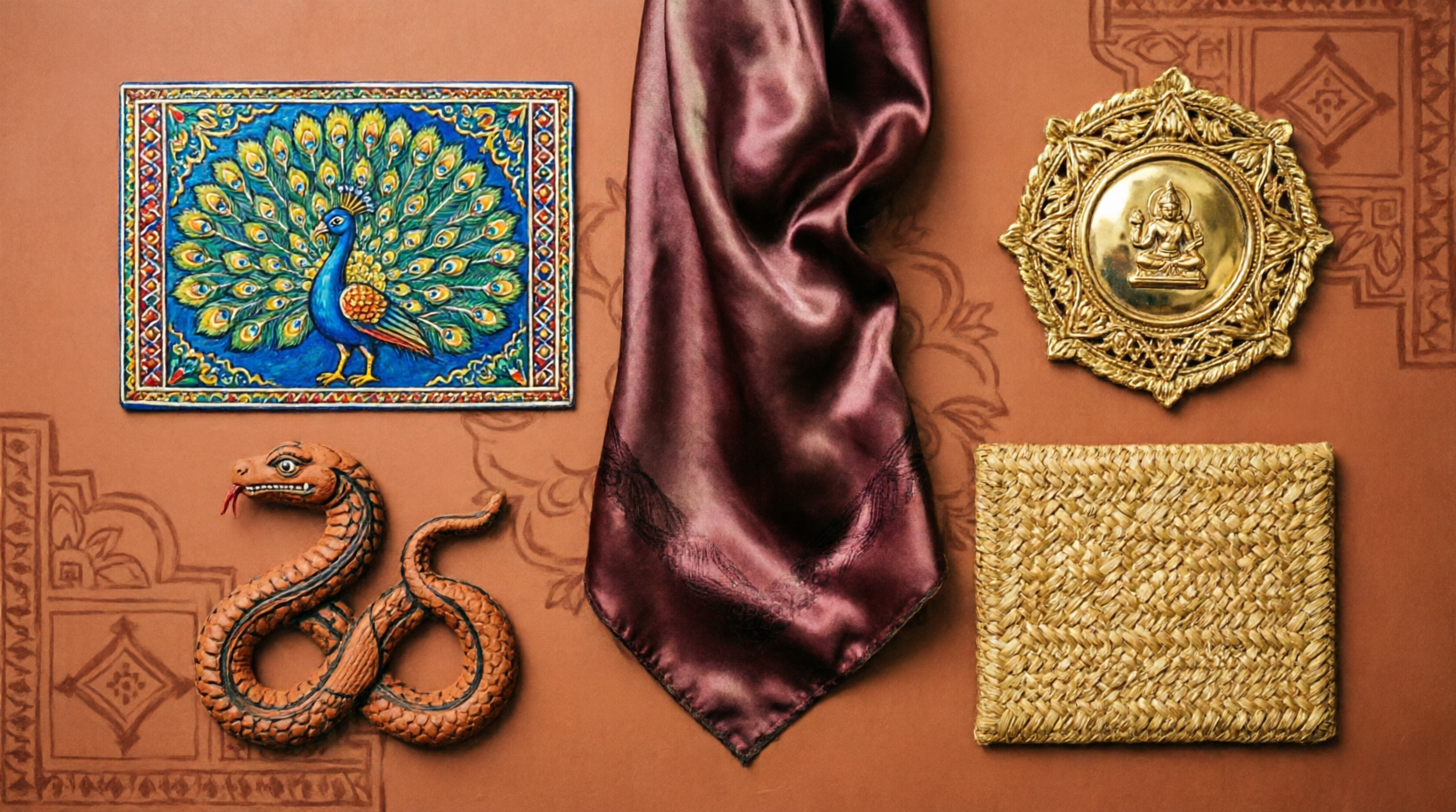
Originating in the Ang region (centered around modern-day Bhagalpur), Manjusha art is one of the oldest narrative art forms in eastern India. Often called “Snake Art” due to the prominent depiction of serpents, Manjusha painting is deeply tied to the regional folklore of Bihula-Mansi and the festival of Bishahari Puja.
Unlike other folk arts that feature broad color palettes, authentic Manjusha art relies on a strict set of three primary colors: green, pink, and yellow. The paintings are enclosed within decorative borders—such as wave patterns, triangular motifs, or snake-like bands—and characters are depicted in profile with expressive, elongated features.
 Manjusha Art: Heritage of Ang Region.
An informative resource exploring the visual language, folk narrative, and historical significance of Manjusha art from the Ang region of Bihar.
3. Tikuli Art: The Intricate Bindi Craft of Patna
Tikuli art has its roots in Patna, the capital of Bihar. Historically, “Tikuli” referred to the ornamental glass bindis worn by women across northern India. Artisans spent days crafting delicate glass wafers embellished with gold leaf and microscopic hand painting.
While the traditional glass bindi market shifted over time, visionary craftspeople adapted the technique onto hardboard surfaces. Today, Tikuli art involves treating hardboard panels, coating them with enamel, and meticulously painting detailed village scenes, dancers, and folk narratives using fine brushes. The smooth, glossy finish gives Tikuli artwork a unique visual texture, preserving a rare craft tradition for modern wall hangings and utility items.
4. Sikki Grass Craft: Golden Grass Artistry
Sikki craft is a unique eco-friendly art form practiced primarily in the Mithila region. Sikki is a wild grass that grows abundantly along riverbanks after the monsoon season. Artisans dry the grass, color it using traditional dyes, and weave it into functional household utility items and art pieces.
Because of its natural metallic shine, Sikki is often called “Golden Grass.” Artisans craft bowls (dhakee), storage boxes, decorative figures, toys, and ritual accessories by coiling and weaving the dried grass together. Beyond its visual charm, Sikki craft represents sustainable, zero-waste craftsmanship rooted in village lifeways.
5. Sujani Embroidery and Khatwa Appliqué Work
Bihar’s textile arts are as rich as its pictorial traditions. Among the most notable are Sujani embroidery and Khatwa appliqué work, both recognized for their historical role in rural households.
Sujani Embroidery
Sujani embroidery originated as a way to recycle old textiles. Women layered old cotton saris and dhotis using simple running stitches, creating padded quilts for newborns and family use. Over time, these quilts became canvasses for storytelling. Artisans use fine threads to embroider narratives of daily life, women’s experiences, rural motifs, and environmental themes onto the fabric. Sujani holds a GI tag, recognizing its geographic and cultural significance.
Khatwa Appliqué Work
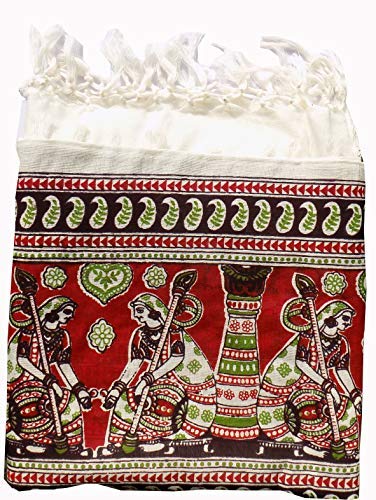
Khatwa is a distinctive form of appliqué art practiced in Bihar. It involves cutting out intricate design shapes from one fabric layer and stitching them onto a background cloth. Traditionally used to create canopy tents, dress materials, cushion covers, and wall hangings, Khatwa requires precision cutting and neat needlework to produce bold, geometric, and floral patterns.
6. Bhagalpuri Silk (Tussar Silk): Handloom Heritage of the Silk City
Bhagalpur, situated along the Ganges, is known as the “Silk City” of India due to its long-standing silk weaving tradition. The city is famous for producing high-quality Tussar silk (also known as Kosa silk), which is derived from wild silkworms native to the surrounding forest belts.
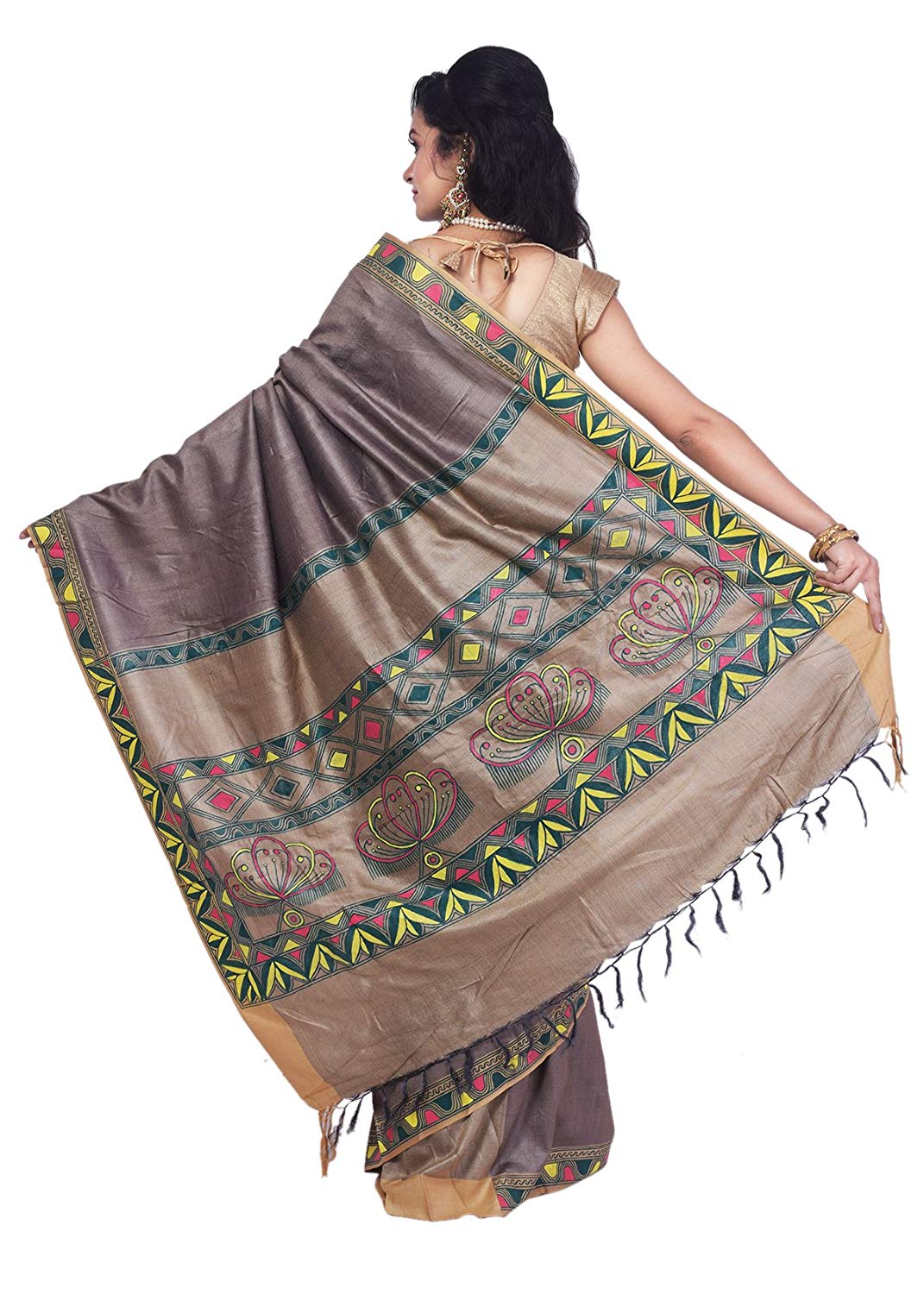
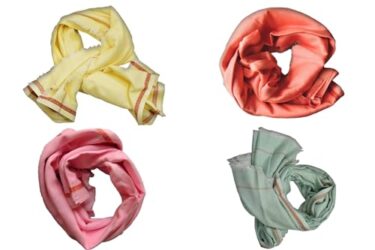
Bhagalpuri silk is celebrated for its natural rich golden texture, lightweight drape, and breathable feel. Handloom weavers combine traditional spinning and weaving techniques to produce Tussar silk saris, dupattas, stoles, and dress fabrics that form a cornerstone of regional Indian fashion.
7. Bawan Buti Sarees of Nalanda (GI Tagged)
In the historical district of Nalanda, handloom weavers create the classic Bawan Buti saree. “Bawan Buti” translates to “52 motifs,” referring to the traditional layout where 52 small, identical woven motifs are placed symmetrically across the body of the saree.
Common motifs in Bawan Buti weaving include Buddhist symbols such as the lotus, stupa, Bodhi leaf, bull, and wheel, reflecting the historical heritage of Nalanda and Rajgir. Crafted primarily in fine cotton and silk threads on pit looms, Bawan Buti sarees hold a GI tag and are revered for their minimalist elegance and technical precision.
8. Pattharkatti Stone Craft of Gaya (GI Tagged)
Pattharkatti, located in Gaya district, is renowned for its traditional stone carving heritage. Craftspeople in this region work primarily with black stone (Gauri stone) and softer local rocks to carve statues, kitchen tools, mortars and pestles, and decorative architectural elements.
The art form gained prominence through historical patronages and the creation of sacred idols for regional temples. Pattharkatti artisans utilize traditional chisels and hammers to transform rough stone blocks into smooth, detailed sculptures that endure for generations.
9. Lac Bangles and Bamboo Crafts of Bihar
Everyday regional lifestyle in Bihar is closely connected with natural raw materials available in the environment, particularly bamboo and lac.
Lac Bangles
Lac, a natural resin harvested from trees, is softened over fire and shaped around wooden mandrels to create colourful, studded bangles. Worn during auspicious ceremonies and festivals like Teej and Chhath, lac bangles hold deep cultural significance in Bihar.
Bamboo Crafts and Festive Utility
Bamboo is widely used across rural Bihar to craft everyday household goods, baskets, winnowing trays, and furniture. A notable cultural artifact made from woven bamboo is the “Soop” or “Sup,” an essential item used in traditional rituals, particularly during Chhath Puja for offering oblations to the Sun God.
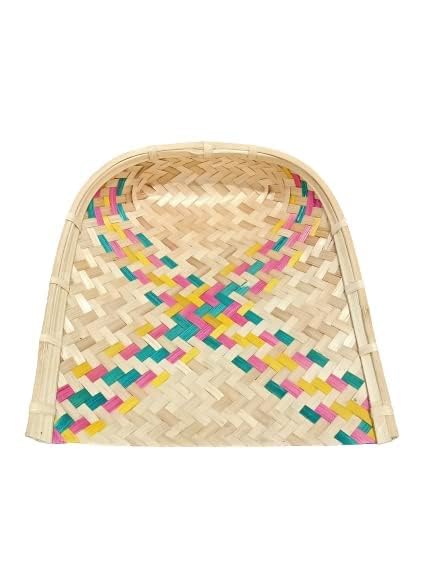
Bamboo Soop/Sup/Moram/Muram for Chhat Puja
A hand-woven bamboo winnowing basket traditionally used in North Indian homes during religious ceremonies, seasonal harvesting, and Chhath Puja rituals.
Overview of GI-Tagged Crafts of Bihar
Geographical Indication (GI) tags serve as an important safeguard for traditional regional arts, ensuring that authentic craft traditions and local artisan communities are recognized and protected.
| Craft / Product Name | Origin Region | Key Feature / Material |
|---|---|---|
| Madhubani / Mithila Painting | Madhubani, Mithila Region | Geometric patterns, natural pigments, cultural narratives |
| Sujani Embroidery | Muzaffarpur & nearby districts | Narrative running stitches on layered cotton fabrics |
| Bhagalpuri Silk | Bhagalpur | Tussar silk weaving with natural texture and sheen |
| Bawan Buti Sarees | Nalanda District | 52 symmetric hand-woven motifs inspired by regional motifs |
| Pattharkatti Stone Craft | Gaya District | Hand-carved sculptures using black stone and local rock |
Empowerment of Rural Women Artisans in Bihar
One of the most meaningful aspects of Bihar handicrafts is their role in social and economic development, particularly for rural women. Historically, arts like Madhubani painting, Sikki grass weaving, and Sujani embroidery were practiced within home courtyards during leisure hours.
Over recent decades, government initiatives, artisan cooperatives, and non-profit organizations have helped transition these domestic crafts into sustainable income-generating opportunities. Women artisans are now business owners, teachers, and exporters, gaining financial independence while keeping their ancestral cultural knowledge alive.
How to Choose and Care for Authentic Bihar Handicrafts
When collecting authentic handicrafts from Bihar, keeping a few practical care and selection tips in mind helps maintain their quality and longevity:
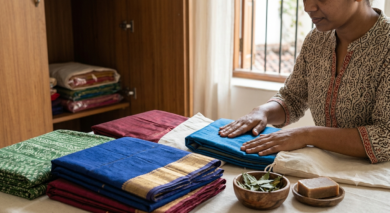
- Textiles (Bhagalpuri Silk & Bawan Buti): Dry clean handloom silk sarees to preserve their natural luster. For hand-embroidered Sujani cottons, mild hand washing with cold water is recommended.
- Artworks (Madhubani & Manjusha): Keep paper and canvas paintings framed behind glass or clear protective coats to guard against humidity and direct sunlight exposure.
- Natural Grass & Bamboo Items: Store Sikki and bamboo items in dry, well-ventilated areas to prevent dampness. Clean gently with a dry soft brush.
- Stone & Lac: Wipe stone carvings with a clean damp cloth; store lac items away from high heat sources to prevent melting or warping.
Frequently Asked Questions
What are the most famous GI-tagged handicrafts of Bihar?
Bihar holds several Geographical Indication (GI) tags for its traditional crafts, including Madhubani Painting, Sujani Embroidery, Bhagalpuri Silk, Bawan Buti Sarees, and Pattharkatti Stone Craft.
What makes Madhubani painting unique compared to other Indian folk arts?
Madhubani painting is unique for its vibrant geometric line work, lack of empty background spaces (filled with flora and fauna motifs), and use of natural dyes derived from plants, seeds, and minerals.
Where are Bhagalpuri silk sarees made?
Bhagalpuri silk sarees originate from Bhagalpur district in eastern Bihar, a historic handloom hub renowned for Tussar silk cultivation and weaving.
What materials are used in Sikki grass craft?
Sikki grass craft uses wild golden grass collected along riverbanks in Bihar. The grass is dried, dyed in various shades, and woven into decorative and functional objects.
Conclusion
The famous handicrafts of Bihar offer a journey through history, folklore, and rural artisan wisdom. From the colorful canvases of Madhubani and Manjusha to the eco-friendly grace of Sikki grass and the tactile elegance of Bhagalpuri Tussar silk, each craft tells a deeply human story. By appreciating, buying, and sharing these traditional crafts, we support sustainable artisan livelihoods and ensure that India’s rich handloom and heritage arts continue to thrive for generations to come.
Disclaimer: EthnicAlive may earn a commission from qualifying purchases made through links on this page.