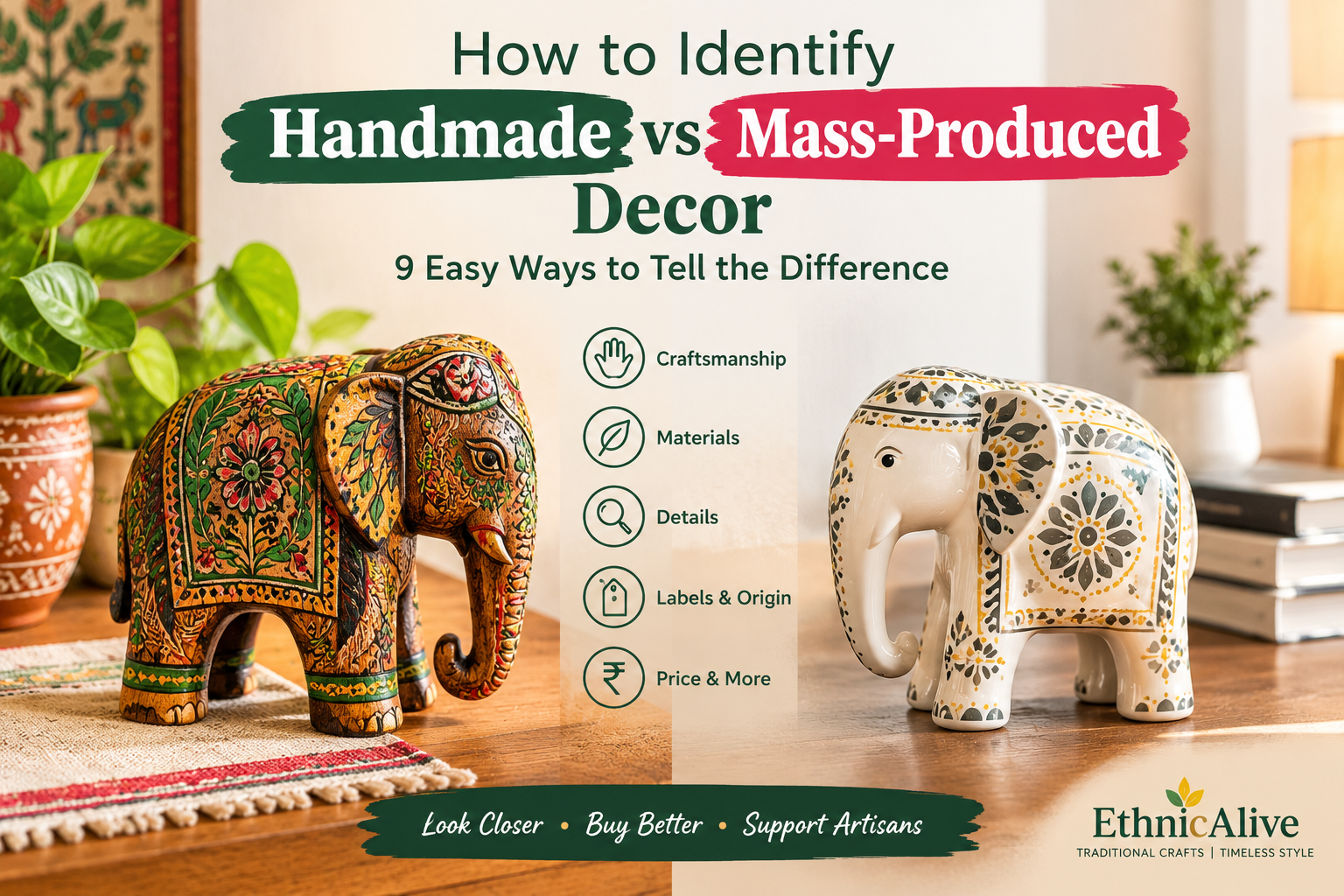
How to Identify Handmade vs Mass-Produced Decor: 9 Easy Ways to Spot the Difference
Have you ever bought a home decoration item online, only to discover that it looks completely different from what you expected? With so many products available today, distinguishing genuine handmade decor from mass-produced alternatives can be challenging. Attractive product photographs, traditional designs, and words such as “artisan-made” do not always tell the complete story.
Understanding the difference between handmade and factory-produced decor can help you make more informed buying decisions. Whether you are shopping for wall art, decorative pottery, wooden accessories, textiles, or traditional Indian handicrafts, a few simple checks can reveal useful clues about how a product was made.
In this guide, discover 9 practical ways to identify handmade vs mass-produced decor, what warning signs to watch for, and how to choose decorative pieces that match your style, budget, and values.
What Is the Difference Between Handmade and Mass-Produced Decor?
Handmade decor is created primarily through the skills and work of individual craftspeople or artisan groups. These products may involve traditional techniques, hand-applied details, or manual finishing. Depending on the craft, artisans may use locally sourced materials and methods passed down through generations.
Mass-produced decor is generally manufactured in larger quantities using standardized processes, factory equipment, molds, or automated machinery. This approach makes it easier to produce consistent designs and supply large numbers of products at competitive prices.
Neither category is automatically superior in every situation. Handmade items may offer distinctive details and evidence of individual craftsmanship, while mass-produced products can provide consistency, affordability, and easier replacement. The best choice depends on what matters most to you.
9 Ways to Identify Handmade vs Mass-Produced Decor
1. Examine Small Details and Natural Variations
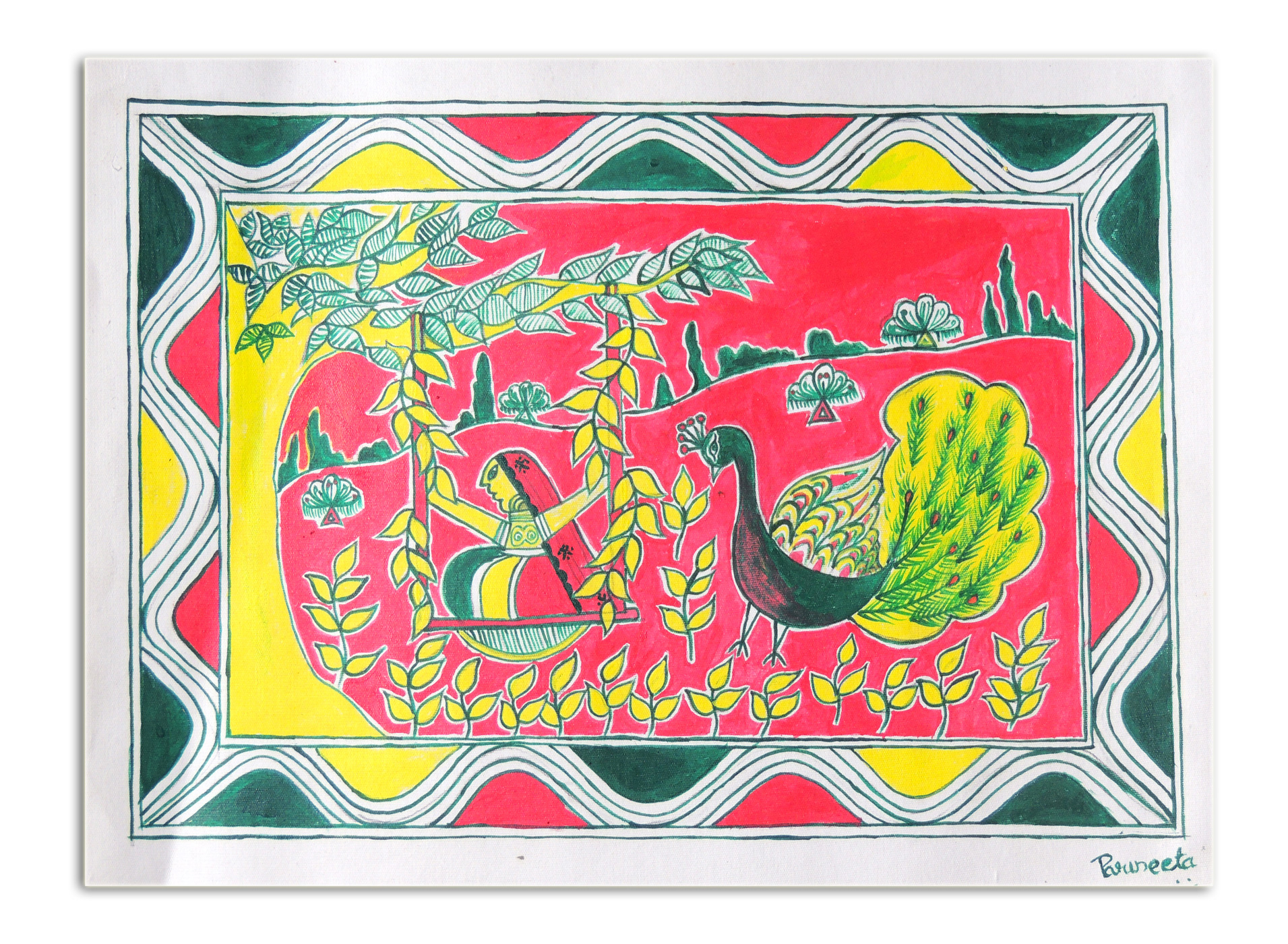
One of the first things to inspect is the consistency of the design. Hand-painted decorations, carved wooden pieces, handwoven fabrics, and shaped clay objects may contain subtle differences in line thickness, texture, pattern spacing, or finishing.
These variations can reflect the individual artisan’s technique. For example, a hand-painted decorative plate may have slightly different brushstrokes from another plate made by the same artist.
However, remember that irregularities alone do not prove a product is handmade. Factory products can intentionally imitate handmade finishes, and skilled artisans can achieve exceptionally precise results.
What to check: Look for details that appear naturally connected to the construction or decoration process rather than deliberately added imperfections.
2. Inspect the Materials and Surface Texture
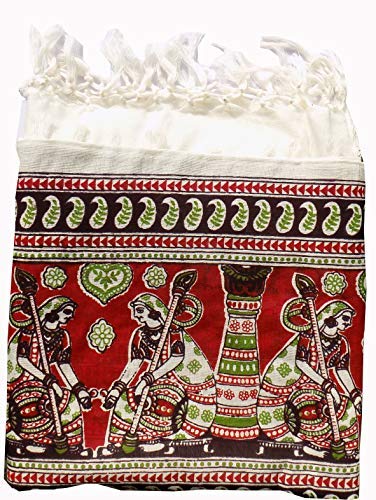
Materials can provide helpful clues about how a decorative object was made. Natural wood may display visible grain patterns, handwoven fabrics may show variations in their weave, and traditional pottery may have distinctive surface textures.
Examine whether the material appears consistent with the product description. A carved wooden item, for instance, should have a finish and construction appropriate to the type of wood claimed by the seller.
Some handmade crafts also use natural fibers, clay, plant-based materials, metal, or traditional dyes. Nevertheless, handmade items can use modern materials, and factory-made products can use natural ones.
What to check: Read the material description carefully and look for close-up photographs that show texture, edges, joints, and surface finishing.
3. Look Closely at the Craftsmanship
Construction quality can reveal more than a product’s appearance. Inspect seams, joints, stitching, carvings, painted edges, woven borders, and the underside of decorative pieces.
For example, a handcrafted wooden wall hanging may feature individually worked details. A textile may show a clearly visible weaving structure, while a hand-decorated object may have layered brushwork or carefully applied motifs.
Good craftsmanship does not necessarily mean perfect uniformity. Instead, look for thoughtful construction, appropriate finishing, and details that suggest care was taken during production.
What to check: Ask for photographs of the back, bottom, edges, and other areas that product listings often leave out.
4. Compare Multiple Pieces of the Same Product
When sellers offer several pieces of the same decorative item, compare their photographs. Handmade products may have small differences in color placement, pattern proportions, texture, or dimensions because each piece is worked individually.
Mass-produced products often have more uniform dimensions, shapes, and repeating patterns, especially when molds or automated production systems are used.
There is an important exception: many artisan cooperatives use templates, looms, or molds while still incorporating substantial handmade work. Similarly, machine-made products can undergo manual finishing.
What to check: Ask whether the exact item pictured will be shipped or whether the seller will send a similar piece from a batch.
5. Investigate the Product’s Origin and Artisan Story
A reliable seller should be able to explain where a product comes from, which materials are used, and how it is made. Detailed information about the craft, the workshop, the artisan group, or the region can help you evaluate a product’s authenticity.
For Indian handicrafts, regional craft traditions can provide useful context. Depending on the product, you may encounter handwoven textiles, clay crafts, metalwork, carved wood, hand-painted decor, or grass-based weaving.
Be cautious of vague descriptions such as “traditional handmade design” that provide no information about the actual manufacturing process.
What to check: Look for a specific craft name, production location, process description, artisan or cooperative information, and consistent product details.
6. Read Product Labels and Certifications Carefully
Labels and certifications may offer additional evidence, but it is important to understand what each one actually verifies.
In India, a Geographical Indication (GI) identifies products associated with a particular geographical origin and recognized qualities, reputation, or characteristics. A GI is not a universal certificate that every item is handmade.
Other craft-related marks or seller credentials may have their own eligibility requirements and verification procedures. Check the issuing organization, certificate details, product category, and whether the claim applies to the specific item being sold.
Also distinguish between the phrases “handmade,” “hand-finished,” “hand-painted,” and “handcrafted design.” They do not necessarily describe the same level or type of manual work.
What to check: Treat labels and certificates as supporting evidence, not as a substitute for understanding the item’s actual production method.
7. Evaluate the Price Without Assuming That Expensive Means Handmade
Handmade decor may cost more because of the time, labor, specialist skills, smaller production volumes, or materials involved. However, pricing varies widely according to the craft, the artisan’s experience, the product’s size, and the seller’s business model.
A high price does not automatically establish authenticity, and a low price does not automatically mean a product is factory-made. Some traditional crafts are affordable, while certain mass-produced designer products carry premium prices.
What to check: Compare similar items, materials, dimensions, construction methods, and seller information rather than judging authenticity by price alone.
8. Examine Product Photography and Descriptions
Online shopping makes careful inspection especially important because you cannot physically handle the item before purchasing it.
Authentic listings should ideally include clear photographs of the actual product from several angles. Close-ups can help you see brushstrokes, weaving patterns, carving marks, stitching, surface texture, and finishing details.
Watch for product pages that use only generic catalog photographs or make broad claims without explaining how the item was produced. Reverse-image searches and comparisons with other listings may also help you identify identical designs sold under conflicting descriptions.
What to check: Look for original product photographs, dimensions, material details, care instructions, manufacturing information, and a clear return policy.
9. Ask the Seller Direct Questions
When a listing is unclear, asking direct questions is often the most useful next step. A knowledgeable seller should be able to explain the production process without relying entirely on marketing terms.
Before buying, consider asking:
Is the product entirely handmade, partly handmade, hand-finished, or machine-made?
Which parts of the item are made or decorated by hand?
What materials are used, and where do they come from?
Is this an individual artisan’s piece or part of a large production batch?
Can you share additional photographs of the actual item?
Are claims about the artisan, region, or certification independently verifiable?
Specific and consistent answers can help you make a better-informed decision. Be wary of sellers who avoid straightforward questions or use the word “handmade” without clarifying what it means for their product.
Recommended Home Decor & Handmade Craft Products
Disclosure: This post contains affiliate links. As an Amazon
Associate, we may earn from qualifying purchases at no extra
cost to you.
BAUZINI Round Wooden Serving Tray – 11 Inch
Add natural warmth to your home with this round acacia
wood decorative platter. Suitable for serving tea and
coffee or styling a kitchen, dining table, ottoman, or
coffee table.
Bring an Indian handicraft touch to your interior with
miniature clay musical instrument showpieces, including
tabla, veena, and harmonium designs. Consider them for
table decoration, home styling, or return gifts.
Often involves significant manual work or traditional craft techniques
Usually uses standardized manufacturing processes
Appearance
May contain subtle piece-to-piece variations
Often has a more uniform appearance
Customization
May offer personalized designs or made-to-order options
Usually offers standardized designs and sizes
Availability
Can be limited by artisan capacity and production time
Often available in larger quantities
Pricing
Depends on labor, skills, materials, and complexity
Often benefits from economies of scale
Verification
Look for process details and credible artisan information
Look for accurate manufacturing and material information
Important: These are general patterns, not absolute rules. Hybrid production is common, and many products combine machinery with meaningful handwork.
Common Red Flags When Buying Handmade Decor Online
Be cautious when a seller makes strong authenticity claims but provides little evidence to support them. Watch for these warning signs:
Unclear manufacturing details: The listing claims an item is handmade but never explains which processes are done by hand.
Copied or generic photographs: The images do not clearly represent the actual product being sold.
Contradictory descriptions: The title says handmade, while the product details describe automated manufacturing or materials inconsistent with the claim.
Unverifiable certifications: A badge or certificate is displayed without enough information to check its source or relevance.
Unrealistic claims: The seller makes dramatic statements about rarity, age, sustainability, or artisan origins without evidence.
One warning sign does not automatically prove a product is misleading. Use the overall evidence, ask questions, and review the seller’s policies before purchasing.
Why Choose Handmade Decor for Your Home?
Handmade decor can bring visual character, regional design traditions, and distinctive craftsmanship into a living space. Depending on the item, buying directly from an artisan or a transparent artisan business may also provide more information about who made it and how the maker earns a living.
Traditional Indian crafts can be especially meaningful when they represent the skills and cultural knowledge of a particular community. Handwoven textiles, carved objects, clay decorations, metal crafts, and hand-painted accessories can connect everyday interiors with regional creative traditions.
Still, responsible purchasing requires more than the word “handmade.” Consider durability, material sourcing, product safety, packaging, shipping distance, and the seller’s transparency. These factors can matter just as much as the method of production.
How to Buy Authentic Handmade Decor Online
Before placing your order, use this quick checklist:
Read the complete product description, including materials and dimensions.
Inspect close-up photographs of the actual item.
Check whether the manufacturing method is explained clearly.
Research the seller, artisan group, or craft organization.
Verify any certification or geographical-origin claim where relevant.
Compare prices with similar products made using comparable methods.
Read customer reviews critically and review the return and replacement policy.
Keep the order confirmation and product description for reference.
These steps can reduce uncertainty and help you choose decor with greater confidence, whether you are decorating your home, selecting a gift, or collecting traditional handicrafts.
Frequently Asked Questions
How can I tell whether a decor item is genuinely handmade?
Examine its construction, surface details, materials, and piece-to-piece variations. Then review the seller’s production explanation and artisan information. No single visual clue proves authenticity, so consider multiple sources of evidence together.
Are handmade products always better than mass-produced products?
Not always. Handmade products may offer distinctive craftsmanship and individualized details, while mass-produced products can provide consistent sizing, accessible prices, and convenient replacement options. Choose according to your quality requirements, budget, and preferences.
Does a higher price prove that a product is handmade?
No. Prices reflect several factors, including materials, design, branding, distribution, and labor. Compare the product’s construction and manufacturing information rather than relying on price alone.
Can machine-made decor look handmade?
Yes. Modern manufacturing can reproduce distressed finishes, brushstroke effects, wood grain, and irregular patterns. Product photographs should therefore be considered alongside material details, production information, and seller credibility.
Does a Geographical Indication (GI) tag mean a product is handmade?
Not automatically. A GI identifies a product linked to a recognized geographical origin and associated qualities, reputation, or characteristics. Whether a particular item must be handmade depends on the relevant product specification and applicable requirements.
Where can I find authentic Indian handicrafts?
Look for reputable artisan cooperatives, transparent craft businesses, established craft marketplaces, and sellers that explain product origins and manufacturing methods. Check the specific item’s description, seller credentials, and return policy before buying.
Final Thoughts: Look Beyond the Label
Identifying handmade vs mass-produced decor is easier when you look beyond attractive photographs and marketing claims. Examine the craftsmanship, understand the materials, investigate the maker’s story, and ask clear questions about how the product was created.
Remember that handmade does not automatically mean sustainable, superior, or authentic, just as mass-produced does not automatically mean poor quality. The most confident purchase is one supported by transparent information and realistic expectations.
Ready to decorate more thoughtfully? Explore traditional craft styles, compare products carefully, and choose pieces that reflect your personal taste while giving you confidence in their materials, origin, and manufacturing process.