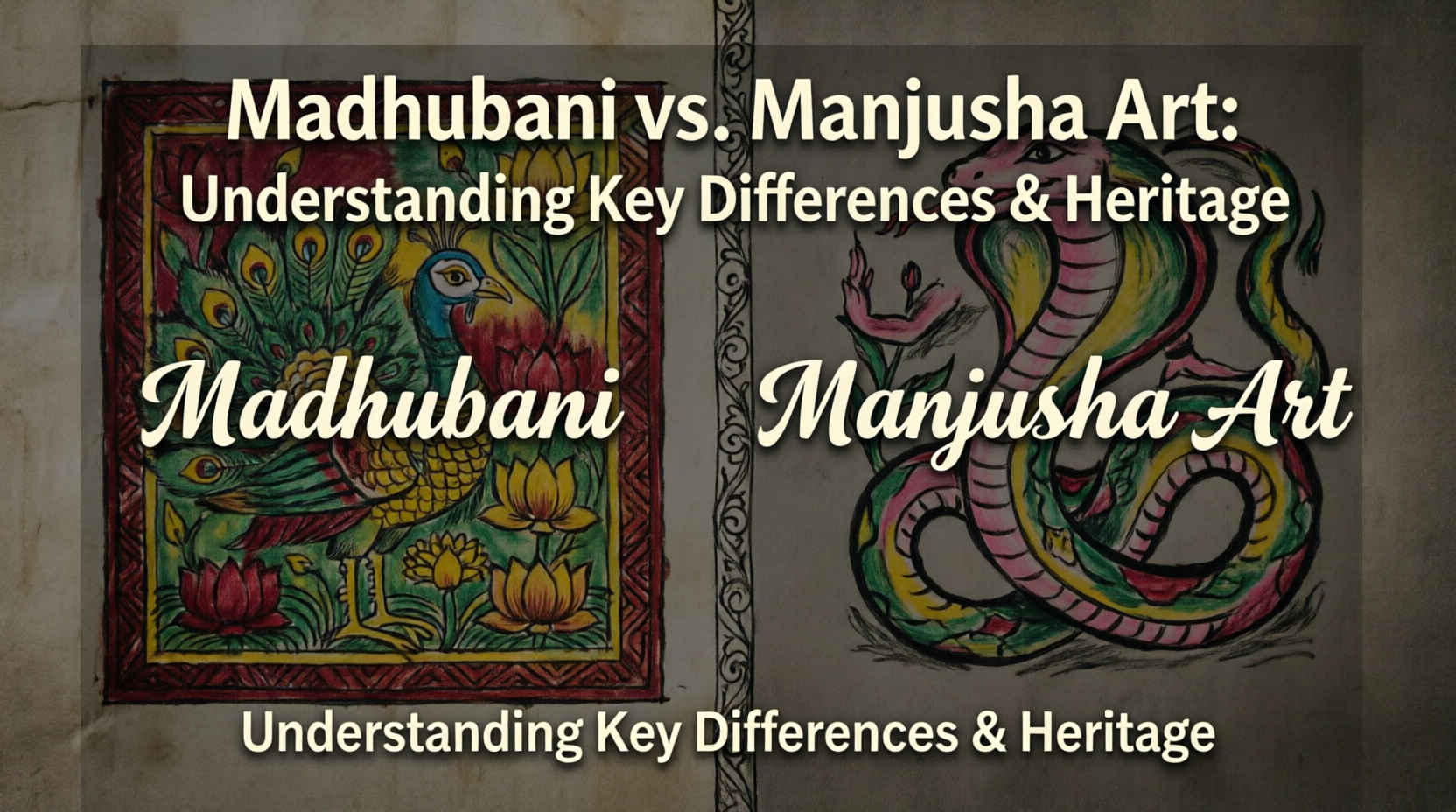
Madhubani vs. Manjusha Art: Understanding Key Differences & Heritage
India is home to many beautiful folk art traditions that preserve the stories, beliefs, and cultural identities of its communities. Among the most fascinating are Madhubani painting from the Mithila region and Manjusha art from the Ang region of Bihar. Although both are celebrated forms of traditional Indian painting, they have distinct origins, visual styles, color palettes, and storytelling traditions.
Understanding the differences between Madhubani and Manjusha art helps us appreciate Bihar’s artistic diversity and the cultural heritage preserved by generations of traditional artists.
1. What Is Madhubani Art?
Madhubani art, also known as Mithila painting, originated in the Mithila region of Bihar and adjoining areas of Nepal. Traditionally practiced by women, this art form developed as a way to decorate walls and floors during festivals, weddings, and religious ceremonies.
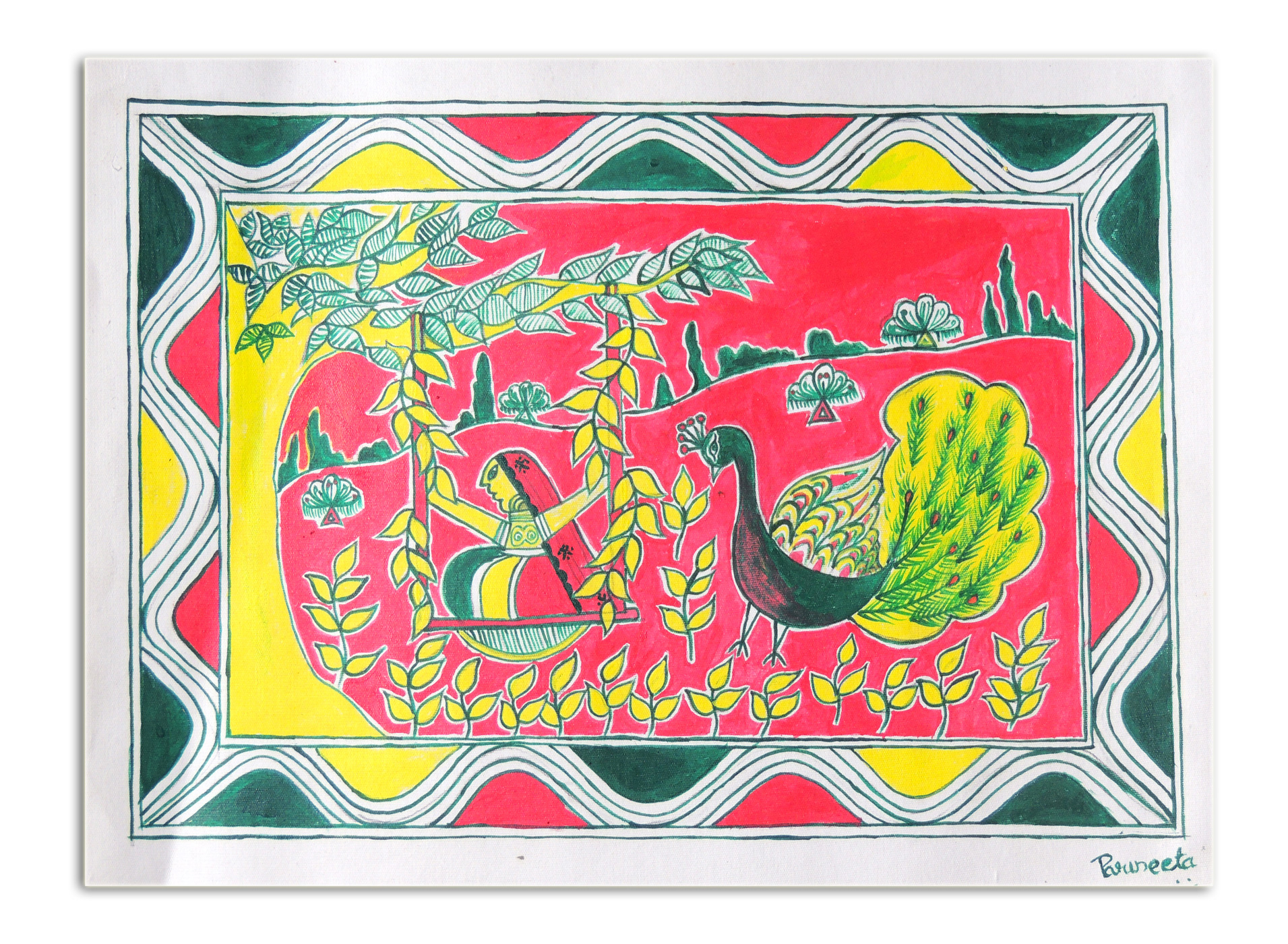
Madhubani paintings are recognized for their intricate patterns, detailed linework, decorative borders, and vibrant colors. Artists frequently depict Hindu deities, scenes from the Ramayana, nature, fish, peacocks, flowers, the sun, and other symbols associated with prosperity and everyday life.
Different Madhubani styles include Bharni, Kachni, Tantrik, Godna, and Kohbar. Depending on the style, artists may use bold color fills, fine parallel lines, geometric patterns, and elaborate decorative details.
2. What Is Manjusha Art?
Manjusha art is a traditional folk art of the Ang region of Bihar, especially associated with Bhagalpur and Champanagar. Its most distinctive feature is its connection with the Bihula–Bishahari story, a regional narrative involving the snake goddess Manasa, also known as Bishahari, and the devotion and journey of Bihula.
Historically associated with ceremonial Manjusha structures used in the Bihula–Bishahari tradition, this art communicates stories through recognizable figures, symbolic motifs, and sequential visual scenes.
Traditional Manjusha paintings are particularly recognizable for their characteristic three-color palette of yellow, pink or red, and green, with black outlines and a white background. Green lines and decorative borders play an important role in its visual identity.
Common motifs include snakes, lotuses, fish, turtles, birds, the sun, the moon, and other symbolic elements. Human figures often have distinctive angular or X-shaped body postures, making Manjusha art visually different from other folk painting traditions.
3. Madhubani vs. Manjusha Art: Key Differences
Feature
Madhubani Art
Manjusha Art
Origin region
Mithila region of Bihar and adjoining Nepal
Ang region of Bihar, particularly Bhagalpur and Champanagar
Historical association
Household wall paintings, rituals, weddings, and religious celebrations
Traditional ceremonial art associated with the Bihula–Bishahari story
Primary themes
Ramayana, Hindu deities, nature, weddings, and daily life
Bihula–Bishahari folklore, Manasa Devi, snakes, and symbolic storytelling
Color palette
Varies by style and may include many colors, black, and natural pigments
Traditional yellow, pink or red, and green, with black outlines and white background
Linework
Intricate patterns, fine lines, dense detailing, and decorative fills
Distinctive green linework, strong outlines, and recognizable symbolic figures
Borders
Decorative borders are common, but their design varies
Distinctive borders are an important traditional feature
Character style
Varies across styles, subjects, and artists
Often features angular figures with distinctive X-shaped postures
Regional identity
Mithila’s cultural and artistic heritage
Angika heritage and Bhagalpur’s folk storytelling tradition
4. Differences in Color and Visual Style
Madhubani: Detailed Patterns and Diverse Colors
Madhubani painting is known for its decorative complexity. Depending on the regional style, artists may fill the entire composition with intricate lines, floral patterns, geometric shapes, and bright colors. Some styles emphasize bold color, while others use delicate linework and more restrained palettes.
Fish may represent prosperity and fertility, while peacocks, lotus flowers, and religious figures appear frequently in different compositions. The meaning of a motif depends on the particular painting and cultural context.
Manjusha: Three Colors and Storytelling Borders
Traditional Manjusha art is distinguished by its limited palette of yellow, pink or red, and green, supported by black outlines and a white background. Its borders are more than decoration: they help establish the characteristic appearance of the composition.
Traditional border patterns may include Lehariya or snake-like waves, Belpatr-inspired designs, triangular patterns, and snake motifs. Together with symbolic figures and repeated motifs, these features make Manjusha art recognizable even when the painting tells a complex story.
5. Storytelling: Ramayana and Bihula–Bishahari
Storytelling is an important part of both traditions, but their best-known narrative associations differ.
Madhubani art and the Ramayana: Madhubani artists frequently depict episodes involving Rama, Sita, and other religious figures. Paintings may illustrate marriage ceremonies, divine events, festivals, and stories from Hindu mythology.
Manjusha art and Bihula–Bishahari: Manjusha art is strongly associated with the regional folklore of Bihula, Bala, and Bishahari or Manasa Devi. The narrative of Bihula’s journey and devotion is represented through figures, symbols, and sequential scenes. This connection makes Manjusha an important example of narrative folk art rooted in Angika cultural memory.
Both traditions demonstrate how painting can preserve cultural knowledge and communicate stories across generations, even to audiences who may not read written texts.
6. Explore Traditional Folk Art Paintings
Traditional paintings can bring regional heritage into homes, offices, libraries, and cultural spaces. The following examples offer ways to explore Manjusha and Madhubani-inspired artwork.
Product 1: Anukirti Manjusha Art Canvas Jhanp & Vishahri Painting
This Manjusha-inspired canvas painting features Jhanp and Vishahri imagery associated with the folk tradition of Bhagalpur. It may appeal to collectors and anyone interested in the visual storytelling heritage of Ang Pradesh.
Product 2: Paper Mansa Devi Painting – Manjusha Art Products Frame Canvas
Interested in the goddess-centered imagery of Manjusha art? This framed canvas option features Mansa Devi, a figure closely associated with the Bihula–Bishahari folklore tradition. It can be considered for a folk-art collection or a culturally themed interior.
Product 3: AAKARSHAK Handmade Madhubani Ram Sita Vivah Art
For those who appreciate the Mithila tradition, this handmade Madhubani-style Ram Sita Vivah artwork represents a well-known religious and cultural theme. Its framed presentation may suit a traditional art display, a festive setting, or a heritage-inspired gift.
Product availability, dimensions, materials, prices, and other details may change. Please check the current Amazon listing before purchasing.
7. Why Preserving Bihar’s Folk Art Matters
Madhubani and Manjusha art are not simply decorative painting styles. They represent different regional histories, artistic knowledge, religious traditions, and ways of communicating stories.
Preserving these traditions can help sustain artisan livelihoods, encourage younger generations to learn traditional techniques, and introduce regional Indian heritage to new audiences. Purchasing authentic artisan-made work, learning about its origins, and crediting artists where possible are meaningful ways to support traditional crafts.
When buying a painting, look for information about its artist, origin, materials, and technique. A product described as inspired by a folk-art tradition may be a contemporary interpretation rather than a traditionally produced artwork, so read the seller’s description carefully.
Conclusion
Madhubani and Manjusha art share a place in Bihar’s rich folk-art heritage, but each has its own identity. Madhubani is associated with the Mithila region, intricate patterns, varied styles, and themes that include the Ramayana. Manjusha belongs to the Ang region, especially Bhagalpur, and is distinguished by its traditional three-color palette, characteristic borders, symbolic figures, and the Bihula–Bishahari narrative.
Learning about these differences helps us recognize the diversity of Indian traditional painting and appreciate the communities that continue to preserve it. Whether you prefer the detailed patterns of Madhubani or the distinctive storytelling style of Manjusha, both traditions offer a meaningful connection to Bihar’s cultural history.
Frequently Asked Questions
Is Manjusha art the same as Madhubani art?
No. Both are folk-art traditions associated with Bihar, but they come from different regions and have distinct visual styles, color palettes, and cultural associations.
Where did Madhubani art originate?
Madhubani art originated in the Mithila region of Bihar and adjoining areas of Nepal.
Where is Manjusha art from?
Manjusha art is associated with the Ang region of Bihar, particularly Bhagalpur and Champanagar.
What are the traditional colors of Manjusha art?
Its characteristic traditional palette uses yellow, pink or red, and green, with black outlines and a white background.
Which stories are associated with these art forms?
Madhubani paintings often portray religious themes, including the Ramayana. Manjusha art is closely associated with the Bihula–Bishahari folklore tradition.
Affiliate Disclosure
This article contains affiliate links. If you purchase a product through these links, EthnicAlive may earn a commission at no additional cost to you. Product links are provided for readers who wish to explore these examples of traditional Indian folk art.