Elegance Woven in Threads: Guide to Indian Handloom Sarees for Weddings & Festivals
Indian handloom sarees represent centuries of artistic inheritance, regional craft, and timeless grace. Far beyond simple garments, these woven textiles are living expressions of India’s diverse cultural fabric. Across every state, weaver communities have preserved intricate techniques passed down through generations, producing drapes that grace major life rituals, religious ceremonies, and grand celebrations. Whether preparing for traditional #IndianWeddings or vibrant #FestiveWear occasions like Diwali and Durga Puja, choosing handloom sarees brings an aura of classic sophistication and authentic heritage to your wardrobe.
In this comprehensive #SareeGuide, we explore the distinct beauty of regional handloom weaves—from the regal splendor of Banarasi and Kanjivaram silks to the symbolic elegance of Bengali red-and-white drapes. We will also examine how to select, style, and care for these heirloom garments to ensure they remain treasured pieces for years to come.
The Heritage and Artistry of Traditional Handloom Sarees
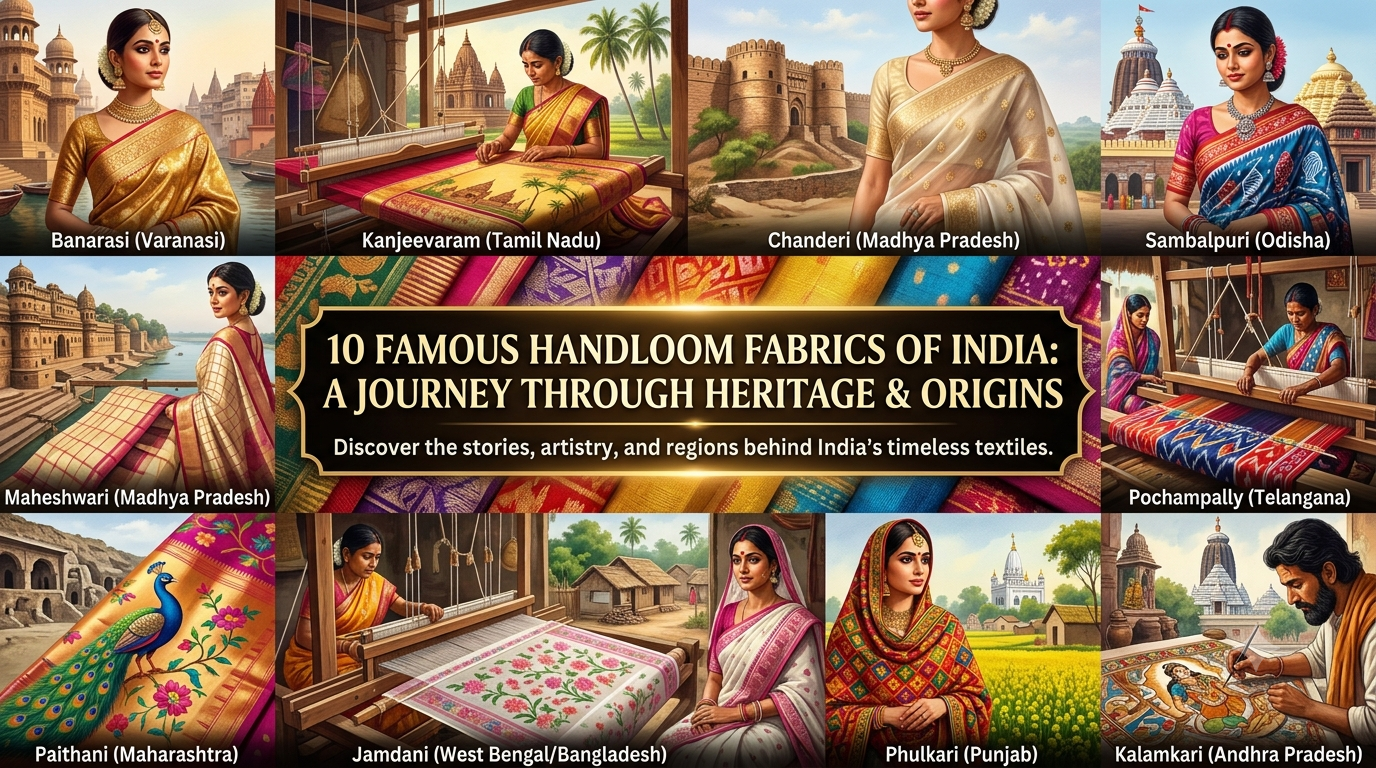
The story of Indian #HandloomSarees is deeply intertwined with local geography, indigenous raw materials, and regional aesthetics. Historically, handloom weaving flourished around cultural centers and temple towns, where artisans developed signature motifs inspired by nature, architecture, and spiritual mythology.
Kanjivaram Silk: Originating from Kanchipuram in Tamil Nadu, this weave is famed for its heavy mulberry silk, rich contrast borders, and motifs drawn from ancient temple carvings such as peacocks, floral vines, and geometric checks.
Banarasi Silk: Hailing from Varanasi, Uttar Pradesh, #BanarasiSilk is celebrated for its opulent metallic zari work, brocades, and complex floral patterns (kalga and bel) inspired by Mughal-era artwork.
Regional Textile Clusters: Beyond these iconic names, regional weaving hubs across West Bengal, Bihar, Maharashtra, and Gujarat produce textiles like Bhagalpuri silks, Paithani, and Patola, each carrying regional identity and specialized jacquard or tie-dye traditions.
Choosing handloom textiles supports artisan livelihoods and preserves irreplaceable weaving techniques. The slight irregularities in handwoven threads are not flaws; rather, they serve as unique signatures of human craftsmanship that set authentic handlooms apart from mass-produced synthetic alternatives.
Selecting the Ideal Saree for Weddings and Festive Occasions
Selecting the right saree requires balancing the nature of the celebration with comfort and drape aesthetics. For grand wedding receptions and bridal ceremonies, heavy silk weaves featuring rich zari borders and detailed woven butti work create a majestic presence. Intimate festive gatherings, morning rituals, or community celebrations often call for lightweight soft silk, silk blends, or regional weaves that offer ease of movement while maintaining cultural dignity.
When curating your #EthnicFashion collection, consider how motif layout, border contrast, and color palette reflect the mood of the event. Rich crimson, royal blue, emerald green, and classic gold remain timeless choices for evening galas, while pastel hues, tissue finishes, and classic red-and-white combinations excel during daytime rituals.
Featured Saree Selections for Celebrations
To help you explore diverse regional styles and fabric options, here is a detailed look at selected sarees suitable for various festive and wedding functions.
This drape merges aesthetic elements inspired by both South Indian Kanjivaram and North Indian Banarasi design traditions. Crafted with soft silk material, it features fine woven zari butti motifs distributed across the body of the saree. The design is framed by a heavy traditional border that adds weight and structure to the overall silhouette.
Suitable for bridal receptions, wedding ceremonies, and high-profile evening celebrations, this saree provides a balance between rich visual texture and wearable soft silk fabric. It includes matching blouse material to allow customized tailoring according to your preferred neckline and sleeve design.
The MANOHARI Banarasi saree is constructed using a silk blend fabric and traditional jacquard weaving techniques. It showcases a rich zari border designed with intricate repeating patterns that highlight the craftsmanship of Banarasi styling. The pallu is detailed with elegant tassel finishings, adding a touch of traditional flair to the drape.
Designed for festive functions, family gatherings, and wedding rituals, this ethnic saree offers a structured drape through its jacquard weave. It comes complete with an unstitched blouse piece, giving you flexibility in styling the final ensemble for ethnic events.
For individuals seeking a versatile drape suitable for varied settings, the Shiv Textiles silk saree offers a subtle design approach. Fabricated for multi-purpose use, this saree spans ethnic requirements from formal office gatherings to light festive celebrations and daytime events.
Its lightweight silk structure provides comfortable wear over extended hours without sacrificing traditional appeal. This piece serves as a reliable option for those who prefer refined, understated elegance during seasonal festivals and cultural gatherings.
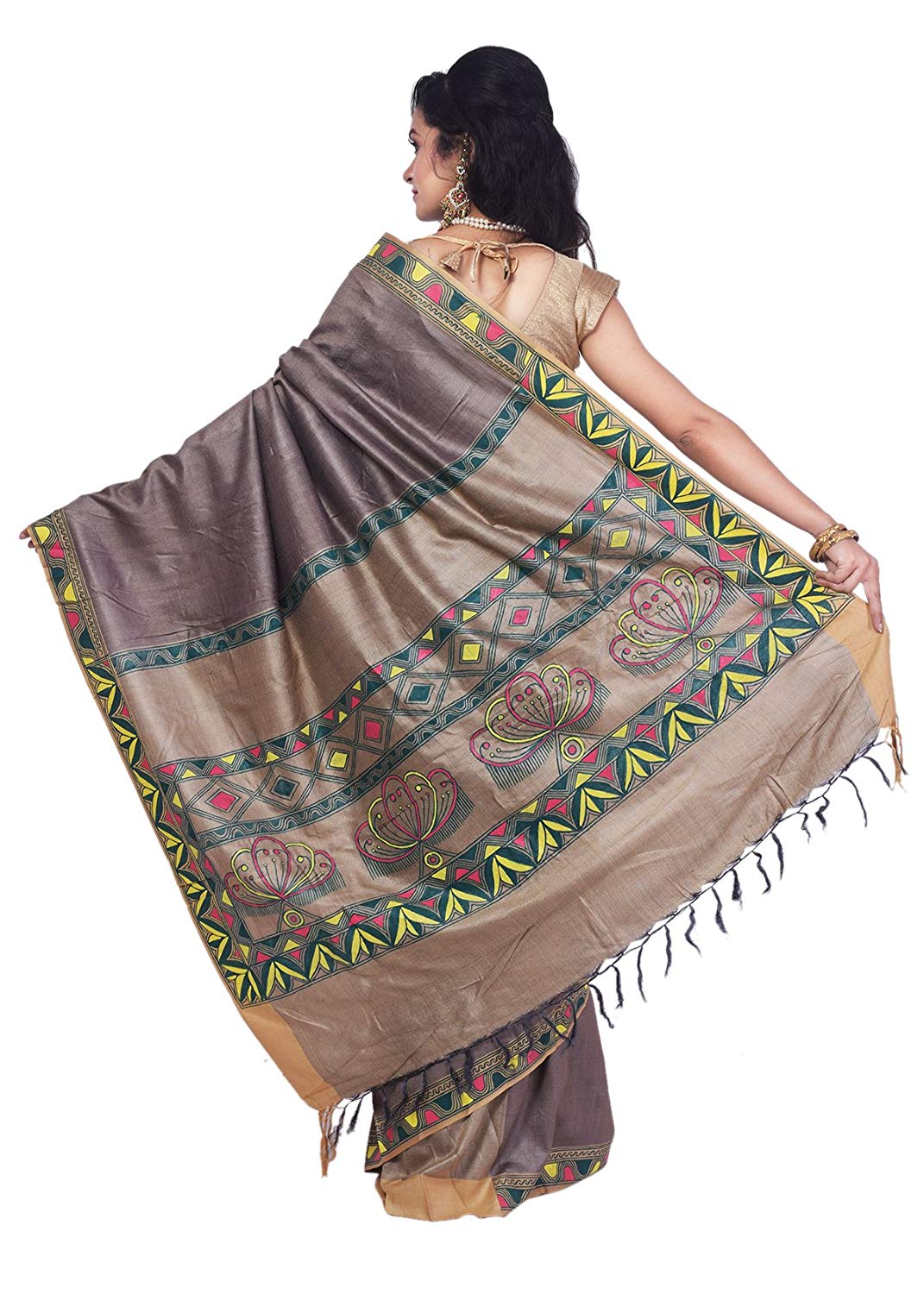
Bhagalpuri Women Durga Puja Saree | Red & White Border Bengali Style
Embodying regional cultural symbolism, this Bhagalpuri saree highlights the iconic red-and-white border combination deeply connected with Bengali traditions and Durga Puja festivities. The contrasting red border set against a serene white or off-white base holds high ceremonial value during sacred rituals and festive gatherings.
Reflecting traditional Bengali drape aesthetics, the saree captures authentic Eastern Indian heritage. The texture and light body of Bhagalpuri ethnic wear make it comfortable for devotional ceremonies, cultural performances, and traditional festival mornings.
Styling and Draping Tips for Traditional Handloom Sarees
Elevating a handloom saree involves selecting complemental jewelry, tailored blouses, and draping techniques that highlight the weave’s features.
1. Complementary Jewelry Choices
Banarasi Sarees: Pair with Kundan, Polki, or classic antique gold jewelry to match the intricate floral zari work.
Kanjivaram Sarees: Traditional temple jewelry crafted in silver dipped in gold complements heavy borders and woven buttis.
Bengali Red-and-White Sarees: Pair with traditional gold filigree, terracotta ornaments, or classic red coral and white conch shell bangles (Shakha Pola).
2. Tailoring the Blouse
Because many classic sarees feature heavy borders and motifs, blouse designs can be tailored to adjust the formal intensity of the outfit:
High-neck or elbow-length sleeve designs work exceptionally well with heavy zari borders.
Simple contrast blouses highlight intricate jacquard and butti details on the main body of the saree.
Utilize the unstitched blouse piece provided with the saree to maintain weave continuity along the sleeve margins.
3. Draping Style Variations
While the standard Nivi drape is universally flattering, experimenting with regional draping styles enhances the cultural theme of your attire. The Bengali Athpouriya drape, with its pallu draped over both shoulders, is perfect for red-and-white border sarees during puja ceremonies. Seedha pallu drapes display heavy front brocade work beautifully during family receptions.
Care and Maintenance Guidelines for Preserve Fine Textiles
Traditional handloom and silk sarees are heirloom items that demand attentive care to preserve their thread integrity, zari luster, and color vibrancy over time.
Storage: Store fine silk sarees wrapped individually in breathable cotton or muslin bags. Avoid plastic covers, which can trap moisture and cause zari oxidation.
Folding: Periodically unfold and refold your silk sarees to prevent permanent creases along stress lines, which can weaken fine threads over prolonged storage.
Cleaning: Always opt for professional dry cleaning for silks and heavy zari garments. Avoid machine washing or harsh chemical detergents.
Ironing: Iron on a low silk setting with a protective cotton cloth placed over the saree to shield delicate zari threads from direct heat.
Frequently Asked Questions (FAQ)
1. What is the difference between a Banarasi and a Kanjivaram saree?
Banarasi sarees hail from Uttar Pradesh and are known for Mughal-inspired floral brocades, woven zari motifs, and supple drape textures. Kanjivaram sarees originate from Tamil Nadu and feature structured mulberry silk weaves with contrast borders inspired by South Indian temple architecture.
2. Why is the red and white combination auspicious for Bengali festivals?
In Eastern Indian culture, white symbolizes purity and peace, while red signifies energy, strength, and marital happiness. The red and white saree is traditional attire during Durga Puja, Sindoor Khela, and religious ceremonies.
3. How do I maintain silk blend handloom sarees at home?
Silk blend sarees offer moderate durability, but professional dry cleaning is still recommended to preserve zari work and jacquard texture. Store them in a dry place wrapped in cotton cloth away from direct sunlight.
4. What type of blouse material works best with heavy handloom drapes?
Most premium sarees include complementary unstitched blouse material featuring matching woven borders. Using this material ensures textile harmony, though contrasting silk or raw silk blouses are also popular choices.
Conclusion
Traditional Indian handloom sarees remain unmatched in their cultural richness, regional craftsmanship, and visual dignity. Whether selecting an opulent Banarasi soft silk weave for a wedding reception or a classic red-and-white Bhagalpuri drape for festive ceremonies, these garments celebrate the living arts of Indian weavers. By choosing authentic ethnic drapes, thoughtfully styling them with traditional jewelry, and observing proper textile care, you preserve both elegant fashion traditions and local artisan heritages.
Disclosure: EthnicAlive may earn a small commission from qualifying purchases made through affiliate links included on this page.