Traditional Wedding Customs of Bihar: Where Folk Songs, Sacred Rituals and Family Traditions Come Alive
A wedding in Bihar is not just a marriage ceremony. It is a celebration that begins in the courtyard, travels through the lanes of the village, echoes in folk songs, and brings together generations of a family.
In Bihar, a traditional wedding is known by its own unique rhythm. The sound of the dholak, women singing mangal geet, the fragrance of haldi, the colourful wedding mandap, and the emotional moments of bidaai create memories that remain with a family for years.
Whether it is a Maithil wedding in Darbhanga, a Bhojpuri wedding in Buxar, a Magahi celebration in Gaya, or an Angika wedding in Bhagalpur, every region has its own customs, expressions and cultural identity.
Some traditions may have different names or variations from one community to another, but the emotions behind them remain beautifully connected: family, blessings, prosperity and togetherness.
Let’s explore the traditional wedding customs of Bihar, one ritual at a time.
1. Lagan and Tilak: The Beginning of a New Relationship
Before the wedding celebrations begin, families traditionally consult the Panchang and match horoscopes to determine an auspicious wedding date, known as Lagan or Shubh Muhurat.
One of the important pre-wedding ceremonies is Tilak. The bride’s family visits the groom’s home with gifts, clothes, sweets, fruits and other customary offerings. The groom is welcomed and blessed, marking the formal acceptance of the marriage alliance.
In many Bihari families, this occasion is accompanied by traditional hospitality, family gatherings and mangal geet.
It is not simply an exchange of gifts; it is the coming together of two families.
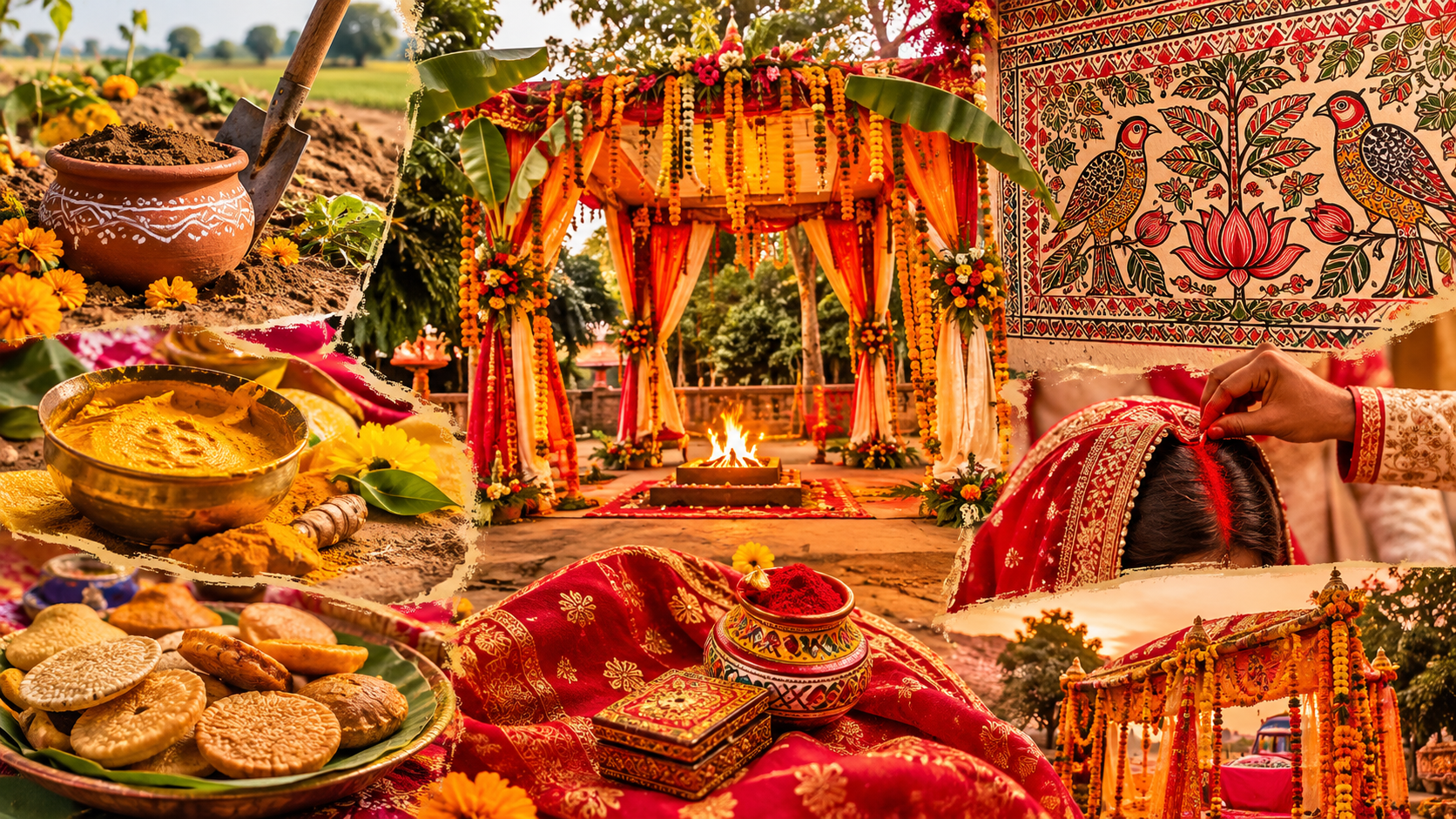
2. Haldi: The Golden Glow of Tradition
The Haldi ceremony is among the most joyful pre-wedding occasions.
A traditional paste made with turmeric, mustard oil and sometimes curd is applied to the bride and groom by family members. Women gather around, sing playful wedding songs and bless the couple.
The atmosphere is full of laughter, teasing and affectionate moments.
In village households, this ritual often takes place in the open courtyard, where relatives sit together and enjoy the celebration.
The yellow colour of haldi symbolises auspiciousness, purity and a bright beginning.
3. Matkor: A Beautiful Connection with Mother Earth
One of the fascinating folk traditions found in several parts of Bihar is Matkor or Mati-kor.
In this ritual, women from the bride’s family gather and go to a nearby field, pond or designated place to collect sacred earth. They sing traditional songs while bringing the soil back for the wedding preparations, particularly for the mandap.
The soil represents Mother Earth, fertility and the agricultural roots of rural life.
Imagine a group of women walking together, carrying small baskets, singing songs and laughing along the way. This is the beauty of Matkor.
It reminds us that traditional Bihari weddings are deeply connected to nature and the rhythms of village life.
4. Mandap and Kohbar: The Sacred Wedding Space
The Mandap is the heart of a traditional Hindu wedding.
Decorated with banana leaves, flowers, mango leaves and other auspicious elements, it becomes the sacred space where the marriage rituals take place.
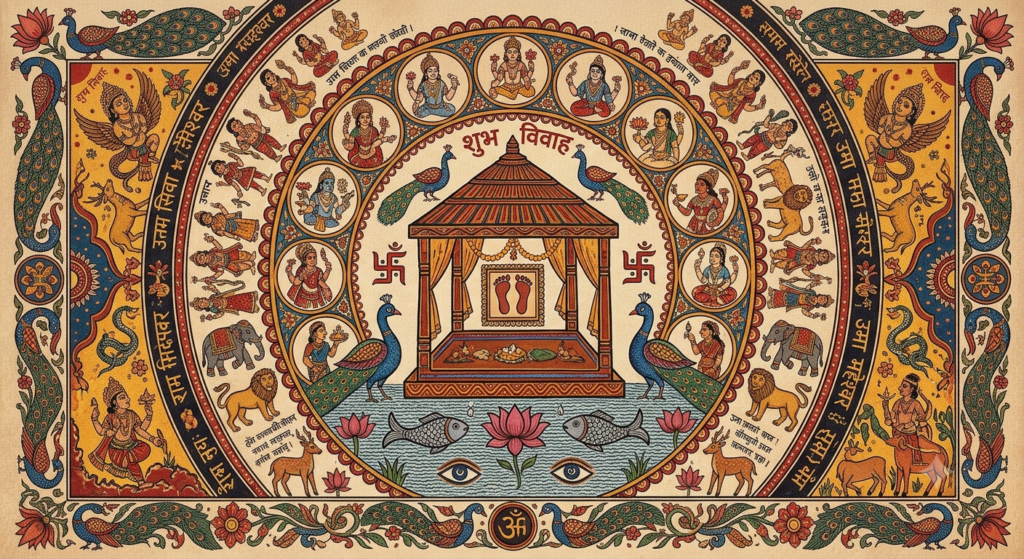
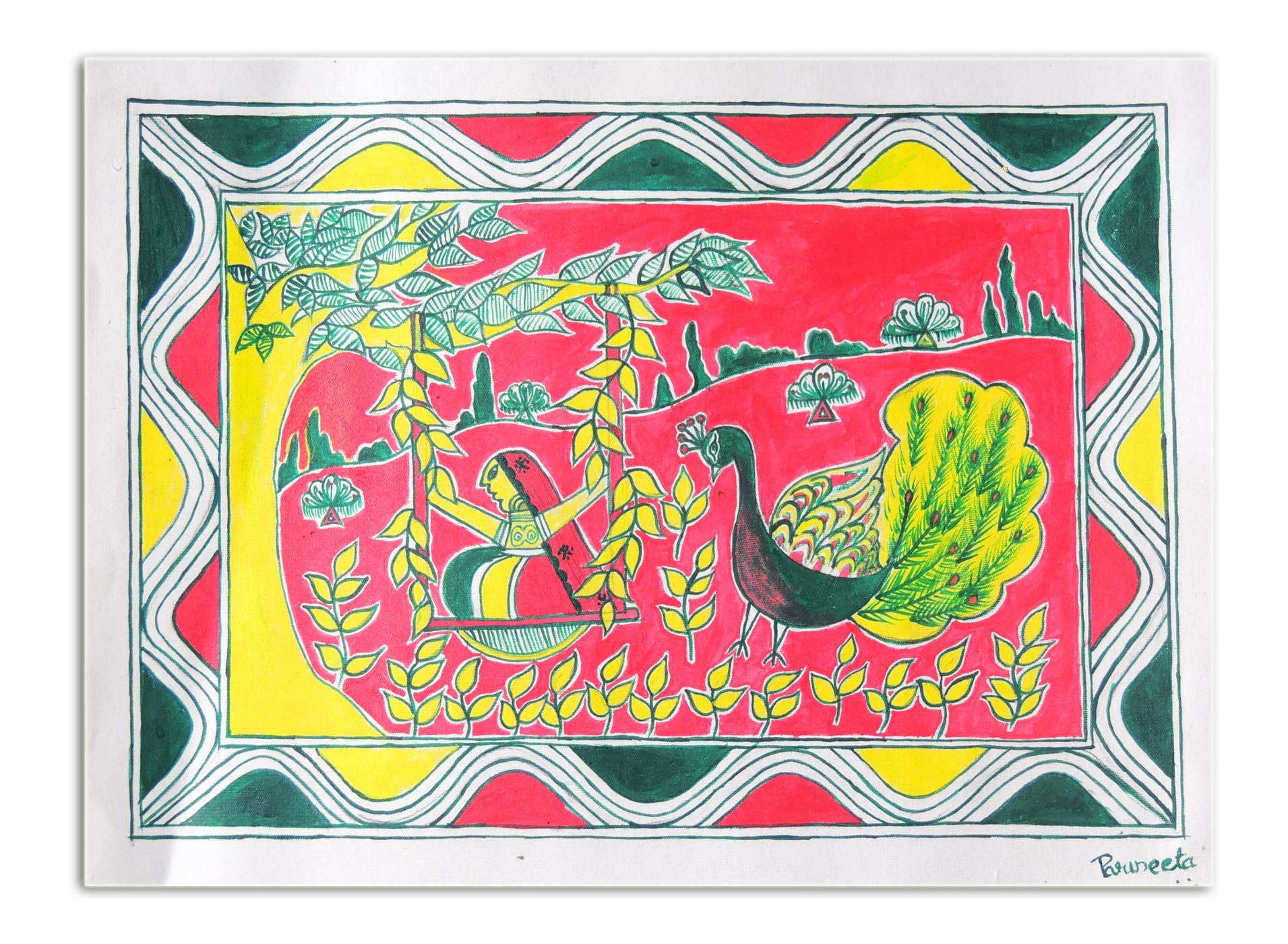
In parts of Mithila, the wedding room and its traditional decorations are associated with Kohbar. Beautiful folk paintings, symbolic motifs, lotus flowers, bamboo, birds and other fertility symbols are traditionally used in Kohbar art.
The imagery is not merely decorative. It carries cultural meanings associated with prosperity, love, fertility and a happy married life.
The artistic traditions of Bihar, especially Mithila painting, make this aspect of wedding culture particularly fascinating.
5. Wedding Folk Songs: The Soul of a Bihari Marriage
No traditional Bihari wedding feels complete without folk songs.
Long before recorded music and DJ systems became popular, women of the household were the natural singers of wedding celebrations.
They sang while preparing the mandap, applying haldi, welcoming the groom and blessing the bride.
Some traditional wedding-song forms and expressions include:
Mangal Geet: Auspicious songs sung during wedding rituals.
Sohar: Traditional songs associated primarily with childbirth and family celebrations, sometimes included in broader festive singing traditions.
Samdaun / Samadavan: Emotional folk songs, especially associated with the bride’s departure in Mithila.
Vivah Geet: Songs narrating wedding customs, family relationships and blessings.
Gari Geet: Playful and humorous songs exchanged between the bride’s and groom’s families.
In Bhojpuri-speaking households, wedding songs often carry a lively, teasing character. In Mithila, songs can be deeply emotional and poetic. In the Ang region, local Angika expressions give wedding songs their own identity.
A traditional wedding song is not just entertainment. It is an oral record of family life, relationships and local culture.
6. Barat and Dwar Puja: Welcoming the Groom
The arrival of the Barat is one of the most energetic moments of a Bihari wedding.
The groom arrives with relatives and friends, traditionally accompanied by music, dancing and celebrations.
At the entrance, the bride’s family welcomes the groom through Dwar Puja. In many communities, the bride’s mother or other senior women perform an Aarti and bless the groom.
There may also be traditional welcoming customs involving rice, flowers, sweets and auspicious symbols.
The atmosphere is filled with excitement as the two families meet and the wedding celebrations move towards the sacred ceremonies.
7. Kanyadaan, Pheras and Sindoor Daan
The main marriage ceremony takes place under the mandap in the presence of family members and a priest.
Depending on the community and regional customs, the rituals may include:
Kanyadaan: A deeply emotional ritual in which the bride’s parents symbolically entrust their daughter to the new marital relationship.
Gathbandhan: The bride and groom’s garments are tied together, symbolising their union.
Pheras and Saptapadi: The couple performs sacred steps or circumambulations around the holy fire, taking marital vows according to the traditions followed by their family.
Sindoor Daan: One of the most significant moments in many Hindu Bihari weddings. The groom applies vermilion to the bride’s hair parting, symbolising her married status.
The moment is often accompanied by blessings, traditional songs and emotional expressions from the women present.
8. Kohbar Rituals and Traditional Wedding Symbolism
In the Mithila region, the Kohbar tradition deserves special attention.
The Kohbar is traditionally associated with the newlywed couple’s room and its auspicious artwork. The paintings often feature bamboo, lotus, fish, birds, turtles and other symbolic motifs.
These elements represent continuity, prosperity, fertility and the blessings of nature.
Mithila’s wedding art is a beautiful example of how folk painting becomes part of everyday cultural life rather than remaining confined to galleries.
Similar symbolic connections between nature, art and marriage can also be seen in the wider folk traditions of Bihar.
9. Chauthari, Chumawan and Griha Pravesh
The celebrations do not end with the wedding ceremony.
When the bride arrives at her new home, she is welcomed through traditional Griha Pravesh customs.
In many families, the entrance is decorated with rice, flowers and auspicious symbols. The bride may be asked to enter by gently touching or stepping into a vessel of rice, depending on local custom.
Chumawan is another traditional blessing ritual found in several communities. Senior women bless the newly married couple with rice, flowers, turmeric and other auspicious materials.
Some families also observe Chauthari, a post-wedding ritual whose timing and customs vary across regions and communities.
These ceremonies express the family’s wish for a happy, peaceful and prosperous married life.
10. Bidaai: The Most Emotional Moment
If there is one moment in a traditional Bihari wedding that touches everyone’s heart, it is Bidaai.
As the bride leaves her parental home, emotions take over. Parents, brothers, sisters and relatives struggle to hold back their tears.
In Mithila, Samdaun songs express the sadness of separation with extraordinary sensitivity. Bhojpuri and Magahi folk traditions also preserve deeply emotional songs associated with a daughter’s departure.
The familiar courtyard, the childhood home and the people she has grown up with are suddenly behind her.
Bidaai is not just a ritual. It is one of the most powerful expressions of family bonds in Bihari culture.
11. The Traditional Bihari Wedding Feast
Food is an essential part of every Bihari celebration.
A traditional wedding feast reflects local taste, seasonal ingredients and family customs.
Depending on the region and the family’s preferences, the menu may include:
Litti Chokha
Dal Puri and seasonal vegetable preparations
Kadhi-Bari
Chana Ghugni
Kachori and Sabzi
Dahi Chura
Khaja
Thekua
Anarsa
Malpua
Balushahi
In Mithila, the influence of Maithil cuisine can be seen in traditional festive preparations. In the Ang region, local delicacies and sweets add another distinctive flavour to wedding celebrations.
The food is often served with warmth and generosity. Guests are not simply invited to eat; they are welcomed as part of the family.
12. Regional Diversity: Four Cultural Flavours of Bihari Weddings
Bihar’s wedding traditions are not identical everywhere. Its linguistic and cultural regions give each celebration a distinct character.
Mithila – Darbhanga, Madhubani and Surrounding Areas
Maithili wedding songs, Kohbar art, Samdaun and distinctive marriage rituals form an important part of the region’s cultural identity.
Bhojpur – Buxar, Ara and Surrounding Areas
Bhojpuri Vivah Geet, lively Gari songs, family gatherings and energetic Barat celebrations are characteristic features of many traditional weddings.
Magadh – Gaya, Jehanabad and Surrounding Areas
Magahi folk expressions, traditional family customs and local wedding songs preserve the cultural identity of this historic region.
Ang Pradesh – Bhagalpur, Banka and Surrounding Areas
Angika language, local folk songs, community traditions and the heritage of the ancient Ang region give weddings a distinctive cultural flavour.
Each region tells its own story, yet all celebrate the same beautiful idea: two families becoming one.
13. Modern Weddings and the Changing Face of Tradition
Today’s Bihari weddings have changed considerably.
Destination weddings, professional photographers, designer outfits, elaborate stage decorations and DJ nights have become increasingly common.
Yet many families continue to preserve traditional customs.
Matkor is still performed in some households. Women continue to sing Mangal Geet. Sindoor Daan remains an emotionally significant ritual, and traditional dishes continue to find a place on wedding menus.
There is also a growing appreciation for regional folk art, handloom clothing, traditional jewellery and locally inspired wedding decorations.
Perhaps the best way forward is not to reject modern celebrations, but to carry our cultural roots into them.
A beautifully decorated modern mandap can still have traditional motifs. A wedding playlist can include folk songs. A designer outfit can still celebrate Bhagalpuri silk or Mithila-inspired craftsmanship.
Tradition does not have to remain in the past. It can become part of the future.
Conclusion: A Wedding Is Also a Celebration of Bihar’s Living Heritage
Traditional wedding customs of Bihar are much more than a collection of ceremonies.
They represent the warmth of the family courtyard, the wisdom of grandmothers, the poetry of folk songs, the symbolism of folk art and the hospitality that defines Bihari life.
From Matkor to Sindoor Daan, from Kohbar to Bidaai, every custom carries a memory and a meaning.
These traditions deserve to be documented, celebrated and passed on to the next generation.
Because a Bihari wedding is not just about two people beginning a new journey.
It is about a culture singing, celebrating and blessing that journey together.