
Bhagalpur Silk vs Banarasi Silk: What’s the Difference?
India’s textile heritage is a rich tapestry woven from centuries of regional art, craft, and culture. Among the vast array of traditional textiles, two handloom legends stand out for their distinct beauty, history, and popularity: Bhagalpur Silk and Banarasi Silk. Both occupy a cherished space in every lover of ethnic wear’s collection, yet they offer completely contrasting aesthetic experiences, textures, and cultural narratives.
Whether you are building a timeless handloom wardrobe, searching for heavy bridal silk sarees, or looking for lightweight daily wear, understanding the characteristics of Bihar Silk and Varanasi Weaves is essential. This guide breaks down the core differences between wild Tussar-based Bhagalpuri creations and the opulent Mughal-inspired Banarasi masterworks to help you choose the ideal silk saree with confidence.
The Heritage Behind the Weaves
To truly appreciate these fabrics, one must explore their geographical roots and cultural origins. Each region imparts its distinct environmental and historical influence into the loom.
Bhagalpur Silk: The Earthy Elegance of Bihar
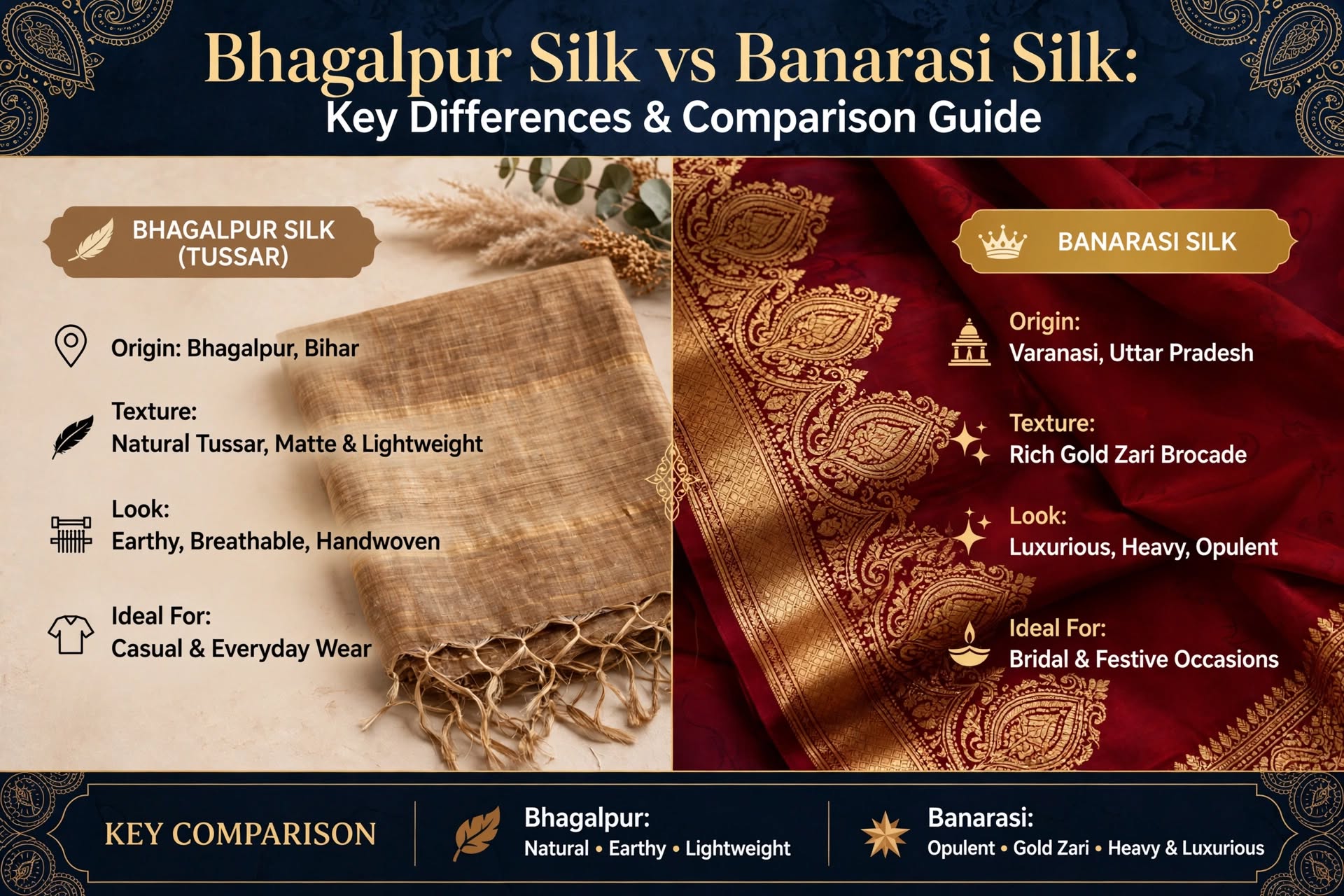
Known as the “Silk City” of Bihar, Bhagalpur has been a renowned weaving hub for over a century. The region is world-famous for producing wild silks, primarily Tussar Silk. Bhagalpur silk weaving is deeply rooted in eco-friendly and traditional artisanal methods. Unlike cultivated silks, wild Tussar is harvested from silkworms living in natural oak and Asan trees. This gives Bhagalpuri silk its characteristic natural, uneven slub texture, matte sheen, and breathable feel. It reflects a grounded, minimalist aesthetic that aligns beautifully with sustainable fashion sensibilities.
Banarasi Silk: Regal Grandeur of Varanasi
Originating from the holy city of Varanasi (Banaras) in Uttar Pradesh, Banarasi silk represents imperial luxury. The art form gained immense prominence during the Mughal period, blending Persian floral motifs with Indian iconography. Crafted traditionally from fine Mulberry Silk, Banarasi sarees are famous for their dense weave, heavy gold or silver metallic threads (zari), floral motifs (Jaal), and intricate brocade patterns. A Banarasi saree is symbolic of celebration, heritage, and grand traditional rites.
Bhagalpur Silk vs Banarasi Silk: A Quick Comparison
| Category | Bhagalpur Silk | Banarasi Silk |
|---|---|---|
| Primary Region | Bhagalpur, Bihar | Varanasi, Uttar Pradesh |
| Silk Fiber Type | Wild Tussar / Katia / Semi-Tussar | Cultivated Mulberry Silk / Satin Silk |
| Texture & Feel | Textured, slubby, semi-matte, lightweight | Smooth, glossy, dense, structured |
| Embellishment | Block prints, subtle contrast borders, minimalist stripes | Intricate Zari work, brocade, floral Jaal, Paisley |
| Weight & Drape | Lightweight, breezy, easy-to-manage drape | Medium to heavy, crisp and regal drape |
| Best Occasions | Office wear, daytime gatherings, festive Puja, casual chic | Weddings, grand receptions, high festivals, bridal trousseau |
Detailed Breakdown of Key Differences
1. Raw Material: Wild Tussar vs. Cultivated Mulberry Silk
The primary difference lies in the nature of the silk yarn used. Bhagalpuri weaving relies heavily on Tussar silk yarn, which is coarse, porous, and naturally golden-brown. This raw silk yarn catches dyes in unique ways, creating subtle variations in shade across the garment.
Conversely, Banarasi weaving traditionally uses high-grade Mulberry silk yarns. Mulberry silk filaments are naturally smoother, longer, and fine. When woven, Mulberry silk creates a uniform, lustrous fabric with high shine, providing a resilient base for heavy metal thread weaving.
2. Texture, Weight, and Drapability
If you prefer lightweight sarees that flow effortlessly during warm weather or long working hours, Bhagalpur silk is an exceptional choice. Its airy texture and organic feel make it manageable for all-day wear.
In contrast, Banarasi silk sarees are substantial and rich. Due to the high thread count and embedded zari brocades, Banarasi weaves carry noticeable structure and weight. They hold sharp pleats easily, offering a majestic silhouette that is visually striking during evening celebrations.
3. Weaving Techniques and Motifs
Design philosophy sharply distinguishes these two regional icons:
- Bhagalpuri Motifs: Emphasizes geometric patterns, contemporary abstract layouts, traditional block prints, and neat contrast borders. The beauty lies in the texture of the weave itself rather than heavy embroidery.
- Banarasi Motifs: Features intricate motifs inspired by nature and Mughal architecture—such as Bel (creepers), Kalka (paisley), Shikargah (hunting scenes), and dense floral net motifs (Jhallar).
Saree Options for Your Wardrobe
Integrating both types into your ethnic wear collection allows you to balance functional, minimalist style with grand, festive elegance.
Bhagalpuri Semi Tussar Silk Saree for Women
For those who love the understated charm of Bihar silk, this handwoven semi Tussar design captures the subtle texture and lightweight grace of traditional Bhagalpuri crafting. It serves as a ideal drape for daytime festivities like Durga Puja or Diwali, as well as formal gatherings.

This saree features a soft texture accompanied by a stylish contrast border and rich pallu design. Paired with its matching blouse piece, it combines comfortable daily wear with classic handloom style.
Vardha Womens Banarasi Satin Silk Saree
When an occasion demands true luxury and heritage grandeur, a Banarasi weave with metallic highlights shines bright. This saree highlights the rich heritage of Varanasi weaves through a gorgeous satin silk base enriched with traditional zari design.

Designed for weddings, receptions, and grand family celebrations, this elegant ethnic saree features rich zari woven detail across the body and pallu. It comes complete with a coordinating blouse piece for a complete festive ensemble.
How to Identify Authentic Silk Weaves
When selecting silk sarees, knowing how to evaluate quality ensures you get an authentic handloom piece:
- Inspecting Bhagalpur Silk: Look for natural texture variations and small slubs in the yarn. Authentic handwoven Tussar displays an organic, non-uniform sheen rather than a glossy plastic-like finish.
- Inspecting Banarasi Silk: Examine the reverse side of the saree. Authentic handloom Banarasi sarees woven with traditional techniques (such as Kadhwa or Phekwa) show floating zari threads or neat floats along the warp and weft on the underside.
Climate Suitability and Care Guide
Climate Suitability
Bhagalpur silk’s breathability makes it suitable for tropical climates, warm summer afternoons, and humid seasonal shifts. Banarasi silk, with its dense weave and metal threads, excels during cooler months, evening functions, and air-conditioned venue events.
Care and Maintenance Tips
- Dry Cleaning: Always opt for professional dry cleaning for both varieties to preserve yarn strength, dyes, and metallic zari threads.
- Storage: Store your silk sarees wrapped individually in soft cotton or muslin cloth bags. Avoid hanging heavy Banarasi sarees on hangers for prolonged periods to prevent yarn stretching along the shoulder line.
- Moisture Protection: Keep stored sarees in a cool, dry closet away from direct sunlight and damp environments. Air them out periodically in a shaded area.
Frequently Asked Questions
Is Bhagalpur silk suitable for daily office wear?
Yes. Due to its lightweight structure, comfortable drape, and neat semi-matte finish, Bhagalpur silk is an excellent choice for formal office wear, regular corporate events, and daily ethnic styling.
Which silk saree is better for weddings, Bhagalpur or Banarasi?
Banarasi silk is generally preferred for grand wedding ceremonies, bridal trousseaus, and formal receptions due to its opulent zari motifs and rich visual appeal. However, Bhagalpur silk is widely favored for pre-wedding functions, daytime Pujas, and casual festive gatherings.
Are Bhagalpuri silks made from wild Tussar silk?
Yes, authentic Bhagalpuri silk is traditionally crafted using Tussar wild silk fibers, renowned for their natural golden shade, unique slub pattern, and textured feel.
How should I fold a heavy zari Banarasi saree?
Fold your Banarasi saree with the rich zari work facing inward to prevent direct rubbing or snagging against other fabrics. Store it inside a clean, breathable cotton saree cover.
Conclusion
Both Bhagalpur Silk and Banarasi Silk represent the extraordinary depth of Indian handloom heritage. Bhagalpur silk offers organic elegance, comfortable wearability, and versatile modern appeal. Meanwhile, Banarasi silk captures timeless royal splendor, perfect for celebrating life’s biggest milestones. Adding both to your ethnic wear collection ensures you have the ideal weave for every season and celebration.
EthnicAlive may earn a commission from qualifying purchases made through links on this page.