How to Care for Silk & Handloom Clothes: Preserve Color & Texture
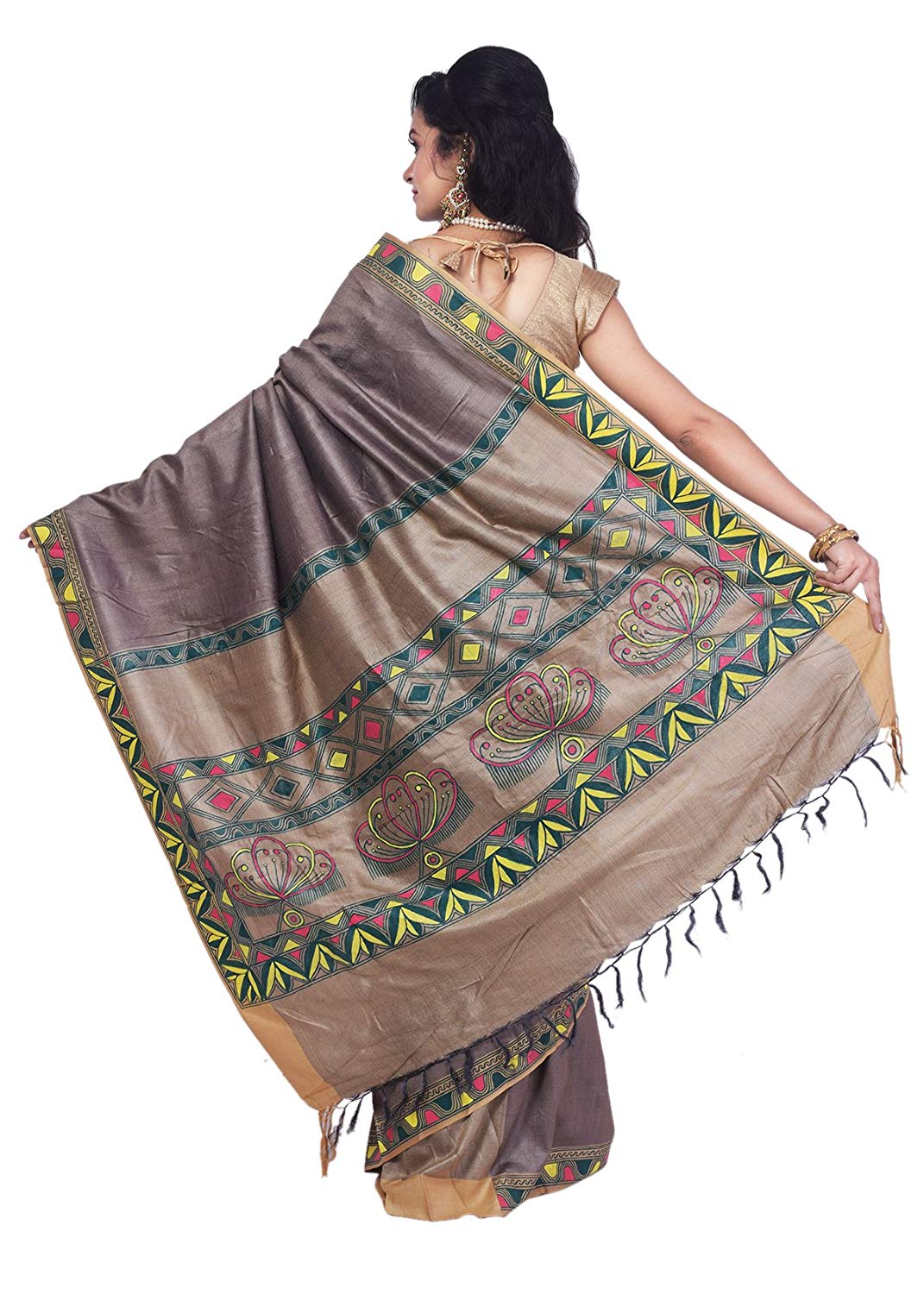
Every handwoven saree, vintage dupattas, or tailored Khadi kurta carries a rich legacy of Indian craftsmanship. From the lustrous sheen of Mulberry and Tussar silk to the breathable charm of Chanderi and hand-spun cotton, traditional garments are far more than mere wardrobe choices—they are living heirlooms. However, the delicate nature of artisanal weaves means they require thoughtful handling. Without proper textile preservation, gorgeous natural dyes can fade, delicate silk fibers can lose their luster, and hand-loomed threads can snap under stress.
While taking handwoven textiles to a professional dry cleaner is a common resort, doing so for every minor wear is neither budget-friendly nor always necessary. With a practical understanding of gentle fabric care, you can safely care for your treasured ethnic wardrobe right at home. In this practical guide, we break down the nuances of handloom clothing, explore essential fabric care tips, and share sustainable ways to wash, dry, store, and preserve your handwoven garments for generations to come.
Understanding Traditional Hand-Woven vs. Mechanized Power-Woven Textiles
To provide effective care, it helps to understand what makes hand-spun and hand-loomed fabrics unique compared to mass-produced powerloom textiles. The difference lies in the tension, weave structure, and fiber vulnerability.
Thread Tension and Structure: Powerlooms operate at high speeds under uniform mechanical tension, creating synthetic or cotton blends with uniform weave structures. Handlooms, by contrast, rely on the rhythmic movement of human hands and feet. This artisan-driven process creates slight variations in thread tension, giving handwoven textiles their organic texture, subtle slubs, and soft feel.
Absorbency and Dye Absorption: Traditional handloom fibers—such as raw silk, tussar silk, and hand-spun cotton—are frequently colored using natural or low-impact dyes. These natural fibers breathe beautifully, but they also absorb moisture and dyes differently than machine-finished fabrics, making them more sensitive to harsh chemical detergents and hot water.
Structural Fragility: Because handwoven yarns are spun with lower twist levels to maximize breathability, rubbing or scrubbing handwoven garments aggressively can disrupt the weave, causing thread displacement or surface pilling.
Recognizing these distinguishing characteristics highlights why powerloom laundering routines are unsuitable for your artisan pieces. Practicing dedicated saree maintenance and handloom preservation helps keep these traditional creations intact.
Fiber Nuances: Raw Silk, Tussar, Chanderi, and Khadi
Not all handloom fabrics react to moisture and pressure in the same manner. Adapting your textile care routine to the specific fiber type ensures the best possible longevity for each piece.
Tussar Silk and Raw Silk
Tussar silk is known for its rich, golden sheen and textured feel, produced by wild silkworms. Raw silk retains a natural gum coating (sericin), giving it a firm texture. Both varieties are highly sensitive to hot water and alkaline soaps, which can strip away their natural luster and cause the fabric to feel stiff or dull.
Mulberry Silk
Mulberry silk is famous for its smooth surface and deep sheen. Found in classic Kanjeevarams, Banarasis, and Paithanis, Mulberry silk requires low-friction washing and gentle pH-balanced cleaning agents to prevent color runs and fiber breakdown.
Chanderi and Maheshwari Fabrics
These lightweight blends combine fine silk threads with high-count cotton. The delicate sheer nature of Chanderi weaves makes them prone to snagging or losing shape if exposed to heavy agitation during washing or excessive heat during ironing.
Khadi and Handwoven Cotton
Khadi care centers on keeping hand-spun cotton soft while preserving rich hand-dyed colors. Natural indigo, madder, and turmeric-dyed cottons often release excess surface dye during initial washes, requiring dedicated color protection strategies.
Golden Rules of Washing Silk and Handloom at Home
Washing silk at home and managing natural handloom textiles does not need to be daunting. Following a few gentle guidelines protects your garments while maintaining their original softness and color vitality.
Always Conduct a Patch Test: Before washing an entire handloom garment, test a small, hidden corner (such as the inner hem of a saree or kurta) with a drop of cold water and clean white cloth to check for dye bleeding.
Use Cool or Room-Temperature Water: Hot or warm water damages delicate protein fibers like silk and causes natural cottons to shrink or shed dyes prematurely. Always choose cool water for handloom cleaning.
Avoid Soaking for Extended Periods: Never leave silk or hand-dyed handloom clothes soaking for more than 5 to 10 minutes. Extended submersion weakens natural protein threads and causes vegetable or acidic dyes to run into adjacent motifs.
Skip Harsh Powders and Bleaches: Standard laundry detergents often contain optical brighteners, bleaching agents, and heavy enzymes that erode silk threads and fade rich vegetable dyes. Use dedicated liquid formulas designed for delicate fibers.
Adopt a Gentle Dip-and-Swish Technique: Never scrub, wring, or twist handloom garments. Gently submerge the piece in soapy water, swish it softly, rinse thoroughly in clear cold water, and press out excess moisture between clean towels.
Product Spotlight: Caring for Delicate Silk and Chiffon Garments
For those looking for a gentle, specialized cleansing agent designed specifically for fine ethnic wear, liquid care washes formulated for sensitive fabrics provide a safer alternative to heavy household detergents.
The Astro Plus+ Silk & Chiffon Care Wash Liquid Pouch Anti-Color Fading & Bleeding Expert Care For Silk Ware and Chiffon Care Protect Your Clothes From Color Runs (3 Pouch) is crafted to address the exact challenges involved in laundering lightweight chiffons, fine silks, and intricate ethnic pieces at home.
Anti-Color Fading & Bleeding: Formulated to keep bright shades from bleeding across contrasting saree borders or pallus.
Expert Care for Silk and Chiffon: Helps preserve fabric softness without stripping natural silk shine or corrupting light chiffon textures.
Convenient Packaging: Comes in a practical 3-pouch format designed for easy portioning during gentle hand-wash routines.
By incorporating a fabric wash tailored for silk ware and delicate textiles into your routine, you can safely wash your preferred ethnic wear at home while keeping vibrant colors clear and vivid.
Drying, Ironing, and Stain Removal for Delicate Fibers
How you treat your handwoven garments after washing is just as important as the wash process itself. Proper drying and ironing routines protect structural integrity and keep colors vibrant over time.
Air Drying Away from Sunlight
Direct sunlight is the primary cause of natural fabric fading and protein fiber degradation. Sunlight breaks down silk proteins, making delicate threads brittle and yellowed over time.
Lay wet silk garments flat on a clean, dry white towel to absorb moisture, then shade-dry them in a well-ventilated indoor or sheltered spot.
Avoid hanging wet heavy silk sarees on thin wire hangers, as the heavy water weight can distort the weave and pull the borders out of shape.
Mindful Ironing Techniques
Always iron silk and fine handloom textiles while they are slightly damp, or use a soft cotton press cloth placed between the iron and the fabric.
Set your iron to the low “Silk” or “Delicate” temperature setting.
Iron on the reverse side of the garment to protect zari threads, intricate embroidery, and metallic motifs from direct heat exposure.
Avoid using direct high-pressure steam on silk or tussar, as uneven steam droplets can leave water marks on unwashed silk surfaces.
Spot Stain Treatment for Handlooms
Accidental spills require swift but gentle care. Avoid scrubbing vigorously with soap brushes, which can destroy local handloom weaves.
Oil or Food Stains: Dust the affected area immediately with talcum powder or cornstarch to absorb excess oil. Leave it undisturbed for 20 minutes, then brush it away softly with a soft-bristled cotton pad.
Liquid Spills: Blot—never rub—the spill immediately using a clean white cloth or paper towel to lift the liquid without spreading it into neighboring fibers.
Saree Storage Ideas and Long-Term Preservation Techniques
Proper long-term preservation ensures your valued sarees and ethnic attire remain ready to wear season after season. Storing items carelessly in humid or airtight plastic conditions can lead to yellowing, zari tarnishing, and fabric breakdown.
Consider these practical saree storage ideas to keep your collection preserved:
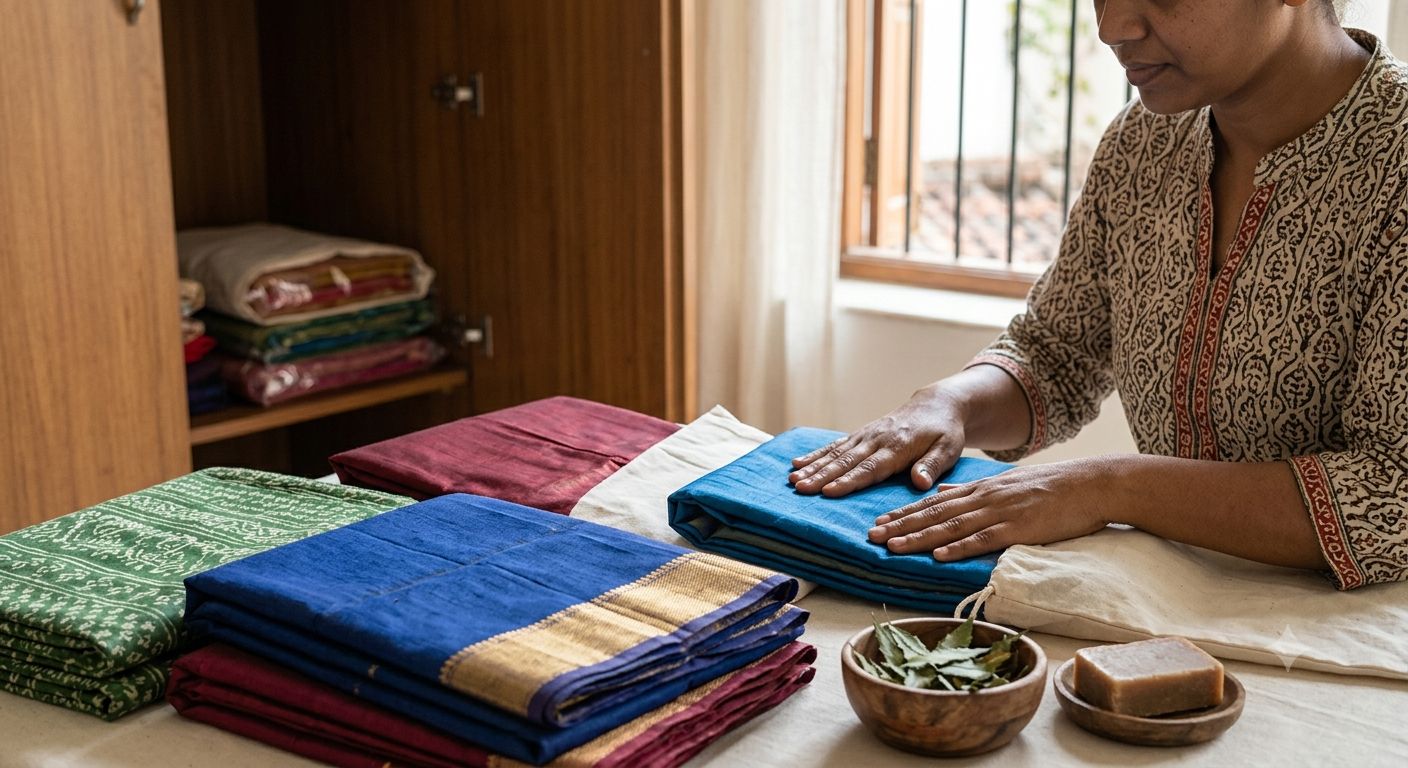
Use Breathable Cotton or Muslin Bags: Store expensive silk sarees, Chanderis, and tussar pieces individually inside pure cotton or muslin saree covers. Muslin allows natural fibers to breathe while protecting them from dust, light, and humidity.
Avoid Plastic Enclosures: Synthetic plastic bags trap moisture and off-gas over time, causing white or light-colored silk fabrics to turn yellow and gold metallic zari threads to turn black or tarnished.
Refold Sarees Periodically: Every three to four months, unpack your stored sarees, open them up completely, and refold them along new lines. This prevents permanent fabric creases and keeps heavy borders from wearing through thread stress points.
Use Natural Pest Repellents: Place dried neem leaves, cedar wood blocks, or lavender sachets inside your storage wardrobe shelves. Avoid placing chemical mothballs directly against silk garments, as they can discolor metal zari threads and alter natural dye shades.
Here is a convenient overview summarizing care recommendations for popular handloom fabric types:
Fabric Type
Recommended Wash Method
Drying Method
Storage Tip
Mulberry & Fine Silk
Gentle cool-water hand wash with mild liquid detergent
Flat shade drying over clean towels
Breathable cotton saree bags; refold every 3 months
Tussar & Raw Silk
Spot cleaning or cautious cool hand wash
Drip dry in shade away from direct sunlight
Wrapped in soft muslin; store with cedar blocks
Chanderi & Maheshwari
Gentle hand swish in cool water; no wringing
Flat drying in well-ventilated indoor space
Keep flat or folded with soft tissue between zari folds
Khadi & Handloom Cotton
Separate cold-water hand wash with mild soap
Line dry in shade; warm steam iron on reverse
Fold neatly in dry, well-ventilated wooden wardrobes
Frequently Asked Questions
Can I wash silk sarees at home without dry cleaning?
Yes, many plain or light silk sarees, tussar fabrics, and handloom cottons can be washed safely at home using cool water and a liquid wash designed for silk care. However, heavy bridal sarees featuring intricate silver or gold zari work, heavy bullion embroidery, or unverified vegetable dyes are best preserved through professional dry cleaning.
How can I prevent bright handloom dyes from bleeding?
To reduce dye bleed, always wash dark or vividly dyed handloom pieces separately in cold water. Avoid soaking hand-dyed garments for extended periods, use dedicated gentle fabric washes formulate to prevent color bleed, and never use warm or hot water.
What is the best way to store vintage silk sarees?
Wrap individual vintage sarees in unbleached white muslin cloth or breathable cotton storage covers. Store them flat in a cool, dry place away from direct light and dampness. Unfold and refold them along different lines every few months to distribute fabric weight and prevent creasing damage.
Why do natural silk sarees turn yellow over time?
Silk fibers can turn yellow when exposed to direct sunlight, acidic sweat, hot irons, or synthetic plastic storage bags that trap humidity. Storing your silk garments in clean, breathable cotton bags and keeping them away from hot temperatures helps preserve their original color and clarity.
Conclusion: Caring for Textiles as Sustainable Fashion Care
Mastering gentle fabric care is more than just maintaining a clean wardrobe—it is an act of sustainable fashion care and cultural heritage preservation. Every hand-spun yarn and handloom weave represents hours of skilled craftsmanship by traditional Indian artisans. By incorporating careful washing practices, sensible saree storage ideas, and protective drying techniques, you can enjoy your handwoven pieces for decades while preserving their unique colors, textures, and rich shine.
With a little time and the right care routines, your cherished silks, Chanderis, and Khadi textiles will continue to tell their story, carrying timeless elegance forward into every special occasion.
EthnicAlive may earn a commission from qualifying purchases made through affiliate links on this page.