Traditional Festivals of Bihar and Their Cultural Meaning
Bihar, a land steeped in ancient history and deep-rooted spiritual consciousness, possesses a cultural tapestry woven with unique rituals, folk songs, and communal celebrations. Far beyond simple festivities, the traditional festivals of Bihar are profound expressions of gratitude toward nature, strong family bonds, and an unwavering respect for the cosmos. To truly understand Bihar is to explore the spiritual and social meaning behind its most cherished festivals.
1. Chhath Puja: The Ultimate Tribute to Nature and the Sun
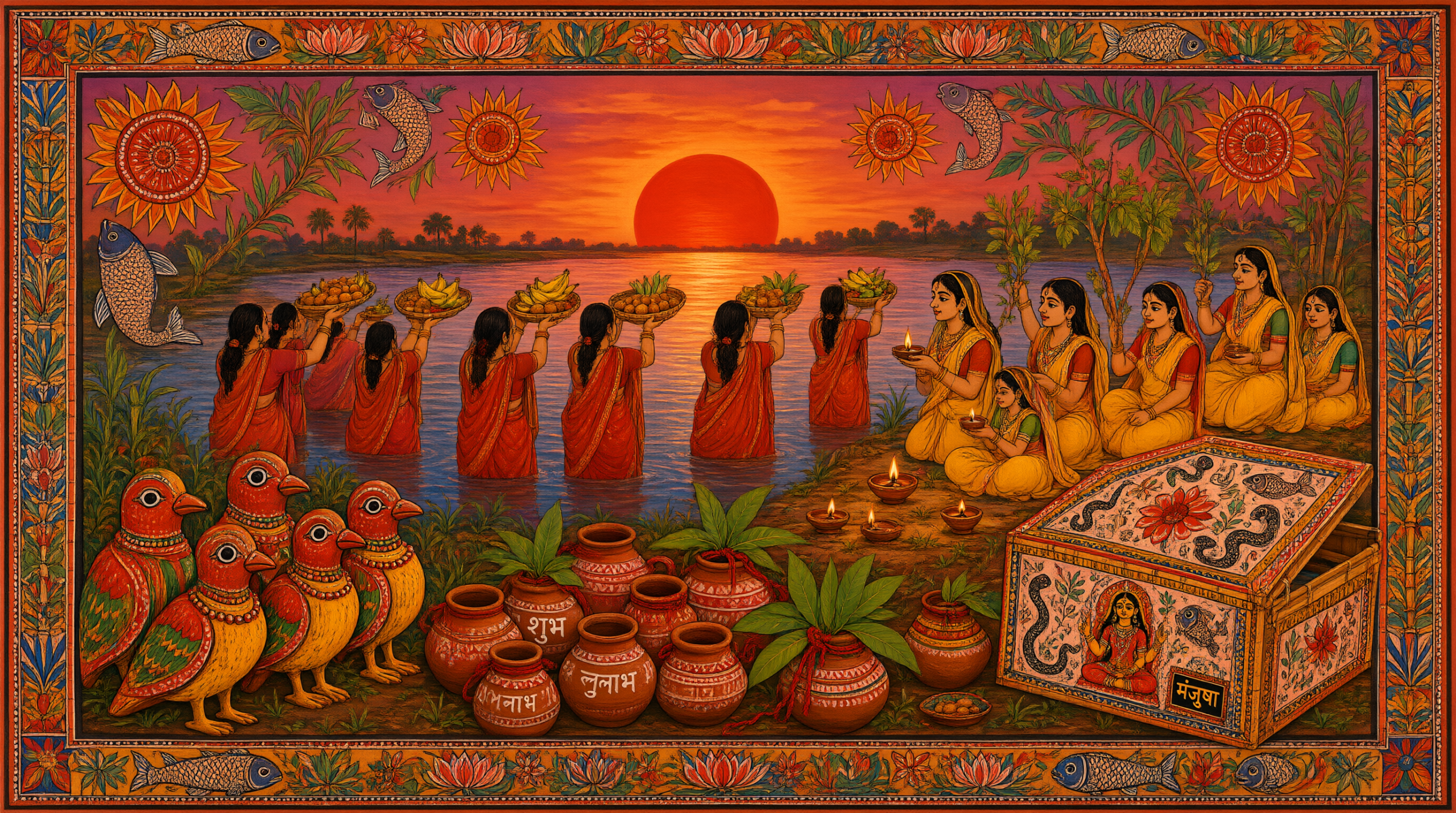
Chhath Puja is undisputed as the soul of Bihar’s cultural identity. Unlike many traditional Hindu rituals that center on idol worship, Chhath is dedicated to the worship of a visible deity—the Sun God (Surya)—and his sister, Chhathi Maiya. Spanning four grueling days of fasting, precise purity, and devotion, the festival honors the source of all life on Earth.
“Chhath Puja teaches us equal reverence for the setting sun and the rising sun, reminding us that every decline is followed by a new dawn.”
Cultural Meaning:The ritual involves offerings (Arghya) made at riverbanks during sunset and sunrise. This symbolizes the cycle of life and acknowledges that end points are as sacred as beginnings. Moreover, Chhath transcends social hierarchy; people from all walks of life stand side-by-side in river waters, sharing the same homemade offerings like Thekua, demonstrating deep democratic egalitarianism and environmental conservation.
2. Sama Chakeva: Celebrating Sibling Devotion and Migratory Birds
Celebrated primarily in the Mithila region during winter, Sama Chakeva is a uniquely charming festival that highlights the bond between brothers and sisters while celebrating the harmony between human beings and nature.
Cultural Meaning:Rooted in a legend from the Puranas, young girls craft clay idols of birds (Sama and Chakeva) and sing traditional folk songs throughout the festival nights. The festival coincides with the arrival of migratory birds from the Himalayas, teaching communities to welcome and protect these seasonal visitors. It concludes with the ritualistic farewell of the idols, symbolizing both sibling protection and environmental stewardship.
3. Bihula: Faith, Courage, and Folk Art
Prominent in the Anga region (Bhagalpur and surrounding areas), Bihula (or Manasa Puja) revolves around the heroic saga of Goddess Manasa and the legendary woman Bihula, who fought against destiny to restore her husband’s life.
Cultural Meaning:Bihula celebrates female fortitude, loyalty, and resilience against adversity. It is inextricably tied to the famous Manjusha Art—a traditional folk art form featuring snake motifs and vibrant borders created specifically to tell the story of Bihula. The festival highlights how folklore acts as a custodian for regional art forms.
4. Jitiya (Jivitputrika Vrat): Maternal Sacrifice and Devotion
Jitiya is an arduous three-day festival observed by mothers for the long life, health, and prosperity of their children. Mothers observe a strict Nirjala fast (without a drop of water) for over 24 hours while offering prayers to Lord Jimutavahana.
Cultural Meaning:Jitiya underscores the selflessness of motherhood in Bihari culture. It serves as a reminder of community support, where women gather to listen to traditional folk narratives, strengthening social connection among neighbors through shared ritual practice.
5. Madhushravani: Nurturing New Beginnings
Observed mainly in the Mithila region during the monsoon month of Shravan, Madhushravani is a 13-day festival celebrated by newly married women. Throughout this period, brides learn traditional stories about marriage, family values, and marital devotion from elderly women in the village.
Cultural Meaning:This festival acts as an informal cultural academy. It facilitates intergenerational knowledge transfer, allowing young women to absorb the wisdom of their ancestors while celebrating the arrival of the life-giving rains.
The Underlying Essence of Bihari Culture
The festivals of Bihar reflect a community living in close harmony with the seasonal rhythms of Earth. They emphasize strict discipline, ecological reverence, maternal sacrifice, and community togetherness over extravagant materialism. By preserving these ancient traditions, the people of Bihar keep alive a heritage that values life, nature, and relationships above all else.
Paper Mansa Devi Painting – Manjusha Art Products Frame Canvas
Interested in the goddess-centered imagery of Manjusha art? This framed canvas option features Mansa Devi, a figure closely associated with the Bihula–Bishahari folklore tradition. It can be considered for a folk-art collection or a culturally themed interior.
Product 3: AAKARSHAK Handmade Madhubani Ram Sita Vivah Art
For those who appreciate the Mithila tradition, this handmade Madhubani-style Ram Sita Vivah artwork represents a well-known religious and cultural theme. Its framed presentation may suit a traditional art display, a festive setting, or a heritage-inspired gift.