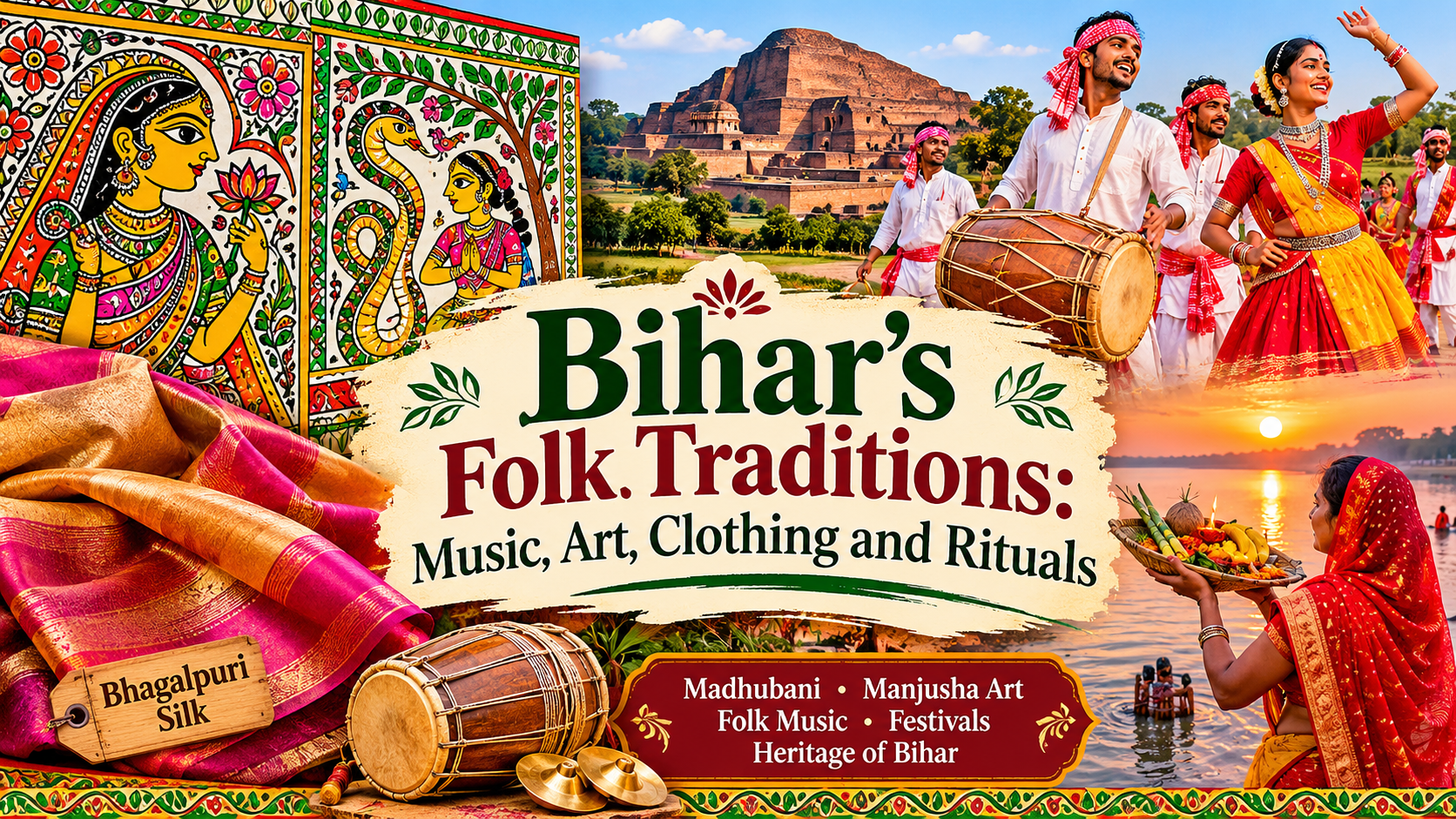
Bihar’s Folk Traditions: Music, Art, Clothing and Rituals
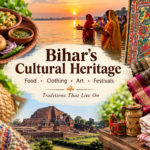
Bihar is a land where culture is not simply preserved in museums or written in history books. It lives in everyday conversations, folk songs sung during celebrations, paintings on village walls, traditional clothing, seasonal festivals and rituals passed down through generations. Every region has its own cultural identity, yet all these traditions come together to create the rich and distinctive heritage of Bihar.
From the colourful paintings of Mithila to the narrative Manjusha paintings of Ang Pradesh, from the soulful rhythms of Bhojpuri folk music to the elegance of Bhagalpuri silk, Bihar offers a fascinating journey through India’s living folk traditions.
1. Folk Music of Bihar: Stories Told Through Songs
Music has always been an essential part of rural and community life in Bihar. Traditionally, folk songs were not performed only for entertainment. They accompanied important moments of life, including marriage, childbirth, harvest seasons, religious celebrations and festivals.
Different regions of Bihar have developed their own musical styles, languages and storytelling traditions.
Popular Folk Music Traditions
Sohar: Traditional songs celebrating the birth of a child, expressing happiness and blessings for the newborn.
Vivah Geet: Wedding songs sung during marriage ceremonies, representing family emotions, customs, humour and blessings.
Kajri: Seasonal folk songs associated with the monsoon, often expressing love, longing and the beauty of nature.
Chaita: Folk songs traditionally sung during the month of Chaitra, marking the arrival of spring.
Jat-Jatin: A popular folk performance tradition of the Mithila region, reflecting rural life, relationships and social experiences.
Birha: Emotional folk singing associated with separation, longing and human experiences, particularly popular in Bhojpuri-speaking areas.
Traditional instruments such as the dholak, harmonium, manjira, nagara and bansuri contribute to the distinctive sound of Bihar’s folk music. These musical traditions continue to connect generations, even as modern musical styles evolve.
2. Folk Art of Bihar: A Colourful Expression of Heritage
Bihar has an extraordinary range of folk and traditional art forms. These paintings are more than decorative expressions. They communicate stories, beliefs, religious ideas, nature, community identity and the experiences of ordinary people.
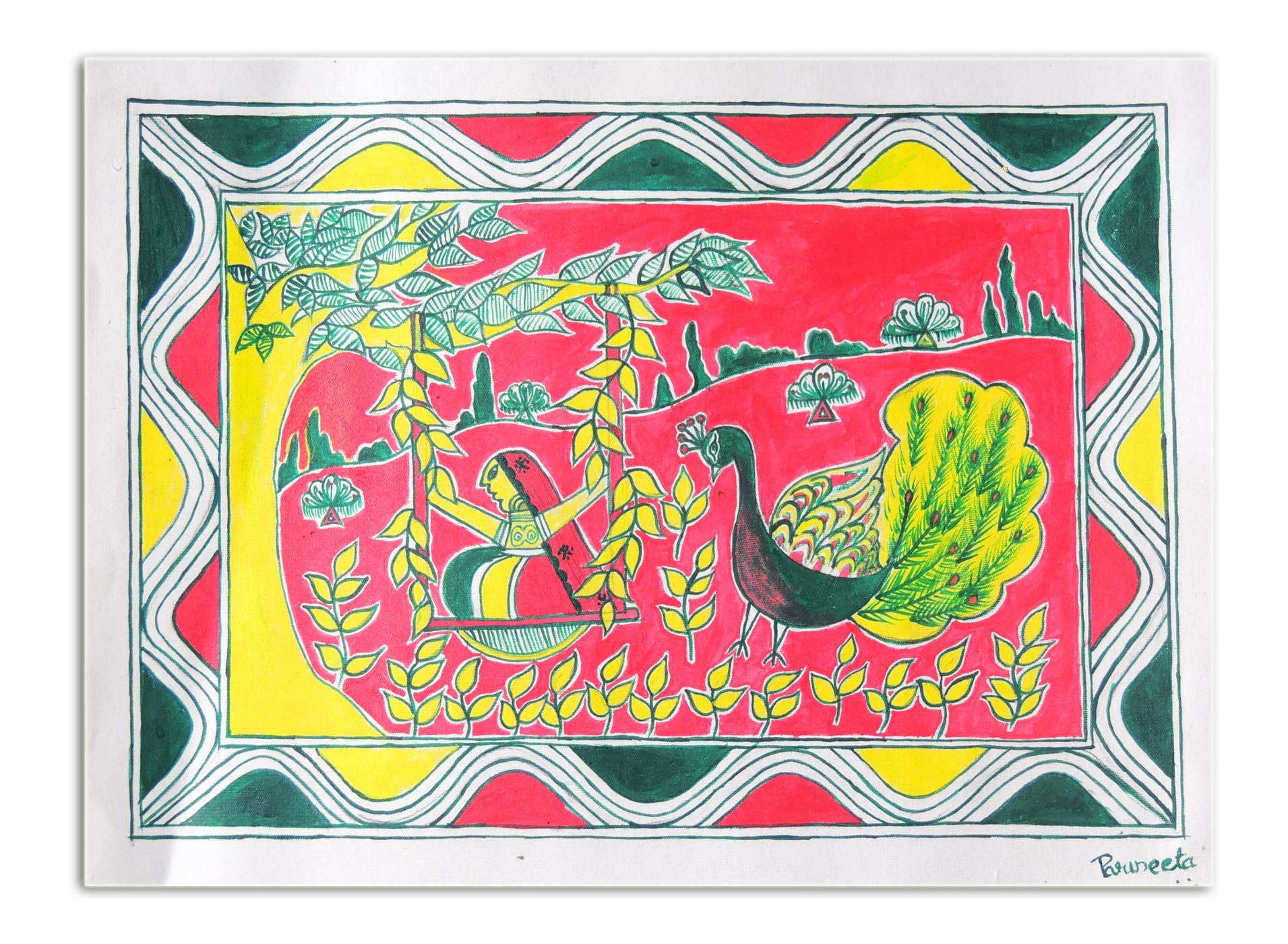
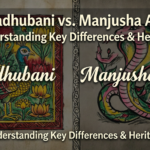
Madhubani, also known as Mithila painting, is one of India’s most recognised traditional art forms. Originating in the Mithila region of Bihar, it is known for intricate patterns, vibrant colours, detailed borders and themes drawn from mythology, nature and everyday life.
Artists traditionally painted on walls and floors, particularly during weddings and religious occasions. Today, Madhubani art has expanded to paper, canvas, textiles, home décor and contemporary products.
Manjusha Art – The Narrative Folk Art of Ang Pradesh
Manjusha Art is a distinctive heritage art form of Ang Pradesh, particularly associated with Bhagalpur and its surrounding areas. Unlike many decorative painting traditions, Manjusha is deeply connected with storytelling and the legendary tale of Bihula and Bishari (Manasa Devi).
Its visual language is instantly recognisable. Traditional Manjusha paintings follow a distinctive three-colour palette of yellow, pink and green, supported by black outlines and a white background. Green lines and carefully designed borders are important elements of its traditional visual identity.
The paintings depict characters, snakes, lotus flowers, elephants, birds, trees and other symbolic motifs connected with the Bihula-Bishari legend.
One of the most interesting features of Manjusha is its narrative approach. The artwork can communicate a sequence of events, allowing viewers to understand a traditional story through visual scenes.
Rooted in the cultural history of Ang Pradesh, Manjusha Art deserves greater recognition in India’s folk-art landscape. Contemporary artists are also adapting this heritage to silk, wall décor, handicrafts, clothing and modern lifestyle products.
Other Traditional Art and Craft Forms
Sujni Embroidery: A traditional textile craft associated with Bihar, especially known for its decorative and narrative stitching on fabric.
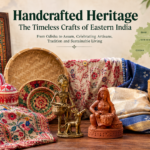
Sikki Grass Craft: A traditional craft of Bihar in which golden-coloured sikki grass is used to create baskets, containers, decorative objects and utility products.
Wood and Bamboo Craft: Rural artisans create functional and decorative products using locally available natural materials.
Stone and Metal Craft: Traditional craftsmanship continues through religious objects, sculptures, utensils and decorative items.
3. Traditional Clothing of Bihar: The Beauty of Handloom and Heritage
Traditional clothing in Bihar reflects its climate, lifestyle, regional identity and craftsmanship. Handwoven fabrics, simple cotton garments and silk textiles have long been part of the state’s cultural and economic life.
Bhagalpur, widely recognised as the Silk City of India, has a long-standing association with silk weaving. Bhagalpuri silk, particularly Tussar silk, is admired for its natural texture, distinctive appearance and elegant finish.
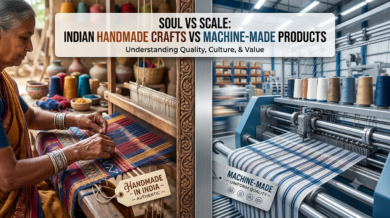
The weaving tradition represents generations of knowledge and skill passed from one artisan to another. Sarees, dupattas, stoles, shawls and other textile products made from Bhagalpuri silk have found admirers across India and beyond.
The heritage of Bhagalpuri silk is not just about fashion. It is also about the livelihoods of weavers, the identity of a region and the survival of traditional handloom craftsmanship.
Traditional Attire Across Bihar
Saree: A traditional garment widely worn by women, with regional preferences for cotton, silk and handwoven fabrics.
Dhoti and Kurta: Traditional clothing worn by men, particularly during religious ceremonies, cultural gatherings and festivals.
Gamchha: A versatile traditional cotton cloth used in everyday life, as well as a cultural symbol of rural Bihar.
Angavastram: A traditional shoulder cloth often used during religious functions and ceremonial occasions.
Handloom Shawls and Stoles: Textiles that reflect the weaving skills and regional craftsmanship of Bihar.
Today, designers and artisans are finding new ways to combine traditional Bihar textiles with contemporary fashion. This connection between heritage and modern design creates opportunities for local weavers and craft communities.
4. Festivals and Rituals: The Spiritual Heart of Bihar
Festivals and rituals are among the strongest expressions of Bihar’s cultural identity. They bring families and communities together and preserve traditions through collective participation.
Chhath Puja – A Unique Celebration of Nature and Gratitude
Chhath Puja is one of the most important festivals of Bihar. Dedicated to Surya Dev (the Sun God) and Chhathi Maiya, the festival expresses gratitude for life, health, prosperity and the natural forces that sustain the world.
Devotees observe fasting and offer prayers to the setting and rising sun, generally at riverbanks, ponds and other water bodies. Thekua, fruits, sugarcane and traditional offerings form an important part of the celebration.
Chhath is remarkable for its discipline, simplicity, devotion and strong community participation.
Jitiya – A Festival of Maternal Love and Well-being
Jitiya, also known as Jivitputrika Vrat, is observed by many women in Bihar for the well-being and long life of their children. It is associated with fasting, devotion and family traditions.
Sama-Chakeva – Celebrating Family Bonds
Sama-Chakeva is a traditional festival particularly celebrated in the Mithila region. It is associated with the bond between brothers and sisters and is marked by folk songs, clay figurines and community celebrations.
Holi and Other Seasonal Celebrations
Holi brings colour, music and social celebrations to communities across Bihar. Traditional folk songs, local food and gatherings give the festival its regional character.
Other celebrations, including Makar Sankranti, Saraswati Puja, Durga Puja, Diwali and regional village fairs, also contribute to the cultural diversity of the state.
5. Food, Folk Customs and Everyday Cultural Life
Bihar’s cultural heritage is also reflected in its food habits and everyday customs. Traditional recipes are closely connected with agricultural seasons, festivals, family gatherings and local ingredients.
Some well-known traditional foods include:
Litti Chokha: A much-loved traditional dish made with roasted wheat-flour balls filled with sattu and served with chokha.
Thekua: A traditional sweet prepared especially during Chhath Puja.
Khaja: A layered traditional sweet associated with places such as Silao.
Tilkut: A sesame-based sweet particularly popular during Makar Sankranti.
Malpua: A traditional sweet prepared during festivals and special occasions.
Village fairs, seasonal gatherings, traditional games, local storytelling and community celebrations continue to preserve the social character of Bihar. These customs remind us that culture is not limited to grand monuments or famous festivals. It also exists in ordinary moments of everyday life.
6. Preserving Bihar’s Folk Heritage in the Modern World
Like many traditional cultural practices across India, Bihar’s folk traditions are experiencing changes due to urbanisation, modern lifestyles and changing consumer preferences. Some traditional art forms and crafts face challenges in finding new markets and attracting younger generations.
However, these challenges also create opportunities.
Digital platforms, cultural exhibitions, artisan-led businesses, educational workshops and contemporary product design can help traditional crafts reach new audiences. Handloom textiles can become part of modern fashion, while folk paintings can find new expressions through home décor, accessories, murals and lifestyle products.
Supporting local artisans, purchasing authentic handmade products and documenting traditional knowledge are practical ways to contribute to cultural preservation.
The future of Bihar’s folk heritage depends not only on remembering the past but also on giving traditional knowledge a meaningful place in modern life.
Conclusion: Bihar’s Culture Is a Living Heritage
Bihar’s folk traditions tell the story of a civilisation shaped by creativity, devotion, craftsmanship and community life. Its music carries emotions across generations, its paintings preserve legends, its handloom fabrics reflect the skill of artisans, and its rituals express a deep relationship with nature, family and faith.
From Madhubani and Manjusha paintings to Bhagalpuri silk, from Chhath songs to traditional wedding rituals, every cultural expression contributes to the identity of Bihar.
These traditions are not merely memories of an older India. They are living heritage, created and renewed by the people who continue to practise them.
To preserve Bihar’s culture is to celebrate its people, respect its artisans and keep its stories alive for generations to come.
Paper Mansa Devi Painting – Manjusha Art Products Frame Canvas