
1. Traditional Food of Bihar: Flavours Rooted in Home and Heritage
Food is one of the most memorable expressions of Bihari culture. Traditional recipes often use familiar ingredients such as wheat, rice, sattu, lentils, seasonal vegetables, mustard oil and jaggery. Many dishes are closely associated with family gatherings, local seasons and religious celebrations.
Litti Chokha: The Pride of Bihari Cuisine
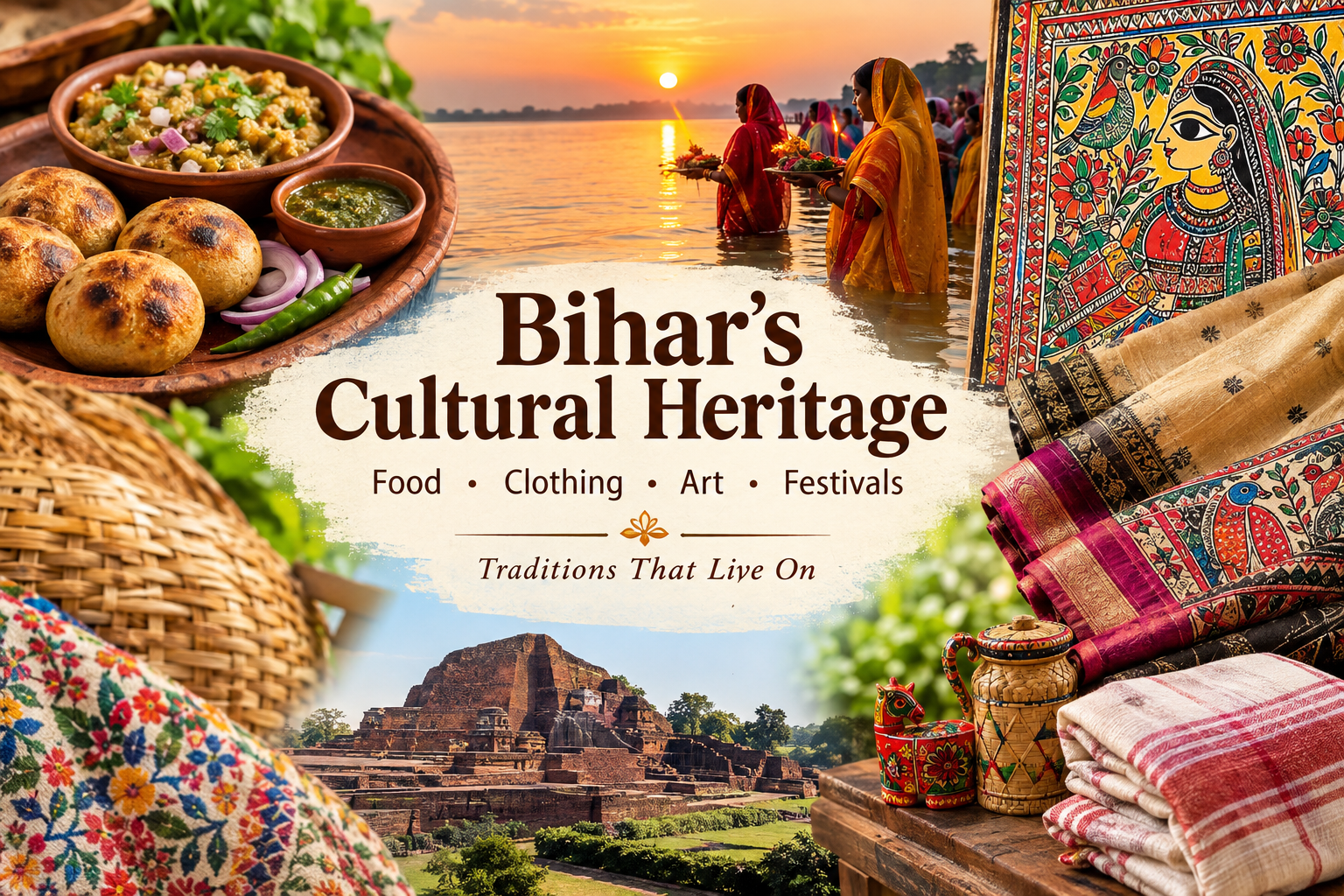
Litti chokha is among the most recognised foods of Bihar. Litti consists of wheat-flour balls filled with seasoned sattu, or roasted gram flour, and traditionally roasted until cooked. It is served with chokha made from roasted eggplant, potatoes or tomatoes, often accompanied by chutney and a little ghee. Its rustic preparation and satisfying flavour make it a favourite far beyond Bihar.
Other Traditional Bihari Foods
- Sattu Paratha: A filling flatbread stuffed with seasoned roasted gram flour.
- Thekua: A traditional wheat-flour and jaggery sweet closely associated with Chhath Puja.
- Dal Pitha: A regional preparation of dumplings filled with spiced lentils.
- Khaja: A crisp, layered sweet particularly associated with Silao and the Nalanda region.
- Makhana Kheer: A creamy dessert made with fox nuts, milk and sugar, enjoyed in many households.
These dishes are more than recipes. They carry memories of grandparents’ kitchens, village celebrations, harvest seasons and festivals that bring families together.
2. Traditional Clothing of Bihar: From Bhagalpuri Silk to the Gamcha
Traditional Bihari clothing combines practicality, regional identity and festive elegance. Sarees, dhoti-kurta, kurta-pyjama and the everyday gamcha remain familiar elements of clothing traditions, although styles naturally vary between communities and generations.
Bhagalpuri Silk: The Textile Heritage of Bihar
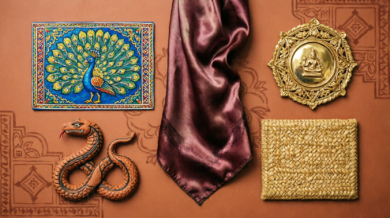
Bhagalpur is widely known as the Silk City of India. Its textile tradition is especially associated with Tussar silk, valued for its distinctive texture and natural-looking sheen. Bhagalpuri silk fabrics are used in sarees, dress materials, dupattas and other garments that bring traditional weaving into contemporary wardrobes.
A saree with a temple border or contrasting stripes can be a beautiful choice for cultural occasions, family celebrations and festive gatherings. When selecting silk clothing, check the product description carefully for the actual fabric composition, weave and care instructions.
Featured Pick: Semi Tussar Silk Saree with Temple Border
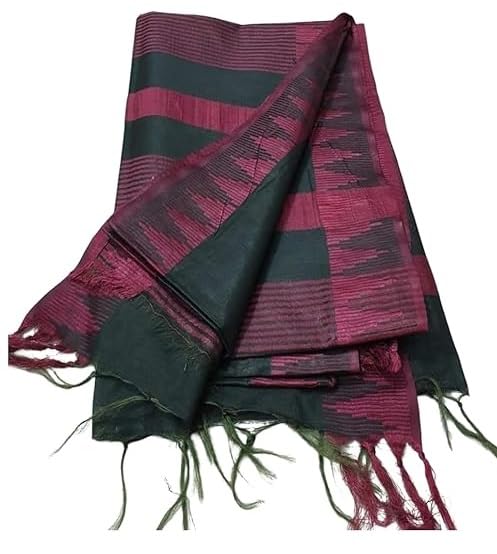
Interested in a traditional saree with a distinctive border? This STB-SILK TEXTILES BHAGALPUR women’s semi Tussar silk saree features a temple-border design and an attached striped blouse. It may suit shoppers looking for a traditional Indian look for festive events and cultural occasions.
Check the saree, available colours and current price on Amazon
Madhubani-Print Dupattas: A Cultural Touch for Everyday Style
A dupatta featuring Madhubani-inspired designs offers another way to celebrate Bihar’s artistic heritage through clothing. Such prints can be paired with a simple kurta, a solid-colour suit or a contemporary ethnic outfit.
Featured Pick: Cotton-Silk Madhubani Print Dupatta

This STB-SILK TEXTILES BHAGALPUR cotton-silk Madhubani-print dupatta is an option for women and girls who enjoy traditional Indian patterns. Style it with a plain kurta or a coordinated ethnic outfit to make the print stand out.
The Bihari Gamcha: A Simple Cloth with Many Uses
The gamcha is a familiar part of everyday life in Bihar and neighbouring regions. Traditionally used as a towel, shoulder cloth or head covering, it is valued for its usefulness rather than elaborate decoration. Gamchas also have a place in hospitality, rural work and regional gift-giving traditions.
Featured Pick: EthnicAlive Bihari Gamcha

The EthnicAlive Bihari Gamcha is listed as a large cream-coloured bamboo gamosa with quick-absorption and faster-drying features. It is worth considering for everyday use or as a practical regional gift. Check the listing for exact dimensions, material composition and washing instructions before ordering.
3. Folk Art and Handicrafts of Bihar: Stories Told Through Colours
Bihar’s folk-art traditions preserve stories, beliefs, symbols and local ways of seeing the world. Art is found not only in galleries but also in textiles, household decorations, ritual objects and designs passed between generations.
Madhubani Painting: The Art of Mithila
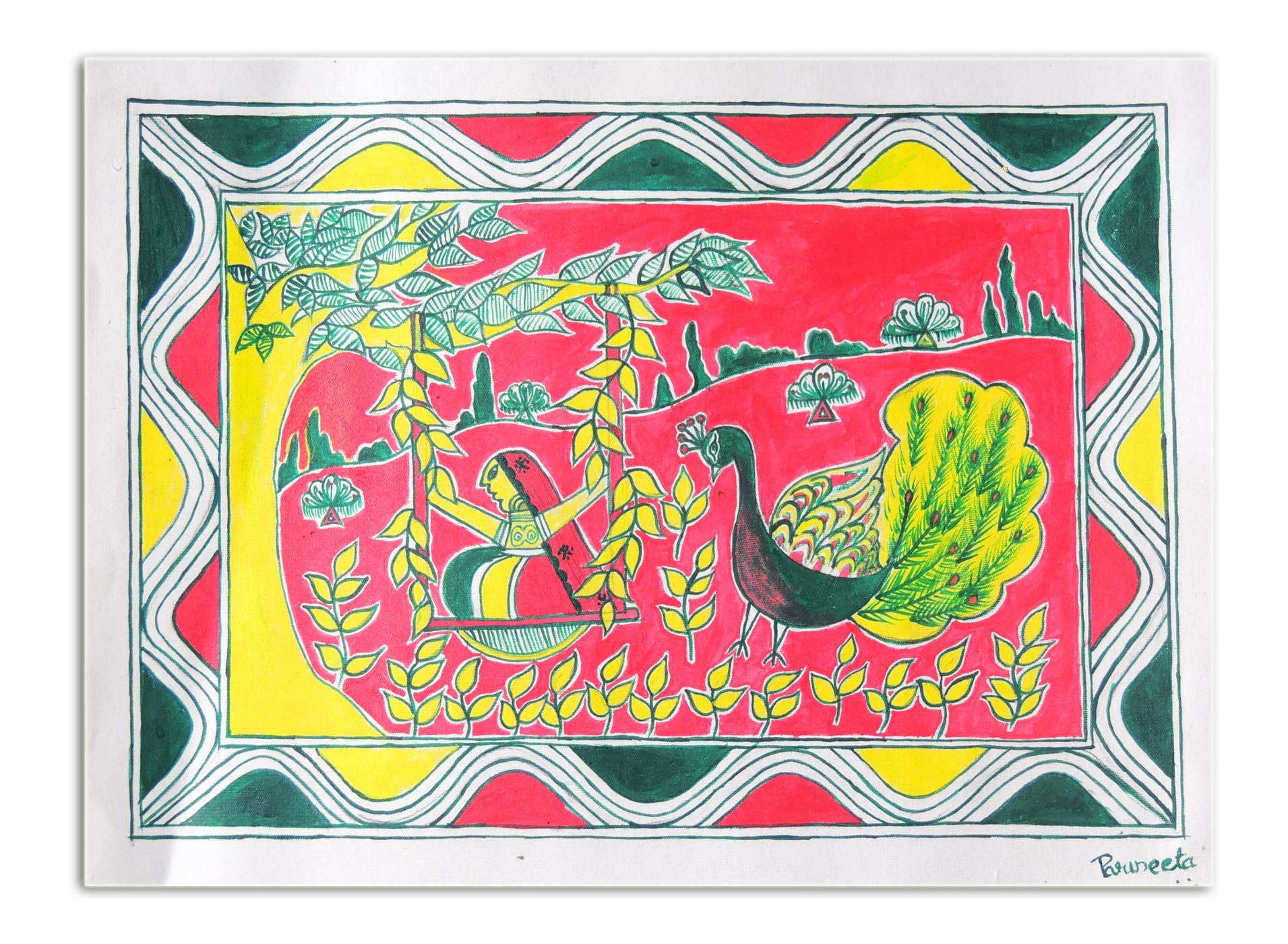
Madhubani painting, also known as Mithila art, originated in the Mithila region of Bihar. Traditionally painted on household walls, it is now also created on paper, canvas, fabric and decorative objects.
Its recognisable visual language includes intricate patterns, expressive figures, flowers, birds, fish, the sun, religious subjects and scenes from everyday life. Different artists and communities use distinct styles, colours and techniques. The art has also created opportunities for many artists to share their work with wider audiences.
Manjusha Art: Bhagalpur’s Storytelling Tradition
Manjusha art is a distinctive folk-art tradition associated with the Ang region around Bhagalpur. It is closely linked to the folklore of Bihula and Bishari and the story of Bihula’s journey. Its characteristic borders, stylised figures and symbolic motifs help communicate a narrative through pictures.
While Madhubani and Manjusha are both important Bihar art traditions, they have different regional roots, visual conventions and storytelling identities. Learning about both helps us appreciate the diversity of Bihar’s artistic heritage.
Other Traditional Crafts of Bihar
- Sujini embroidery: Decorative stitching traditionally worked on layered fabric.
- Sikki grass craft: Woven objects made from golden-coloured grass, including baskets and decorative items.
- Tikuli art: A decorative painting tradition associated with Patna.
- Khatwa appliqué: A textile technique in which fabric pieces are arranged and stitched into designs.
- Bhagalpuri silk weaving: A textile tradition that contributes to Bihar’s regional identity and craft economy.
These traditions remind us that a handmade object can carry far more than decorative value. It can represent a place, a community’s knowledge and the time invested in learning a craft.
Featured Pick: Handmade Madhubani Chhath Puja Ghat Wall Art

Looking for artwork that reflects Bihar’s festival traditions? This AAKARSHAK Madhubani Chhath Puja Ghat artwork is listed with a black frame and a size of 24 by 17 inches. Its festival-inspired subject makes it an option for a living room, prayer space or a culturally themed home interior.
Before buying, review the listing for the artwork’s materials, finish, framing details and whether the item meets your expectations for handmade craftsmanship.
4. Festivals of Bihar: Faith, Family and Community
Festivals are an essential part of Bihar’s cultural identity. They bring together religious devotion, seasonal foods, folk songs, family traditions and community participation.
Chhath Puja: A Festival Dedicated to the Sun
Chhath Puja is one of Bihar’s most distinctive and widely observed festivals. Devotees worship the setting and rising Sun, offering prayers near rivers, ponds and other water bodies. The festival is known for its discipline, cleanliness, traditional offerings and powerful atmosphere of collective devotion.
Thekua, fruits and other offerings are prepared as part of family and community observances. For many Biharis living away from home, Chhath brings back memories of riverbanks, folk songs, family preparations and the warmth of their native place.
Holi, Diwali and Makar Sankranti
Holi brings colour, music and festive foods. Diwali is marked by lights, worship and family gatherings, while Makar Sankranti is associated in many households with seasonal foods such as sesame and jaggery preparations.
Sama-Chakeva and Other Regional Traditions
In parts of Mithila, Sama-Chakeva is a seasonal celebration associated with folk songs, handmade figures and family participation. Bihar’s many regions also preserve local fairs, devotional gatherings and folk performances that reflect their own histories and customs.
Together, these celebrations show how Bihar’s cultural heritage continues to evolve while remaining connected to family, faith, nature and community life.
5. Bringing Bihar’s Cultural Heritage into Modern Life
You do not have to attend a festival or visit a village to appreciate Bihar’s traditions. Thoughtfully chosen clothing, artwork and everyday textiles can bring regional culture into modern homes and wardrobes.
- For festive dressing: Consider a saree featuring a traditional border or a dupatta with regional folk-art motifs.
- For practical everyday use: A gamcha can be a useful addition to your daily essentials or a thoughtful regional gift.
- For home décor: Festival-themed folk art can add a cultural focal point to a living room or prayer area.
- For meaningful gifting: Choose items that reflect the recipient’s connection to Bihar, its festivals or its artistic traditions.
When shopping for heritage products, read the material and size details, examine photographs, review the seller’s information and check customer feedback. A traditional print is not automatically the same as an original hand-painted artwork, so look for clear descriptions of how each item was made.
6. Why Preserving Bihar’s Cultural Heritage Matters
Cultural traditions survive when people continue to practise them, teach them and value the work behind them. Artisans, weavers, cooks, folk performers and families all play a part in keeping Bihar’s heritage alive.
Supporting regional crafts can help create demand for traditional skills, but responsible shopping also means checking product descriptions and avoiding unsupported claims about authenticity or handmade production.
Younger generations can contribute by learning local stories, documenting family recipes, attending cultural events and sharing reliable information about regional art forms. Small efforts can help ensure that Bihar’s living traditions remain meaningful for the future.
7. Frequently Asked Questions About Bihar’s Cultural Heritage
What is Bihar famous for culturally?
Bihar is known for its rich history, Buddhist and Jain heritage, traditional cuisine, Chhath Puja, Madhubani painting, Manjusha art, Bhagalpuri silk and a variety of regional folk traditions.
What is the traditional food of Bihar?
Litti chokha is one of the best-known dishes. Other traditional foods include sattu paratha, thekua, dal pitha, khaja and regional sweets prepared for festivals and family occasions.
Which traditional textile is associated with Bhagalpur?
Bhagalpur is especially associated with Tussar silk and Bhagalpuri silk textiles, which are used to make sarees, dress materials and other garments.
What is the difference between Madhubani art and Manjusha art?
Madhubani art originated in the Mithila region and is known for its detailed patterns and varied subjects. Manjusha art is associated with the Ang region around Bhagalpur and is particularly connected with the Bihula-Bishari folklore. Their regional histories, motifs and visual styles differ.
Why is Chhath Puja important in Bihar?
Chhath Puja is a major festival dedicated to the Sun and is valued for its disciplined observances, traditional offerings and strong community participation. It is also an important expression of cultural identity for many Biharis living outside the state.
How can I support Bihar’s traditional crafts?
Learn about regional art forms, attend exhibitions, share artisans’ work and purchase responsibly described products. Check whether an item is hand-painted, handwoven, printed or machine-produced before paying a premium for craftsmanship.
Conclusion: Bihar’s Heritage Is a Living Tradition
The cultural heritage of Bihar lives in the food shared around a family table, the sarees and textiles worn on special days, the patterns painted by folk artists and the prayers offered at sunrise during Chhath Puja.
From Bhagalpuri silk to Madhubani paintings and Manjusha storytelling, every tradition offers another way to understand the creativity and identity of this remarkable region. Appreciating these traditions means more than looking back at history: it means helping keep that heritage alive in everyday life.
Explore regional clothing, traditional textiles and culturally inspired décor thoughtfully, and let the stories behind these creations remain part of the experience.